

Asia tech, real estate sectors see immediate gains on first Fed rate cut in four years
But longer-term impact on markets might be muted given uncertainties around the US economy


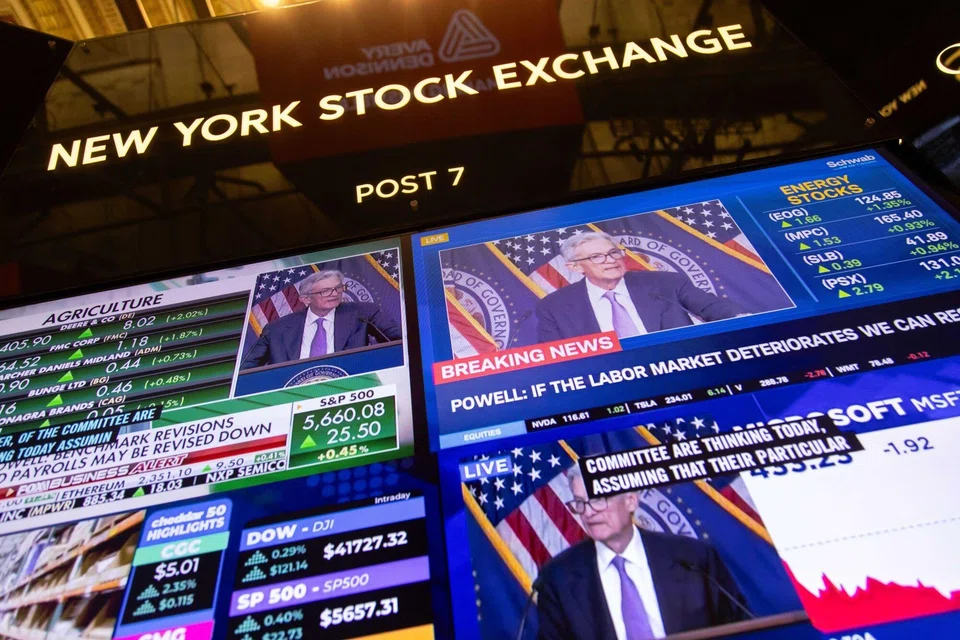
ASIAN technology, real estate and other interest-sensitive stocks will benefit right away from the US Federal Reserve’s first rate cut in over four years, analysts said.
However, the longer-term impact of rate cuts on markets might be minimal given uncertainties around the health of the US economy, added analysts.
The Fed cut interest rates by half of a percentage point, or 50 basis points (bps) on Wednesday (Sep 18), bringing interest rates to within the range of 4.75 to 5 per cent. Policymakers said further cuts are lined up for the end of this year and during the next two years.
The cut is the first since March 2022 when the Fed began a cycle of rate hikes to curtail inflation. The rate hikes brought interest rates up from nearly zero to 5.5 per cent.
The move to cut interest rates by half a percentage point reflects the Fed’s “growing confidence” that it can maintain strength in the labour market in a context of moderate growth and inflation moving down to 2 per cent, said Fed chairman Jerome Powell at a press conference on Wednesday.
Asian markets up
Regional indices ended higher on Thursday.
The Straits Times Index ended 1.1 per cent higher on Thursday after opening flat earlier that morning. Singapore-listed US office real estate investment trusts (Reits) were among the early gainers of the rate cut, rising between 5 and 8.9 per cent in early trade.
Meanwhile, Japan’s Nikkei 225 climbed 2.1 per cent, while the Hang Seng Index rose 2 per cent. The FTSE Bursa Malaysia KLCI climbed 0.03 per cent, and the Indonesia’s IDX Composite index was up 1 per cent.
On the forex front, Asian currencies headed into the Fed meeting trading higher, but retreated against a strengthening greenback post-Fed cut, before gaining again on Thursday morning.
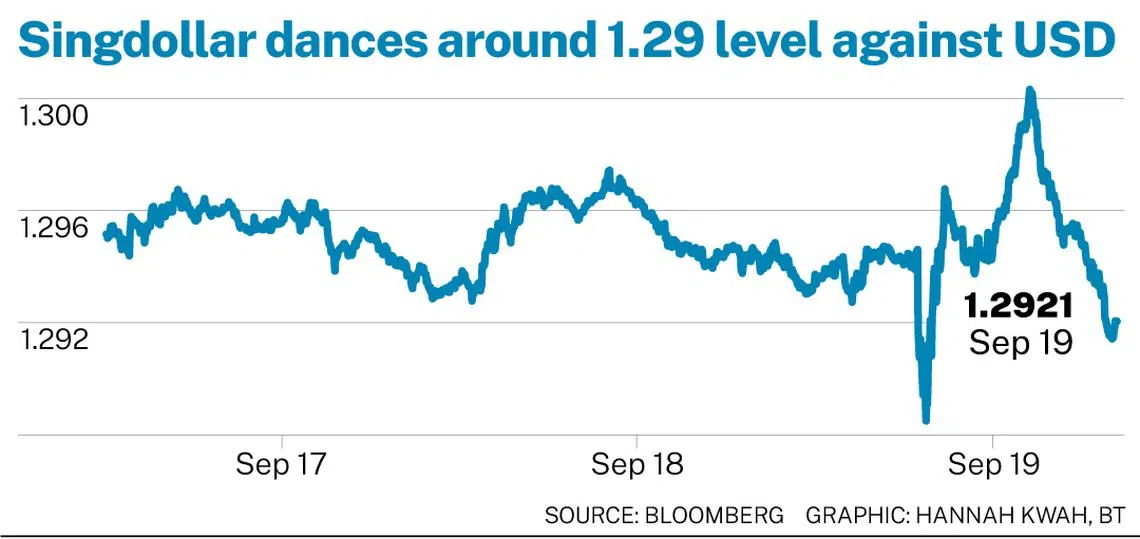
The Singapore dollar climbed to a fresh decade-high of around 1.2885 per US dollar at 2.30 am local time on Thursday after the Fed’s move, and was trading at around 1.29 against the US dollar as at 5 pm.
What analysts make of the cut
Most analysts acknowledged that the “super-sized” rate cut was in line with expectations given that the Fed had hinted recently that it would opt for a deeper cut of 50 bps, rather than a more conservative 25 bps.
But some such as Chen Jingwei, chief investment strategist at wealth management firm Wrise Singapore, was surprised by the extent of the cut.
He noted that cuts of at least 50 bps are historically imposed in emergency situations. The last time the Fed made a similar move was during an emergency meeting during the Covid-19 pandemic in March 2020. Before that, the Fed had done so in 2008 during the financial crisis.
Jonathan Woo, a senior research analyst at Phillip Securities, said: “The conversation has now almost fully shifted over from inflation concerns to labour market weakness.”
With the Fed positioning the latest rate cut as a “recalibration” of policy rates, Ray Sharma-Ong, head of multi-asset investment solutions for South-east Asia at investment company abrdn, expects it to make cuts at a faster pace over the next year if the labour market continues to soften.
However, Charu Chanana, global market strategist at investment platform Saxo, said that there is “immense uncertainty” on the path ahead for the Fed as mixed economic signals have made policymaking more difficult.
Impact on Asian equity markets
In the Asian equity market, the latest rate cut will have an immediate impact on sectors sensitive to interest rates, particularly technology and real estate, said analysts.
“Reduction in rates tends to lower borrowing costs, which can boost corporate profits and encourage investment, providing a tailwind for equities,” said Phillip Securities’ Woo.
The rate cut will also inject more liquidity into global markets. Emerging markets, especially, stand to gain from a lower cost of capital and could see a rise in equity prices, he added.
Sharma-Ong of abrdn said that he expects long-duration sectors, such as Asian info tech and healthcare, to benefit from an easing rate environment.
“In contrast, we expect shorter duration sectors like commodities and banks to lag,” he said.
For Singapore, Wrise’s Chen said expectations of lower rates have already pushed investors towards higher-yielding investments such as dividend-paying equities and Reits.
He believes Singapore banks’ high dividends and strong balance sheets will offset any impact from lower interest rates.
Meanwhile, yields on traditional safe-haven investments, such as Treasury bills and fixed deposits, are likely to decrease, he added.
Longer-term impact on Asian markets
Despite the initial optimism, analysts said that the longer-term impact of rate cuts on Asian markets is likely to be muted.
Lorraine Tan, director of equity research for Asia at Morningstar, said that while markets could see an initial positive reaction from the latest rate cut, its longer-term impact is expected to be minimal given that the normalisation in US interest rates is already largely factored into company valuations.
Woo added that the aggressiveness of a 50 bp cut might also introduce volatility in the market as it signals deeper economic concerns by the Fed.
The extent of the positive impact of lower rates across regional markets will also depend on how local governments and central banks respond to the Fed’s move. Should they also ease monetary conditions, the positive momentum in the region’s equity markets will be reinforced, said Chen of Wrise.
Bank Indonesia (BI) had sliced its benchmark interest rate by a quarter point on Wednesday, in a surprise move ahead of the Fed’s cuts. BI’s move followed the Philippine central bank’s pre-emptive cut last month.
Other regional central banks are expected to begin their easing cycle in the coming months.
Currency movements
Asian currencies are expected to strengthen against the US dollar in the wake of lower rates.
Maybank analysts noted in a report on Thursday that rate cuts are less punitive for local currencies as the 10-year US Treasury yield had dropped substantially, widening the yield differential in their favour.
“With the Fed easing narrative still entrenched, the US rates backdrop could continue to remain benign for regional currencies,” continued the report. “And as such, it is also a benign environment for regional central banks to cut rates and support their respective economies, providing currencies a concomitant boost.”
Wrise’s Chen added that stronger Asian currencies could improve the purchasing power of consumers and boost the prospects of companies reliant on imports. However, currency volatility may affect companies with significant export exposure, he warned.
TRENDING NOW
Prima to move out of historic Keppel Road flour mill building in 2028

Temasek-related Azalea, SeaTown, Seviora Capital to merge in 2027

Family offices see more tailored products, leverage ‘collective firepower’ for direct deal access

Singapore room rates soar, but hotels seeing mixed demand from F1 race and events

