

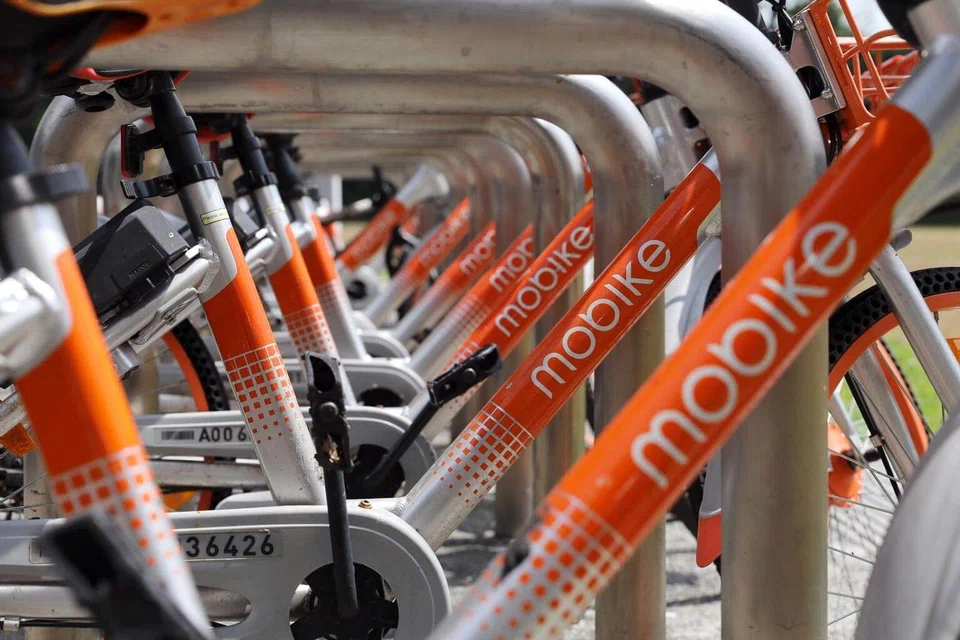
Mobike's backpedal, and a lesson on ambition

Singapore
WHEN Qiming Ventures invested in Mobike, it saw a disruptive force tackling the issue of getting around dense cities in the world's most populous country, observed Helen Wong, the partner who was behind the Chinese venture capital (VC) firm's investment in the Chinese bike-sharing firm.
But Mobike may have erred in thinking that regional countries worked the same way as China. And despite the firm caution from Qiming - which has already exited its stake in Mobike - Mobike made a failed push into several markets that included Singapore, Malaysia and Thailand.
Mobike, which was sold to Chinese online services giant Meituan Dianping in 2018 for US$2.7 billion, has in recent months retreated back to its home market, scaling back along with other bike-sharing startups that cut their losses in their expansion bids.
"The service made a lot of sense in China," Ms Wong told The Business Times by phone, noting that Mobike offered growth opportunities in not just bike rental, but also in data analytics and in payment services.
But Ms Wong, a Singaporean familiar with the Asean region, said the infrastructure in Asean was simply not set up for the bike-sharing model that worked in China. "I never thought it would work in other countries," she shared, adding that Mobike had been cautioned by Qiming that the model from China could not be easily replicated in Asean.
While Ms Wong called Mobike relatively "rational" and less aggressive than its competitors, she said the startup was emboldened by the large amounts of capital sloshing about.
"It is inevitable that with so much capital into these markets, they would want to try and test the boundaries," she added. "They were very ambitious. And most of them are ambitious."
This reflects the broader challenges faced by venture players in working with entrepreneurs with big ideas. Speaking at the Cutting Edge Forum, organised by The Business Times and The Straits Times in March, managing partner of GGV Capital Jenny Lee said that VC investors often "miscalculate the challenge" in changing a founder's ways, without referring to any specific company.
"The most common mistake we make is assuming that CEOs can change," said Ms Lee, a Singaporean and veteran venture capitalist who has invested in top Chinese startups.
For example, a CEO may be an introvert who understands the product and technology, but is poor in management. Asking the CEO to build up an army of thousands of sales staff then becomes unrealistic, she noted.
Chin Chao, CEO of InnoVen Capital's South-east Asia business, recalled that in the first few deals it did, the founders initially did not think they would need venture debt.
"They used every single dollar of that debt as runway extension because it took longer than they thought to execute their plans. And without the venture debt, there would have been some stress on the companies," said Mr Chao.
"Founders are very confident. But now, they're like: 'I'm glad I took it'."
READ MORE:
TRENDING NOW

Philippine power giant First Gen rebuffs foreign offers, plans up to US$2.6 billion in expansion
Cliff Tan has 7 million followers and a 4-month waitlist. Why won’t he expand his business?

Could stablecoins be the future of money?
From finance aspirant to Asean CEO: TUV SUD’s Jonas Strahberger on finding people who believe in you

