Commercial EV demand rising on lower running costs, government subsidies

Yong Jun Yuan
COMPANIES are adopting electric vehicles (EV) in greater numbers, spurred by lower running costs and government subsidies.
The number of electric goods vehicles on Singapore’s roads has risen 49.8 per cent this year to 2,837 as at Apr 30, 2023, statistics from the Land Transport Authority showed.
The number of electric buses rose 34.4 per cent to 203 over the same period.
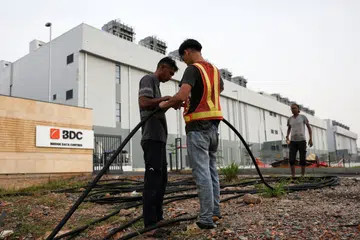
Hoe Yeen Teck, ST Engineering Urban Solutions’ head of mobility services and autonomous solutions, attributes the growth in the electric van segment to incentives from the Early Turnover Scheme (ETS) and Commercial Vehicles Emissions Scheme (CVES), which were announced in 2020.
The company is the authorised distributor of BYD commercial vehicles in Singapore.
Under the ETS, owners pay a discounted certificate of entitlement (COE) rate for a new vehicle if they deregister an eligible commercial vehicle before its COE expires.
Commercial EV owners enjoyed an incentive of S$30,000 when the CVES was introduced. In April, the scheme was extended for two years – to Mar 31, 2025. The incentive amount, however, was lowered to S$15,000.
Since then, Hoe said, there has been a slowdown in commercial EV registrations.
He still expects continued growth in commercial EV adoption, but at a slower rate than last year. “Ageing fleets will still need to be replaced and less pollutive vehicles will continue to enjoy more incentives than more pollutive (ones),” he said.
Cycle & Carriage Singapore’s head of corporate sales for Citroen, Bryan Heng, noted that prices for raw materials have pushed up battery costs and other high-voltage components, leading to a rise in EV prices.
The company has adjusted its prices to ensure that its EVs remain competitive, he added.
Local banks have also given out more loans to companies purchasing EVs.
UOB’s head of sector solutions group Bonar Silalahi said the lender’s financing of commercial EVs more than trebled between March 2022 and March 2023. (*see clarification note)
Eric Ong, OCBC’s global commercial banking head of middle market and services, also noted a trebling of financing commitments to small and medium-sized enterprises (SMEs) for EVs.
“As the availability of EV charging infrastructure grows, we have seen increasing interest among SMEs in owning or operating EVs,” he said.
DBS group head of SME banking Koh Kar Siong said the bank’s commercial EV loans in 2022 were 25 times what they were in 2021. As of May this year, the bank is on track to exceed its 2022 loan performance.
“However, we are mindful that high COEs and lower government subsidies may dampen demand for EVs,” he said.
Chua Kian Hong, director of EV importer EV Werkz, said electric vans can be cost-effective and generally suit companies that do not have particularly heavy driving needs.
This is especially the case if companies have their own premises where they can install EV chargers, which are about the size of instant shower heaters.
A typical business vehicle covering less than 120 km a day would need a charge of only about two hours each day.
“A majority of them are (buying) for their own usage… They are small businesses that need to send staff or equipment (somewhere) and deliver to their customers directly,” Chua noted.
Assuming an electricity price of S$0.25 per kilowatt hour, he said an electric van would incur only about S$0.05 to cover a kilometre. In comparison, it would cost about S$0.15 to S$0.20 for a similar van with an internal combustion engine (ICE).
Cycle & Carriage’s Heng also said EVs can cut maintenance costs by up to 64 per cent over a usage period of 300,000 km.
Companies could also log shorter downtimes, as EVs have fewer moving parts and can go longer without servicing.
ST Engineering’s Hoe said the company has noticed some interest from among new and existing building owners for EV charger installation, which could further improve the accessibility of EV charging points.
“However, some older buildings may face challenges as they are unable to draw sufficient power from the grid, or will have to incur additional costs for civil or electrical works to install EV chargers,” he added.
Companies that maintain their own fleets may also need to retrain their staff.
SBS Transit vice-president of customer experience and communications Grace Wu said technicians maintaining ICE buses require largely mechanical skills, but technicians working on electric bus engines need higher-level expertise in electrical systems.
They have to be trained to handle high-voltage (600-volt) electrical systems safely, beyond the 24-volt electrical system common in ICE buses, she said.
Almost 50 of the company’s technical staff took about two months to be certified under the National Electric Vehicle Specialist Safety course, which was launched in September 2022.
Electrifying construction
The construction industry has had fewer options to electrify its equipment, but more options could become available in the future.
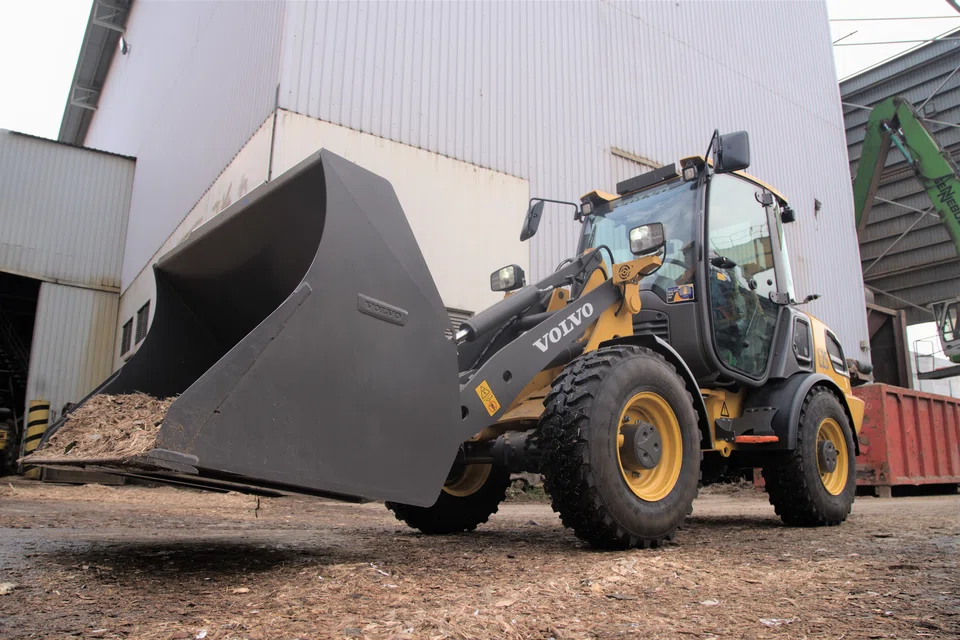
Volvo Construction Equipment (Volvo CE) on Wednesday (Jun 7) launched two electric excavators and one compact wheel loader.
Recycling company Kim Hock Corporation general manager Lim Teck Siang said that after trialling the compact wheel loaders for about a month, the company is in talks to buy two of them.
He said that the company’s operators are “very happy” with the machines because they produce lower vibrations and are therefore more comfortable to use.
Tomas Kuta, Volvo CE’s president for Asia, thinks it would be good to have subsidies for the adoption of greener construction equipment: “If customers feel like they get some support from subsidies and incentives, they will be less afraid to take that step.”
*Clarification note: The article had earlier said that Bonar Silalahi is the UOB group head of sector solutions. He is the head of sector solutions group.