

Roar power: Haw Par rides on Tiger Balm strength to bite into new markets

Megan Cheah
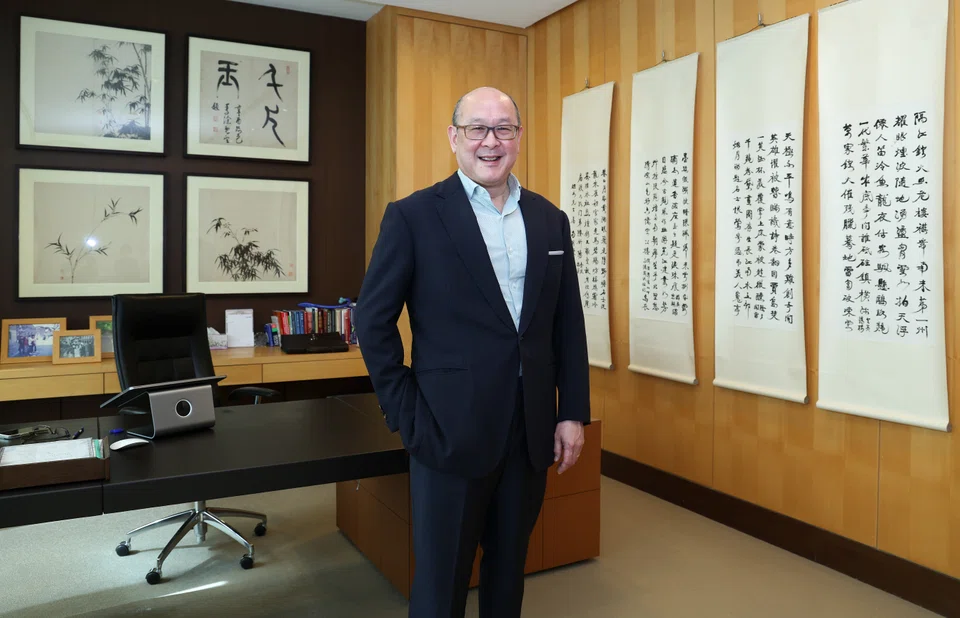
CONSUMERS in Singapore would recognise the classic Tiger Balm ointment in a heartbeat.
The analgesic heat rub – in a distinctive hexagonal shaped vessel adorned with the logo of a leaping tiger – remains the most well-known offering from healthcare products manufacturer Haw Par Corporation .
But the topical ointment is just one of the many products in the company’s extensive range.
Over the last few decades, Haw Par has introduced plasters, mosquito repellent patches, scented shoulder rubs and sports warm-up creams to help bring the household name to more users and new markets.
Haw Par president and chief executive Wee Ee Lim noted that Tiger Balm’s market segment has “changed significantly” as the company started to develop markets in the United States and Europe in the 1980s.
Wee, who has led the company since 2003, said: “We have gotten good traction over the decades in the US and in European countries, with the help of the younger generation in the Western world having more knowledge of alternative medicines.”
And these markets helped to buoy demand for its healthcare wellness products during the Covid-19 pandemic.
Lockdowns and restrictions led to a slowdown in demand in Asian markets and operations in manufacturing plants in the region, while higher logistics costs added to operational costs, Wee told The Business Times.
During this time, consumers in Europe and the US were able to move around more easily and continue their usual spending habits. “They helped us through the most difficult period during Covid,” Wee said.
With the pandemic now mostly behind many markets, overall consumer sentiment has returned in full force.
Mainboard-listed Haw Par’s earnings jumped 34.9 per cent to S$104.1 million for the half year ended June 2023, from S$77.2 million in the corresponding year-earlier period.
Revenue climbed 16.3 per cent to S$111.1 million, from S$95.5 million in H1 FY2022. The group’s healthcare products accounted for the bulk of its total revenue, raking in sales of S$101.8 million for the period.
Haw Par said the improvement in H1 FY2023 was boosted by growth in consumer spending.
Brand recognition
While Haw Par’s products are widely recognised, the group struggles with a perception that its medicated oils are used largely by older folks.
Recognising that the texture and strong smell of the bottled ointment could be unpopular among younger consumers, it has turned to creating new, more trendy products – while keeping the classic Tiger Balm association.
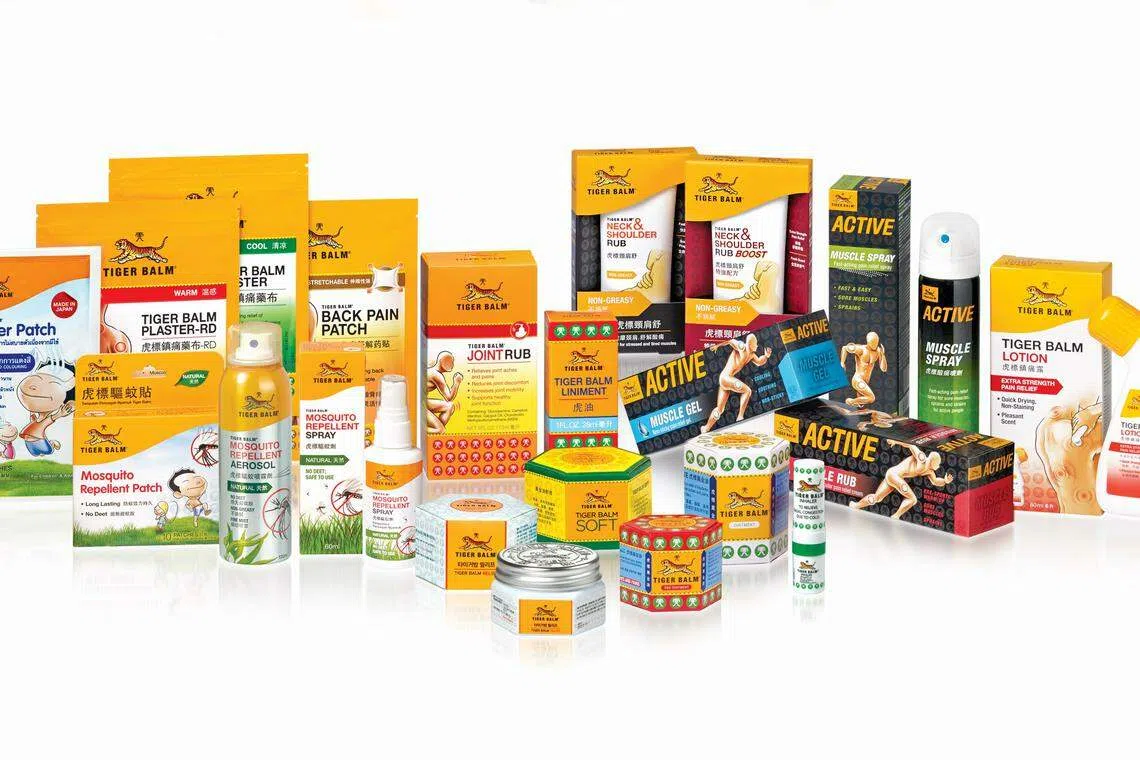
“When we refresh our traditional range of products, we consciously try to maintain the classic look,” said Wee.
It also developed products for more niche consumer groups. For example, it now has a warm-up cream for athletes.
Still, the original ointment remains the most distributed product under the Tiger Balm brand.
Several celebrities have posted about the product – all unsolicited, said Wee. And the ointment even recently appeared in the South Korean drama King the Land, with screenshots of the scene shared widely on social media.
Wee joked: “Even if you go up to some obscure ski resorts in the mountains somewhere in Europe, you can still get (Tiger Balm).”
Tourism growth driver
Despite the improved sales last year, Wee is cautiously optimistic about the group’s prospects in 2024.
For instance, he highlighted a dampening of consumer sentiment in European markets.
Meanwhile, in the US, large retailers are facing the squeeze from e-commerce rivals. This pressure, he said, has been passed on to manufacturers.
At the same time, the slow return of Chinese tourists has hampered growth in the global tourism industry – crimping a key revenue source, said Wee.
“In order to see growth, we have to get the tourism business to come back,” said Wee. “That engine is missing at the moment.”
Haw Par’s interest in tourism is also apparent in its leisure business.
The group owns Underwater World Pattaya in Thailand, which was opened in 2003 and has been profitable except during the Covid-19 years.
Closer to home, it used to run Underwater World Singapore in Sentosa, which closed in June 2016.
Haw Par had first purchased a 54.31 per cent stake in Underwater World Singapore in 1995, before buying up the remaining interest in 1999.
The group also previously operated oceanariums in Spain and China.
Hunting for new pastures
While leisure is not its current focus, Wee said retaining the Thai oceanarium helps to preserve the knowledge and experience the group had acquired in the aquarium attraction industry.
He also did not rule out finding other locations to “reignite the leisure segment”.
Haw Par is similarly on the lookout for “meaningful acquisitions at a reasonable valuation”, said Wee.
He noted that the low interest rate environment of the last 10 to 15 years meant that the company found it challenging to add value through acquisitions during that period.
Cautious about overly stretching Tiger Balm’s brand equity from the topical analgesics and well-being space for entry into new segments, however, Wee would prefer to acquire already established brands.
The group had S$275.8 million in cash and cash equivalents as at Jun 30.
“What you see today, with a lot of uncertainty in the market… maybe this will be the time to put our dry powder to work,” he said.
TRENDING NOW

Malaysian king buys stake in Singapore-listed mining firm expanding into rare earths
Family offices ‘kept captive’ by relationship managers turn to independent advisers, direct deals

Once staunchly pro-China, Malaysian Chinese businesses are now distancing themselves from Beijing

Could stablecoins be the future of money?

