As demand grows, OUE Healthcare looks to beef up regional offerings
The Catalist-listed healthcare group also sees opportunity in China’s premium private healthcare market

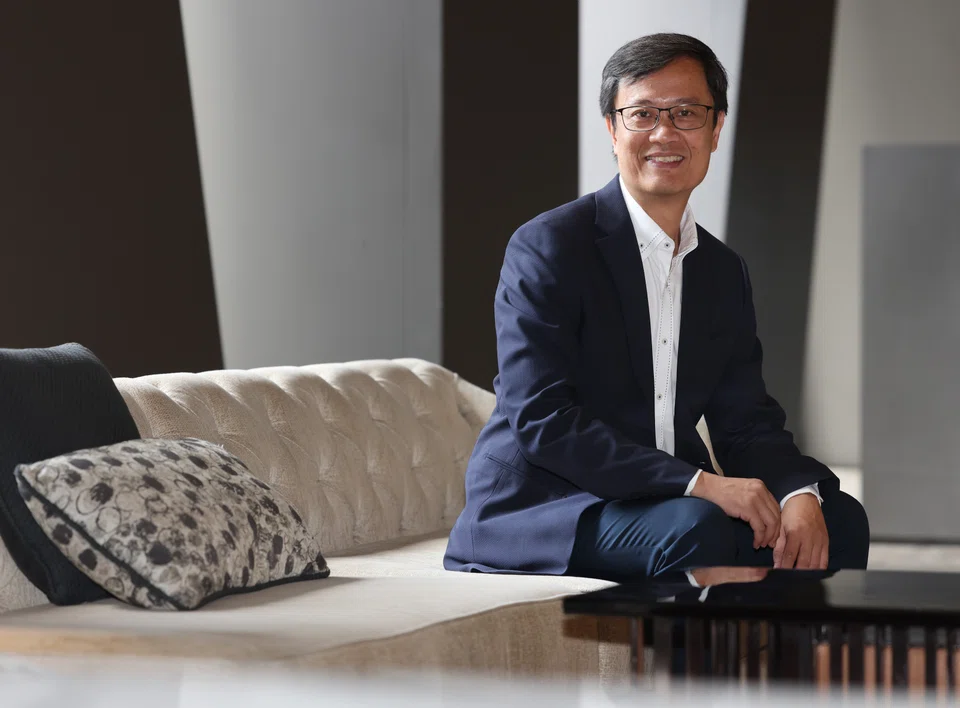
FOLLOWING its acquisition of healthcare provider Healthway Medical Corporation, OUE Healthcare (OUEH) is now a step closer to building a regional healthcare ecosystem centred on Singapore medical excellence, as it hopes to attract more medical tourists.
At the same time, the group wants to strengthen its position in China’s premium private healthcare market with two new hospitals in Changshu and Shenzhen, chief executive and executive director Yet Kum Meng told The Business Times in an interview.
Yet said the Catalist-listed healthcare group’s vision from day one has been to provide an end-to-end spectrum of healthcare services in the region – from primary care to secondary care, to tertiary care and allied services.
He is bullish on the healthcare industry’s outlook, given the sector’s lower susceptibility to economic cycles and the non-discretionary nature of healthcare expenses.
This is especially so for Asia, he said. “In this part of the world, there is still a lot of untapped spending in terms of healthcare. The mega trends of ageing and growing affluence will also support this growth.”
OUEH’s acquisition of a 26.2 per cent stake in Singapore-based Healthway Medical last October was, therefore, a pivotal move in realising the group’s longer-term ambitions.
Up till then, its only presence in Singapore was respiratory and cardiothoracic specialist group O2 Healthcare. The group later took Healthway Medical private, resulting in the latter’s delisting from the Singapore Exchange.
“It sounds a bit hollow to build a regional ecosystem (based on Singapore medical excellence) centred around O2,” said Yet. “With Healthway Medical, it’s a whole new ball game altogether.”
Now with Healthway Medical under its belt, OUEH has added general practitioners and an expanded list of secondary care services – including paediatrics, orthopaedics and dental services – to its overall offerings, on top of a health-screening centre and a new day-surgery centre.
Strengthening Singapore and China operations
Previously known as International Healthway Corporation, OUEH was acquired by property group OUE in 2017. It was rebranded as OUE Lippo Healthcare and later as OUEH.
Even as he seeks to grow the group’s footprint across Asia, Yet is in no hurry to bite off more than he can chew.
“We still have a lot on our existing plate…there’s still a lot of work to be done,” he said. “We will continue to strengthen and grow (the areas) we are already at.”
His immediate priority is to optimise Healthway Medical’s operations and rationalise costs across OUEH.
This is on top of getting more specialists and doctors from Healthway Medical and O2 to attend continuing medical education events, which will help to raise awareness of the group’s brand of medical offerings in Singapore, he said.
O2 has begun making inroads in the region. It recently partnered Thomson Medical’s Group FV Hospital – a healthcare facility in Ho Chi Minh City – to set up Vietnam’s first regional thoracic surgery centre.
Beyond the Republic’s shores, Yet is also focusing on scaling up OUEH’s second hospital in China, located in Changshu, Suzhou. The hospital – which opened in May 2023 – marks the group’s first joint venture with Hong Kong-based China Merchant Group.
The group operates a general hospital in Wuxi, Jiangsu. It also runs a pharmaceutical trading business in the market.
Despite China’s weak macroeconomic outlook, Yet remains unfazed. As he sees it, the current downturn is merely “part and parcel” of a natural economic cycle.
“Since the late 1970s when China started opening up to the world to today, they have gone through almost unstoppable growth,” he said. “So it’s not unusual that they now have an economic downturn.”
Still, OUEH is up against China’s robust public healthcare system, which the Chinese government has invested heavily in, he noted.
“(The government) has built mega hospitals with top medical equipment and they continue to retain many of the top specialists. So we are facing a very, very strong competitor.”
That is why OEUH must differentiate itself to capture a niche segment of consumers, who have more “discerning” needs for premium specialist medical care and services, he said.
“We try not to touch on the mass market, so that we have a small niche where we can survive. But this small niche – when you’re talking about 1.4 billion people – is not very small at all.”
This niche also includes medical tourists. Yet is hoping that the group’s new upcoming hospital in Shenzhen – set to open in late 2024 or early 2025 – will draw Hong Kong residents across the border, where healthcare costs are comparatively lower.
Such individuals are also more likely to visit a private hospital than a public one in mainland China, he added.
Gains yet to be realised
It will take a while for OUEH to break even on these investments, as evident from its latest first-half results for the period ended Jun 30, 2024.
The group sank into the red, posting a net loss of S$3.8 million against a profit of S$1.8 million the year before.
The results were within expectations, said Yet, in part due to startup costs and operating losses relating to its new Changshu and Shenzhen hospitals.
“Hospitals cannot be profitable from day one,” he explained. “In healthcare, reputation and trust precede anything else and it takes time to build that up, especially as a foreign player in the China market.”
Earnings were also hit by the foreign exchange impact arising from a strong Singapore dollar; higher financing costs from loans taken to fund the acquisition of Healthway Medical’s shares in 2023; and the one-off disposal of a piece of vacant land in Kuala Lumpur.
Besides China, OUEH also has overseas operations in Myanmar, where it jointly operates and manages three hospitals, two medical towers and four primary care clinics.
There are no plans for the group to exit the market amid the ongoing civil war, said Yet.
This is because its operations there are “sustainable” for now, he said, even though profits have been eroded by currency fluctuations. He also sees healthcare as a “basic social need” that should continue to be provided for the Myanmese community, especially amid volatility.
For the half year, OUEH’s revenue stood at S$74.9 million, down 5 per cent from S$78.7 million in the year-earlier period.
Nearly 70 per cent of its revenue came from subsidiary First Real Estate Investment Trust (First Reit), which brought in rental income of S$52 million from assets in Japan, Indonesia and Singapore.
In March 2022, OUEH became a controlling shareholder of First Reit following its divestment of 12 nursing homes in Japan to the Reit, as part of the group’s asset-light approach. The group is also First Reit’s sponsor and holds a 40 per cent stake in the Reit manager.
First Reit serves as a capital recycling platform for OUEH, allowing the group to put its real estate assets into the Reit in exchange for units, said Yet.
Stripping out First Reit’s contributions, OUEH’s healthcare operations posted revenue of S$22.9 million – down from S$24.7 million the year before. This comprised mostly revenue from O2 and its Wuxi hospital, with the drop attributed to the former seeing a decrease in patient volume as post-Covid pent-up demand eased.
Even as he has his hands tied with the group’s existing businesses, Yet is not ruling out making further mergers and acquisitions in the region.
Singapore’s healthcare sector, for one, has seen a wave of consolidation of late, as more general practitioners and specialists look to give up their own clinics to join a medical group, he observed.
“Joining a group saves them from worrying about the back-end operations…they only need to focus on their clinical work. It’s also less risky for an individual,” said Yet.
“So we’re always keeping our eyes open. We evaluate the opportunity, whether it makes sense... we will continue to be nimble on this.”