

Used cooking oil the new black gold as it rides biofuel demand, limited supply
Europe is the largest consumer of the feedstock globally, but regulatory uncertainty in US, Europe still a hurdle

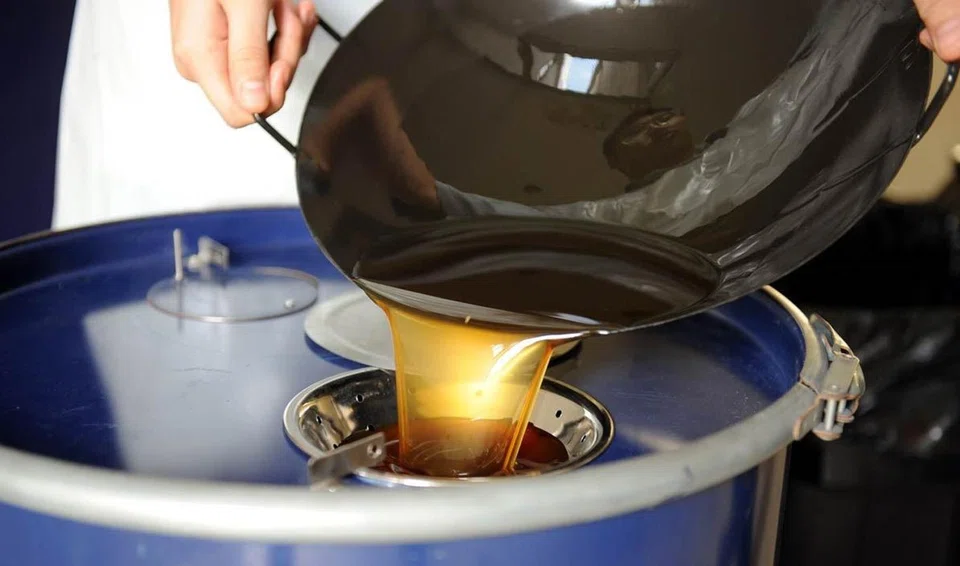
GLOBAL demand for used cooking oil (UCO), a feedstock for biofuels such as sustainable aviation fuel (SAF), is expected to continue to rise, despite regulatory uncertainty in major importing regions such as the United States and Europe.
Together with a limited supply of legitimate UCO, market watchers believe this will support UCO prices in the medium term.
Export volumes from Asia – the largest collector of UCO – have increased more than fivefold between 2016 and 2021 to a total of 2.5 tonnes, accounting for 38 per cent of global UCO exports.
According to industry watchers, import demand for Asian UCO has been firm since the start of 2024. China and Malaysia, two of the biggest UCO exporters in the region, have reported increasing export volumes each year.
Chinese UCO exports have surpassed 2023 levels to reach 1.4 million tonnes for the first half of 2024, Rabobank senior analyst Oscar Tjakra told The Business Times.
Strong US, Europe demand
According to Argus data, Europe is the largest consumer of UCO globally, with the Netherlands, the United Kingdom and Italy topping the charts within the region.
This is despite UCO imports from Asia slowing in the first half due to high freight rates and a European anti-dumping investigation against Chinese biodiesel that has raised uncertainties.
Eddison Lee, principal of energy and natural resources of Oliver Wyman, noted that Asian UCO has been an integral source of feedstock for European biofuel manufacturers. Increasingly, biofuel producers in Asia and the US are also turning to Asian UCO.
“European demand has traditionally preferred UCO to crop based ingredients such as soybean oil, because waste-based biofuels can be counted twice in the compliance calculation of renewable fuel blend requirements under the RED II framework,” said Lee.
The RED II, or Renewable Energy Directive recast, is the European Union’s legal framework for the promotion of energy from renewable sources. It entered into force in 2018 and was revised in 2023 to raise the EU’s binding renewable energy target for 2030 to a minimum of 42.5 per cent.
In the US, UCO demand has surged since governmental incentives in 2022 to decarbonise transportation. This flipped the country from being a net exporter of UCO until 2021 to becoming a net importer since 2022. UCO imports to the US surpassed 1.36 million tonnes in 2023, according to government data.
Robust demand and limited supply
Oliver Wyman’s Lee said that the spread of Low Carbon Fuel Standards and the pending Clean Fuel Production Credit creates advantages for low carbon intensity feedstock such as UCO.
UCO demand also continues to rise amid a global trend of decarbonisation efforts in the road transportation, maritime and aviation industries.
Lee believes that UCO will continue to be “highly sought after”, given limited availability of the waste-based feedstock.
He added: “As the next wave of biofuel plants comes online, the demand for UCO will likely continue to grow – with newer aggregation capabilities and technological advancement hoping to keep growing supply to meet demand.”
Even considering the maximum potential for increasing UCO collection in Asia and beyond, UCO demand still far exceeds supply, noted Teo Hui Ling, a lawyer focused on the energy transition at Bethel Chambers and a founder of the Asia SAF Association.
Rabobank’s Tjakra forecasts UCO prices to remain supported in the medium term on the back of increasing demand and limited supply globally. He noted that UCO prices in 2024 have come down from the peak seen in 2022 but remain higher than pre-2021 level.
Tjakra added that the decarbonisation trend boosting UCO demand is seen not only in the West, but also in Asia.
Singapore has required all departing flights to use 1 per cent SAF from 2026, with the figure projected to rise to 3 to 5 per cent by 2030.
Japan has proposed that SAF producers cut greenhouse gas emissions from jet fuel use by more than 5 per cent from 2030, compared to a 2019 baseline. SAF is also to account for at least 10 per cent of domestic airlines’ jet fuel consumption by 2030.
Indonesia has also put in place a road map to develop SAF, focusing on UCO as one of the feedstocks.
However, fragmented supply chains could limit UCO supply and increase UCO fraud risks, such as mixing virgin vegetable oils with UCO or claiming that biodiesel produced using virgin vegetable oils is UCO methyl ester.
Recent investigations have been launched into UCO supply chains amid concerns of fraudulent feedstock usage.
Rabobank’s Tjakra highlighted that investments in the global UCO supply chain are needed to increase collection of legitimate UCO. “These investments include investments in manpower, packaging, transportation, storage and certification,” he said.
Regulatory uncertainty
Meanwhile, UCO demand could shift, as the US faces the prospect of major changes to the tax credit system next year.
Donald Trump’s return to the White House could also cast further uncertainties for the biofuel industry, especially for Chinese UCO exporters.
These could add to uneasiness in Europe, where recent measures of provisional anti-dumping duties on biodiesel and hydrogenated vegetable oil from China have already raised uncertainty in the UCO market.
Oliver Wyman’s Lee said: “Given a significant proportion of UCO demand is driven by the EU, industry watchers are closely watching any regulation changes in Europe, particularly around ‘waste-based’ caps and double counting.”
Given the inbalance between the supply and demand in the UCO market, and lack of alternatives for decarbonisation efforts in industries such as aviation, governments could also impose regulations to curb UCO exports.
“Some industry players forecast that policy makers may therefore be concerned to ensure that UCO is prioritised to meet demands for domestic biofuel production and consumption instead of being exported to foreign biofuel producers,” said Bethel Chambers’ Teo, noting that Indonesia had introduced UCO export levies in September.
TRENDING NOW

Could stablecoins be the future of money?

Once staunchly pro-China, Malaysian Chinese businesses are now distancing themselves from Beijing

Vietnam’s data-centre investment rush faces reality check on power and site constraints

‘My grandfather’s legacy’: Sherman Kwek lays out three-year plan for CDL to drive returns

