Food-delivery platform foodpanda to rely on affordability, convenience and quick commerce to drive growth
Expansion in its subscription business is a bright spot

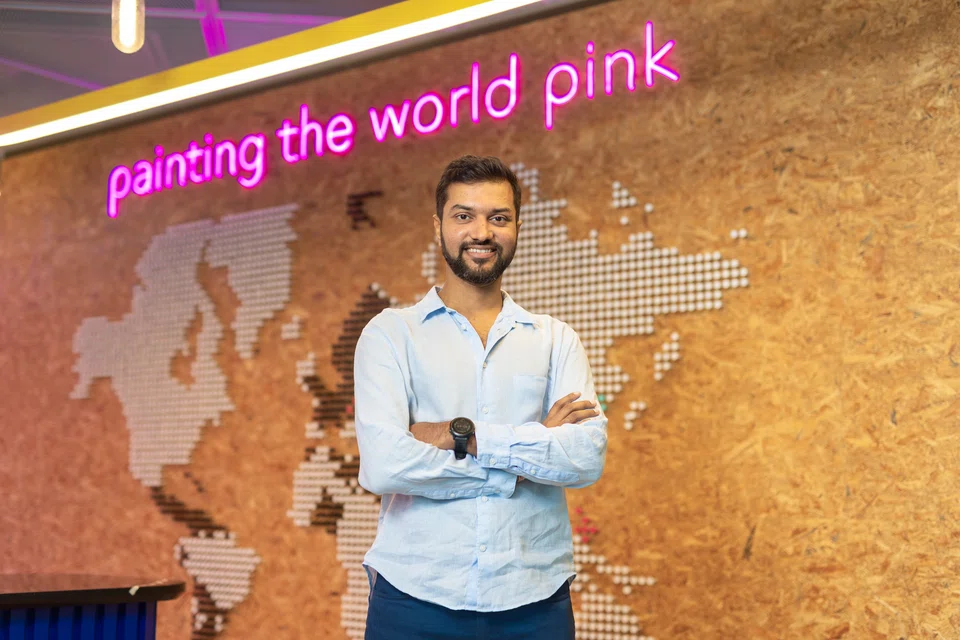
[SINGAPORE] It has been eight months since Bhavani Shankar Mishra took over the hot seat as Singapore managing director for food-delivery platform foodpanda – and his stint has not been without its challenges.
The latest development to hit the news headlines have been complaints about foreigners working as food-delivery riders. Already, enforcement actions have resulted in the arrest of three such individuals.
But Mishra remains focused on foodpanda’s three key pillars – quick commerce, affordability and convenience – to drive the business forward.
“The fact is that our strategy is laser-focused on what our consumers need, and not changing a strategy from one quarter to another quarter,” he told The Business Times. “What we promised, we are going ahead and delivering.”
Before his appointment in March this year, he was part of foodpanda’s Asia-Pacific logistics team. Therefore, he has thus been able to draw on his experience in a role focused on operations to help him execute his strategies.
“That’s the biggest thing that I brought from my previous role – which is hyper-operational – to this role, which is a good combination of strategy and operations,” he said.
For example, he has helped to build some of the features to ensure that foodpanda is compliant with the law on giving food-delivery jobs only to locals and permanent residents.
From checks during onboarding to verification that the rider is the one registered to the account, foodpanda has built in checks and balances to ensure it does not happen on its platform.
Then, there is the challenging landscape facing food and beverage operators in Singapore, which has seen a wave of closures.
But the way Mishra sees it, the number of closures would only be natural, given the higher base of restaurants here.
“At the same time, we see more new restaurants coming on board,” he noted. “We are onboarding the highest number of restaurants that we have in the last three years coming out of the pandemic.”
Onboarding is still outpacing churn from the platform, he added. The competition in the restaurant space also feeds into one of the strategic pillars of choice, where customers have a wide variety to pick from.
Choice as a strategic pillar extends beyond just restaurants, to what is being stocked for foodpanda’s quick-commerce business. This includes the kind of inventory available to customers, as well as the price points, which also feeds into the affordability pillar.
The groceries category, in particular, has been picking up and moving much faster than food delivery, pointed out Mishra. Working with partners Cold Storage and Giant, foodpanda’s platform now reflects the same deals on the app that customers would see in-store.
“That’s the evolution in the short time of eight months; I’m looking forward to the next four months to these evolutions,” he said.
Another bright spot for foodpanda in Singapore is the growth of its subscription business, pandapro. Currently, this contributes to more than half the business in Singapore, said Mishra, who declined to give more specifics.
A number of tweaks have helped grow the subscription business, from extending the trial period to one month from two weeks, to now giving a 20 per cent discount on restaurants and 3 per cent off on quick-commerce orders.
Some of the efforts are shown in foodpanda’s parent company Delivery Hero’s latest second-quarter financial results.
Revenue for Asia grew 26.4 per cent on the year to 1.1 billion euros (S$1.7 billion) in the second quarter of 2025, from 966.7 million euros.
The increase was despite gross merchandise value for Asia falling to 5.2 billion euros in Q2 2025, compared with 5.7 billion euros in Q2 2024.
Growth in the future will not be in huge jumps like in the past, as Mishra is now focused on making small improvements to drive incremental expansion.
“What excites us and keeps us motivated is having that additional 5 per cent, 10 per cent growth on top of what we did last year for the entire platform,” he explained.
Many small, fast improvements, in groceries and accessibility of features will be what will power foodpanda’s growth in Singapore in the year ahead.
The road ahead
There are plans to build on the three strategic pillars next year, as Mishra earmarks investments into app improvements around user experience and interface. “At the end of the day, we want to be seen as an affordable convenient platform for ordering things online,” he said.
Highlighting convenience, he wants to go beyond saving time for customers to making it easier for them to compare prices with similar products before they make their purchase. This adds up to more time savings for customers.
There will also be investments into artificial intelligence, with experiments in using robots as part of the delivery chain between pandamart and customers.
Rather than having riders pick up a delivery from a pandamart and sending it to a customer, robots could be used in the middle mile, shuttling a batch of orders to a hub where riders pick up these orders and complete the last mile of the delivery.
“These are pilots that we have to first think about, test out in a smaller space, work with the right authorities before we scale,” added Mishra.
This will be building on Delivery Hero’s success in countries such as South Korea, the first market in which the group ran its robot trials. The company has embraced the use of robots to overcome the shortage of riders.
Mishra is also focused on getting more non-pandapro users to turn pro in the coming year. Pandapro is a monthly subscription programme that gives its users deals and perks for food delivery, groceries and pickups.
He said that driving users to turn pro will not be undertaken at the expense of non-pro users. “Non-pro (users) still make up the biggest chunk of the eyeballs that we get on our app. While we want to improve a pro value proposition, that cannot come at the cost of non-pro (users) ... because it is the bigger user base that we have, while pro drives the biggest revenue share.”