Fu Yu Corp doubles down on biomedical bet
Added capabilities enable it to value-add and engage new customers, as well as pursue further collaborations with existing customers

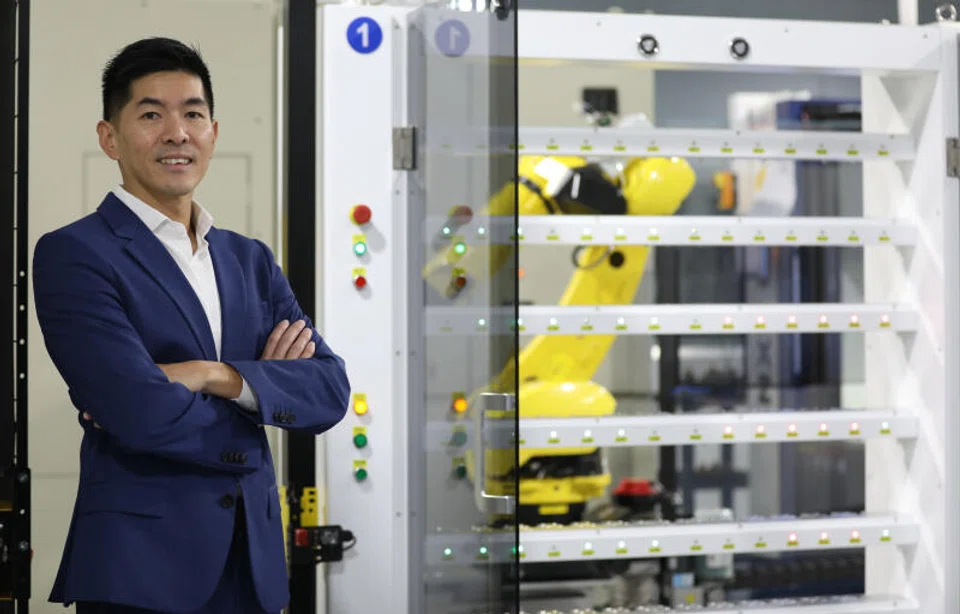
PRECISION plastic parts manufacturer Fu Yu Corp aims to increase sales from its biomedical segment to more than half of the group’s revenue within the next three to five years, up from the current 3 per cent, supported by the launch of its smart factory and new product design capabilities.
“The 3 per cent is evidence that it’s there,” said group chief executive officer David Seow. “We haven’t moved the needle yet, because for some of the capabilities that we’ve got since last year, it takes time. But the signs are there.”
The global biomedical devices market reportedly reached about US$600 billion in 2023, and is expected to grow 6 to 7 per cent annually, Seow said. It is “clearly a sunrise industry”, compared with Fu Yu’s other sectors, such as printing and imaging, consumer, automotive, and medical (where it produces casings), he added.
Biomedical equipment is harder to manufacture, making the barriers to entry and margins higher. The business is also stickier, with customers using the same product for “seven, 10, 15 years” after being trained to use them.
Creating capabilities
Fu Yu is planning to grow the more demanding segment with its recently opened smart factory in Tuas, which features advanced technologies, such as high-precision 3D printers.
The precision plastic parts producer is setting up its manufacturing execution system to enable performance monitoring, preventative maintenance, sustainability and traceability.
“These are the requirements that a lot of our new age, more modern customers need, because gone are the days where they just submit a purchase order, close (their) eyes, and then three months later, see whether it’s there,” said Seow.
Fu Yu has also been hiring talent with the technical capabilities in the biomedical field. Notably, it has established a new production introduction (NPI) team in Singapore.
Many medical original equipment manufacturers (OEMs) carry out research and development in Singapore, Seow said. Fu Yu’s team can engage them and propose cheaper, better materials, or those with shorter lead times, he said. It can also advise on designing for manufacturability.
“We used to be just a price taker… just a build to print company,” he said. Its customers were those that tendered their designs and chose the lowest-cost manufacturers. “Now, our value proposition is very different because of the NPI team.”
OEMs are increasingly looking to outsource their design functions, as they want leaner operations, he added.
On top of new customers, the company is “knocking on the doors” of customers for which it is already an approved vendor, trying to go beyond making simple medical equipment case parts for them, to manufacturing high-precision parts.
While these customers’ existing suppliers may be competition, “windows of opportunity” arise when there is a next iteration of a product, or when the previous provider underperforms.
Production can then be carried out in clean rooms, including in Fu Yu’s Malaysia and China facilities.
Choppy contributions
Fu Yu operates six factories: one in Singapore, which functions as the “hub”, two in Malaysia and three in China, which are the “spokes”.
For the half year ended Jun 30, 2024, its revenue surged 78 per cent year on year to S$126.7 million, from S$71.2 million in H1 of the preceding year.
Of this, S$54.8 million came from the manufacturing business. Some S$72 million came from the “opportunistic” supply chain management business, where Fu Yu acts as a middleman for suppliers and buyers of commodities.
In the manufacturing segment, higher revenues were posted for Singapore and Malaysia – up 6.6 per cent and 39.1 per cent respectively – but performance in China weakened, down 20.4 per cent.
The consumer segment led growth in Singapore in H1 2024, but Seow expects that biomedical will be the main growth driver in future, given recent efforts.
Explaining the sharp improvement in the Malaysian operations, he noted that more corporations have relocated from China to Malaysia. Penang – where one of Fu Yu’s facilities is located – is a “very mature manufacturing hub”. The country also has relatively lower political risk in the region, while having lower costs than stable Singapore.
Seow also highlighted the country’s general macroeconomic recovery, with pick-ups in orders now following late 2022 and 2023’s over-inventory of medical products. The consumer segment has also been picking up.
But in China, the sluggish domestic economy has dragged business activity.
China conundrum
Beyond the uncertainty of China’s long-awaited economic recovery, the US-China tussle poses a threat. Upcoming elections in the US could also escalate trade tensions, resulting in further tariffs on China-made goods.
Fu Yu is taking a cautious “wait and see” approach in this market. But with the departure of international businesses, it is also pivoting to a China-for-China and China-for-Asia strategy.
“While we are growing our local Chinese customers, we have seen in the past that drop in orders from our international customers,” Seow said.
It has been courting domestic customers, but the long process leading up to final production means that the fruits of its labour have not yet been reflected in its financials.
He said it takes about nine months before any revenue is realised for consumer products. For biomedical products, which require regulatory checks, this can take up to two years.
Another headwind is supply chain problems due to the ongoing Russia-Ukraine war and the Middle East conflict. However, Seow is confident that Fu Yu’s centralised procurement in Singapore provides a global view, with opportunities to redistribute resources or seek new suppliers when shortages or freight issues occur.
Keeping confident
Despite some challenges, Fu Yu believes that the future is bright. The group recorded a net profit of S$72,000 in the first half of 2024, reversing from the previous year’s net loss of S$3.9 million.
In 2024 so far, the group managed to secure more new customers than in the year before. It has also identified India as a potential market, securing its first ever customer there recently.
The company has a young management team, in contrast to its founder-led industry peers that are likely to undergo leadership changes. Customers take comfort in knowing that the people they speak to now will be around for the next 15, 20, 30 years, said Seow.
“Before our time, there was a lot of rationalisation of factories or businesses, cutting all the loss-making factories and holding on to the profitable ones,” he added. “But they were not really growing the business. They were not improving or upgrading the capabilities.
“So right now we’ve done that hard work... We have a new value proposition.”