GL has deeper value than just 70¢ a share: analysts
They contend company's 18 hotel assets are 'highly undervalued'
Singapore
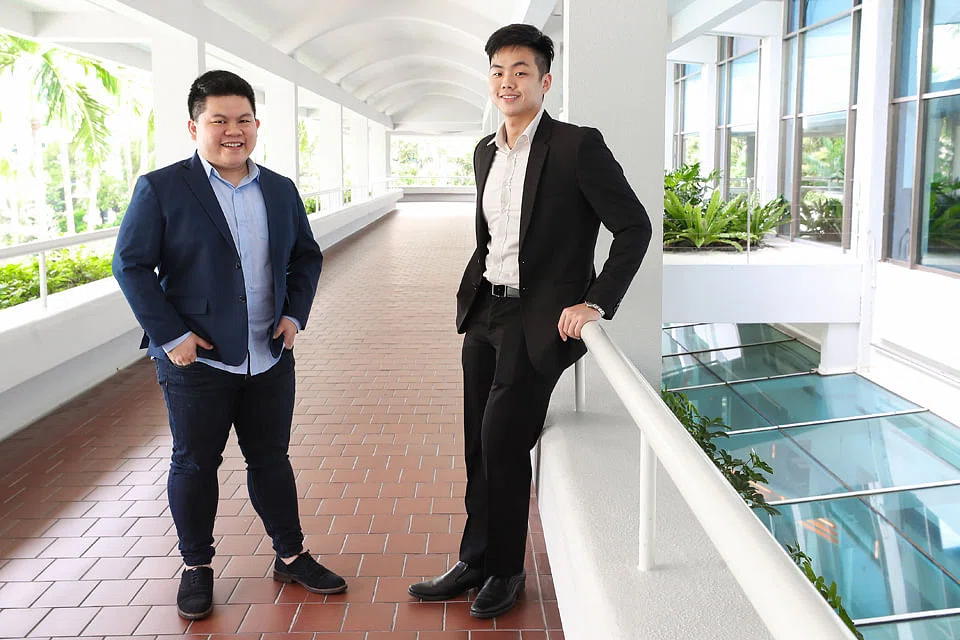
MALAYSIAN tycoon Quek Leng Chan is trying to take GL private on the cheap, say Lim & Tan Securities analysts. They are suggesting shareholders hold out for a better offer.
Given that shares of GL have climbed above the offer price of S$0.70 - closing at S$0.715 on Thursday - the market may be in agreement.
Analysts Nicholas Yon and Ethan Aw calculate that the hospitality and oil & gas company is worth at least S$1.16 per share. (see amendment note) This is based on a 30 per cent discount to their estimated fair value (see table).
This is because GL's 18 hotel assets are "highly undervalued" on its books, they said. The hotels have never been marked to market, and are instead valued at book minus depreciation.
GL is more than 70 per cent owned by Hong Kong-listed Guoco Group, which is in turn controlled by Quek and other members of the Quek and Kwek families.
A revaluation by Christie & Co in 2018, when another family-controlled unit GuoLine tried but failed to privatise Guoco Group, put the GL portfolio at £1.07 billion (S$1.94 billion or US$1.47 billion).
This excluded four loss-making hotels, conservatively valued at zero.
In GL's latest annual report, the group's hotel portfolio in the United Kingdom had a carrying amount of US$949.3 million as at end-June 2020 - roughly half a billion less than Christie & Co's valuation in 2018.
Also insightful is the compulsory sale of Thistle Euston Hotel in 2017 for £40 million, or about six times the initial cost price.
The UK Secretary of State for Transport had acquired the hotel to build a high speed railway line.
Like the Euston hotel, many of GL's properties would have appreciated substantially in value over time given their prime locations in London: close to the Tower of London and Trafalgar Square for instance.
Equity analysts have flagged the undervaluation of GL's hotel assets and its shares before.
But the stock has been affected by the perennial underperformance of its property development business on Molokai Island in Hawaii as well as its UK casino Clermont Club. The latter has since been sold.
The offer for GL is being dangled as an exit for shareholders at a premium to historical trading price, but it is also at 0.73 times book value.
The offeror cited the double whammy of falling oil prices and hotel occupancies, which hit GL's top and bottom line hard in the second half of 2020.
Yet, both oil prices and hospitality may be on an upturn. Vaccine development news, although mixed, is generally positive. And oil prices are now above US$50 a barrel.
In addition to its hotel portfolio, GL owns 55.11 per cent of the rights to a 2.5 per cent royalty on oil and natural gas production in the Bass Strait in Australia.
If hospitality and hydrocarbons seem an odd combination, GL's management has explained in the past that the two asset classes are counterbalanced because high oil prices affect the cost of jet fuel. As higher fuel prices may discourage travel, hotels would stand to gain when oil prices fall. But Covid-19 thrashed both sectors simultaneously in 2020.
Mr Quek had tried to take GL private in 2005. His first offer of S$1.20 a share was later raised to S$1.25 a share.
But his attempt was thwarted by fund managers.
There have also been multiple failed attempts to privatise Guoco Group.
A 2018 offer at HK$135 per share at a 30 per cent discount to book was voted down by shareholders. The other two offers, in 2012 and 2004, were made at HK$88 and HK$58 per share, respectively.
But Mr Quek has a lower hurdle to cross this time than in the past.
Since failing to privatise GL, Guoco Group has been raising its stake on the open market.
Mr Lim and Mr Aw cited Bloomberg data showing that from 2017 to 2019, it has accumulated 92.3 million shares for S$73.9 million. This works out to an average cost of S$0.80 per share.
To privatise GL, Guoco Group needs acceptances amounting to 90 per cent of the total shares.
Since the offer was launched the offeror has bought a further 35.1 million shares for S$24.6 million, taking its effective stake from 70.84 per cent to 73.4 per cent.
The margin Guoco Group needs to win is thin, compared to in 2005. But shareholders can still hold on to their shares in hopes of a better price.
Amendment note: The article has been amended to reflect a change in valuation by the analysts.