With new S$10 million HQ, Jumbo Group looks to Shanghai-focused China strategy, premium dining for growth
Group CEO Ang Kiam Meng is confident that the group’s bottom line will improve in FY2027 as its investments begin to bear fruit

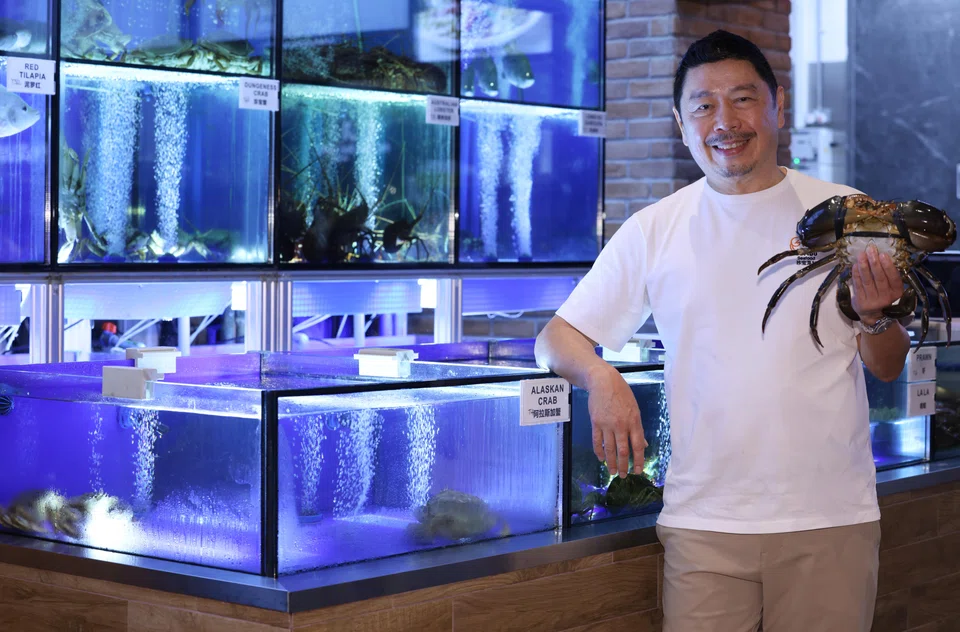
[SINGAPORE] Catalist-listed seafood restaurant group Jumbo is set to expand its footprint in China and South-east Asia, even as it focuses on diversifying its business at home through premium dining concepts and a push into institutional catering.
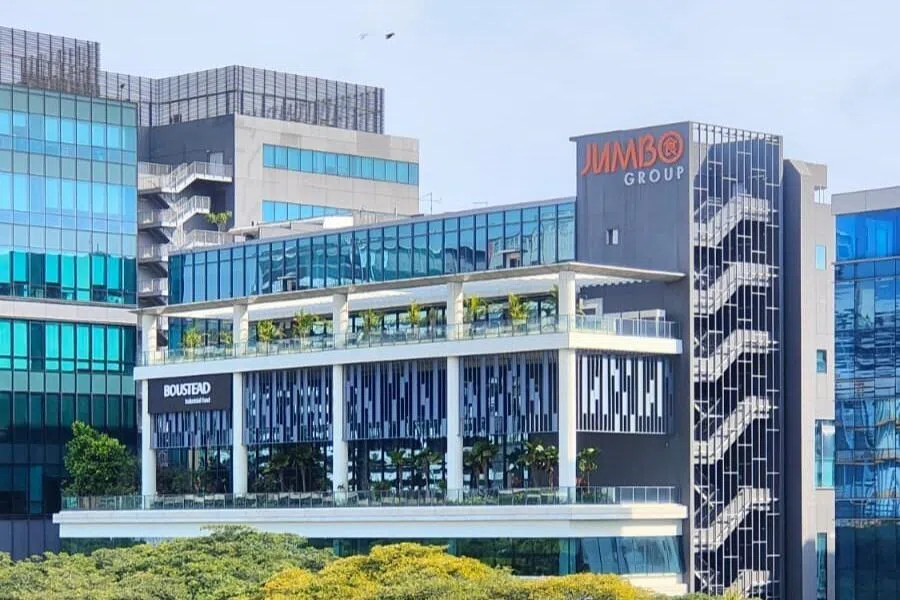
Underpinning these growth plans is the group’s S$10 million investment in a new headquarters (HQ) in Tai Seng Street. The facility consolidates its corporate office and central kitchen into a single site at over 90,000 square feet – nearly double the size of its previous premises.
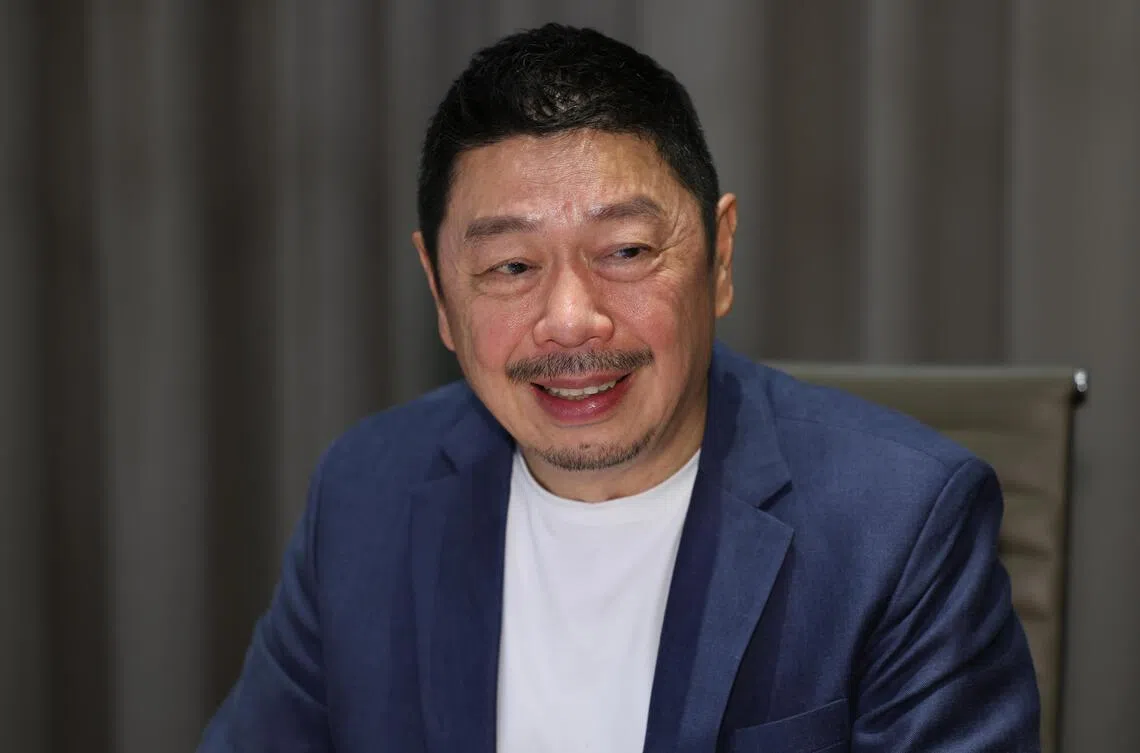
Speaking to The Business Times in an exclusive interview, Jumbo’s group chief executive officer and executive chairman Ang Kiam Meng said the move – which was entirely funded by internal reserves – was necessary to future-proof the business, as the group’s operations had begun to outgrow its previous facilities.
Its former office and central kitchen operated out of different buildings at Kaki Bukit, which Ang noted hindered productivity. The new central kitchen, at twice the size of the previous site, will also boost production capacity and scalability.
Said Ang: “We have been searching for a building like this for a long time – one that can showcase all of Jumbo’s brands and capabilities under one roof.”
This includes a logistics centre, a training academy and new food hall concept Jumboree.
Relocation to the new HQ began in May 2025. The central kitchen is expected to be fully operational by end-June.
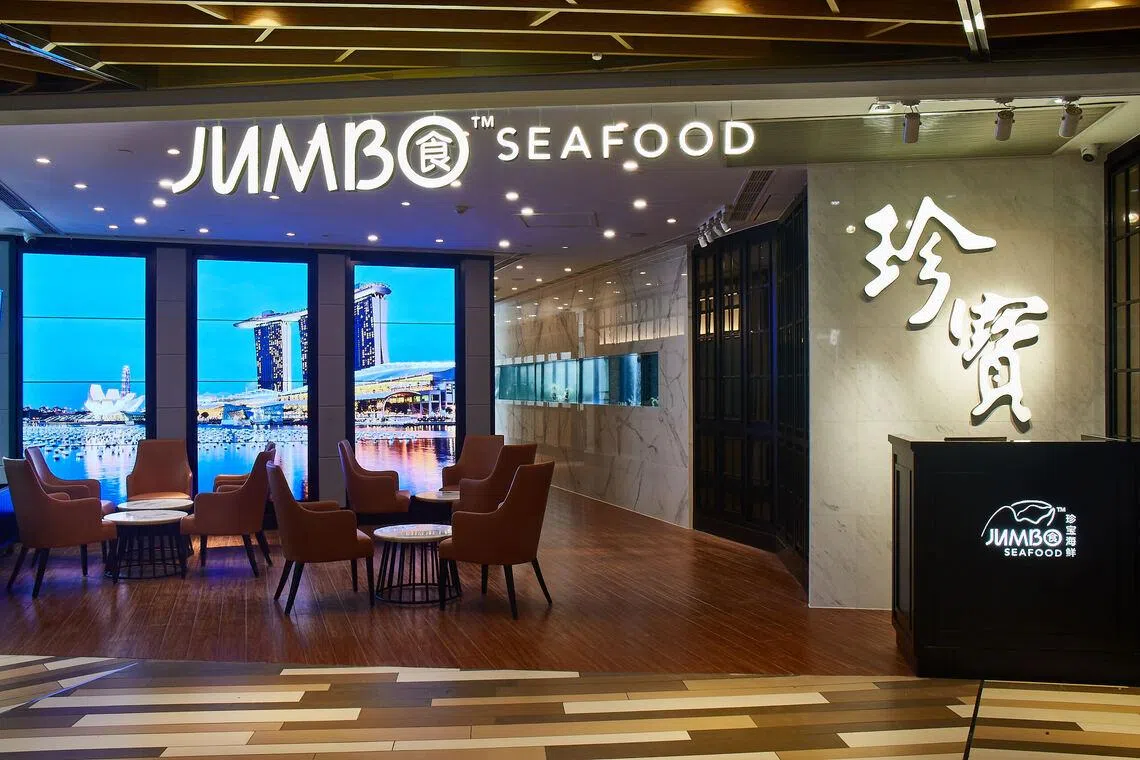
Established in 1987, Jumbo Group currently operates a portfolio of 13 F&B dining concepts. This includes flagship brand Jumbo Seafood; hawker brands Ng Ah Sio Bak Kut Teh and Kok Kee Wonton Noodle; as well as foreign brands such as Tsui Wah.
Heavy investment in Jumbo’s new HQ, coupled with the opening of new outlets, contributed to higher operating expenses in the group’s first half ended Mar 31, 2026. Therefore, net profit fell 22.3 per cent to S$6.2 million, despite revenue rising 7.9 per cent to S$105.1 million.
However, Ang is confident that the company’s bottom line will improve in the next financial year, as these investments begin to bear fruit “for 2027 and beyond”.
Doubling down on Shanghai
Backed by the new HQ’s stronger operational capabilities, Ang believes Jumbo is now well-placed to step up its internationalisation efforts – starting with a sharper strategy for China.
Following a strategic review in 2025, the group will focus on opening more Jumbo Seafood restaurants in Shanghai, a city Ang views as generally more receptive to foreign concepts.
It may also consider closing underperforming restaurants in other Chinese cities as their leases expire, redeploying resources to Shanghai instead.
“Shanghai is huge, cosmopolitan and very vibrant. There’s good spending power. The people there are very open to new ideas,” he said.
He noted that Jumbo previously attempted to establish a presence in too many Chinese cities – a move which backfired. It ended up closing four outlets, of which two were Jumbo Seafood restaurants, in recent years.
Today, there are nine Jumbo Seafood restaurants in China across seven cities – with three in Shanghai – and two Ng Ah Sio Bak Kut Teh outlets in Sanya. Operations in China account for 10 per cent of group revenue, with the rest from Singapore.
“Spreading our resources so thinly is not advisable especially for China, which is so diverse in culture and taste across cities,” said Ang. “So with this move to focus (on Shanghai), we’re very optimistic about our prospects in China.”
Still, economic headwinds have dampened Chinese consumer sentiment, with Ang noting that more Chinese diners are moving away from lavish fine-dining and towards value-for-money F&B options.
The initial pullback in spending made a dent in the group’s China revenue in 2023 and 2024, though its restaurants have since seen a turnaround after redesigning their menus to cater to smaller wallets.
This includes lowering the price of dishes such as Jumbo’s signature Singapore chilli crab, on top of adding more pocket-friendly options such as chicken, said Ang.
In South-east Asia, the group will open a Jumbo Seafood restaurant in Jakarta – its first in Indonesia – in July.
It is also looking for a local partner to re-open its Jumbo Seafood restaurant in Ho Chi Minh City, Vietnam, though Ang declined to give a timeline for this. Jumbo also operates F&B outlets in South Korea, Cambodia, Thailand and Japan.
Venturing into institutional catering, premium concepts
Even as Jumbo Seafood remains the group’s cash cow, Ang has continued to develop new revenue streams and F&B concepts to diversify the business.
One is in institutional catering, with Jumbo looking to supply meals to hospitals, hotels, school hostels and staff canteens in Singapore.
To support this, it has built a dedicated catering kitchen at its new HQ and incorporated a new subsidiary, Jumbo Catering Services, in December 2025.
Ang noted that the group previously lacked the infrastructure to pursue catering at scale, with orders fulfilled at one of its restaurants and confined to corporate events and weddings.
Another growth area is Jumbo’s newer premium dining concepts, as the group looks to capture the growing number of affluent tourists visiting Singapore.
“We noticed that there were segments of customers looking for something more elevated than casual dining,” said Ang, also pointing to the rise of family offices and relocation of high-net-worth individuals to Singapore.
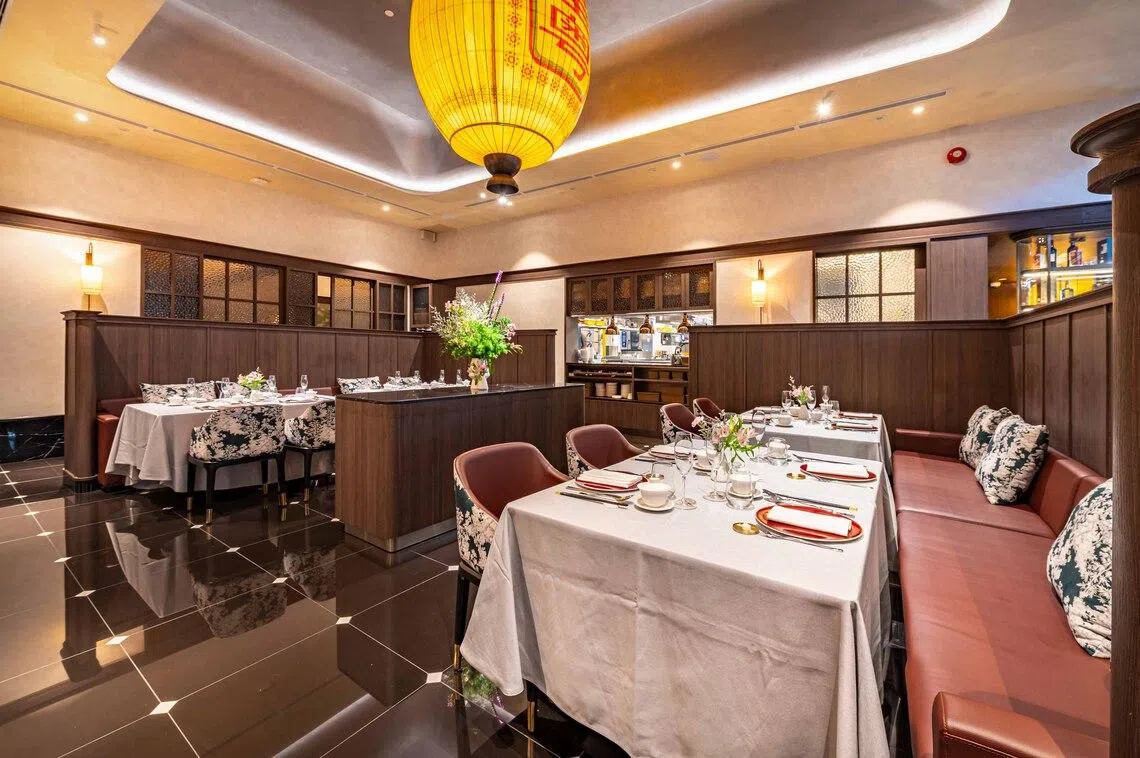
To that end, the group launched fine-dining concept Jumbo Signatures at Marina Bay Sands in 2022. It branched out further in June 2025, opening Jumbo Premium – billed as a step up from Jumbo Seafood – and premium Cantonese restaurant Xing Yue Xuan at Resorts World Sentosa’s Weave.
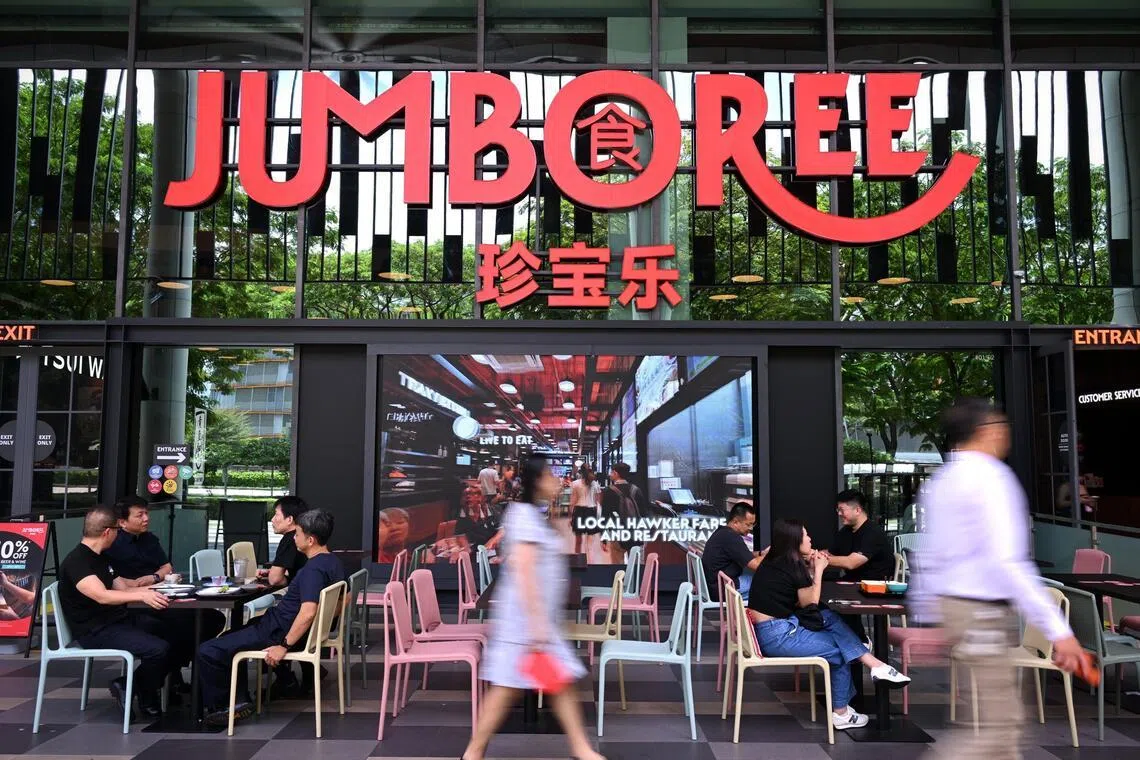
Ang also sees opportunities to grow the group’s local customer base. Its latest F&B venture is Jumboree Food Hall, opened in February at its Tai Seng HQ.
The air-conditioned food court – spanning nearly 18,000 sq ft – houses more than 10 of the group’s brands, including new seafood zi char concept Jumbo 1987. There are also live band performances in the evenings.
The Covid-19 pandemic, in particular, exposed the risks of relying too heavily on tourist spending-dependent business segments such as Jumbo Seafood, he said. Jumbo suffered three straight years of losses from FY2020, as border closures curtailed inbound tourism.
“During Covid-19, food courts and kopitiams were doing okay,” he recalled. “I realised we cannot put all our eggs in one basket, and should spread our resources to address other market segments.”
East Coast Seafood Centre outlet “an iconic store”
These diversification efforts come at a timely juncture, as the group’s newer F&B ventures are expected to help cushion the loss in revenue from the impending closure of its flagship Jumbo Seafood outlet at East Coast Seafood Centre, announced on May 29.
The longstanding branch will cease operations on Sep 30 after its lease expires, as landlord National Parks Board plans to redevelop the centre.
Noting the significant buzz online when the news broke, Ang emphasised that the closure was unrelated to business performance.
Of its current six Jumbo Seafood restaurants in Singapore, the East Coast outlet is its top-performer in terms of sales, contributing 14 per cent of total group revenue.
Said Ang: “It’s an iconic store, and of course we hope to come back to the spot again. We even had Chinese visitors call up our Chinese outlets to inquire about the closure.”

He intends to bid for a new site tender if one is launched, contingent on the redevelopment plans. To thank customers for their support, Jumbo will launch a series of F&B promotions in the coming months.
In the meantime, Ang hopes to open three more Jumbo Seafood restaurants in the heartlands by end-2027 – particularly in the west and north, where the brand has no presence.
When asked about succession plans, Ang, the group’s 63-year-old second-generation leader, said he intends to hand over the baton to his two eldest daughters when he eventually retires. He has three daughters and a son.
His daughters – one 36, the other 37 – have spent a decade working at Jumbo across different departments. Ang has also been grooming other young professionals in the organisation for management roles.
“We’ve been in business for almost 40 years. Many of the old guard are reaching retirement age, and there will come a time when we will need to reshuffle (the team),” he said.