

Rex International’s diversification moves draw doubters

SINGAPORE Exchange Regulation (SGX Regco) appeared to have read the market’s mind – or misgivings – with its spot-on queries to Rex International Holding on its recent diversification moves.
Although the mainboard-listed company responded to these queries in some detail, Rex is unlikely to erase market doubts quickly enough.
Rex owns oil exploration and production assets in Norway and Oman. The company was listed on the junior Catalist board until March last year, when it ascended to SGX’s mainboard.
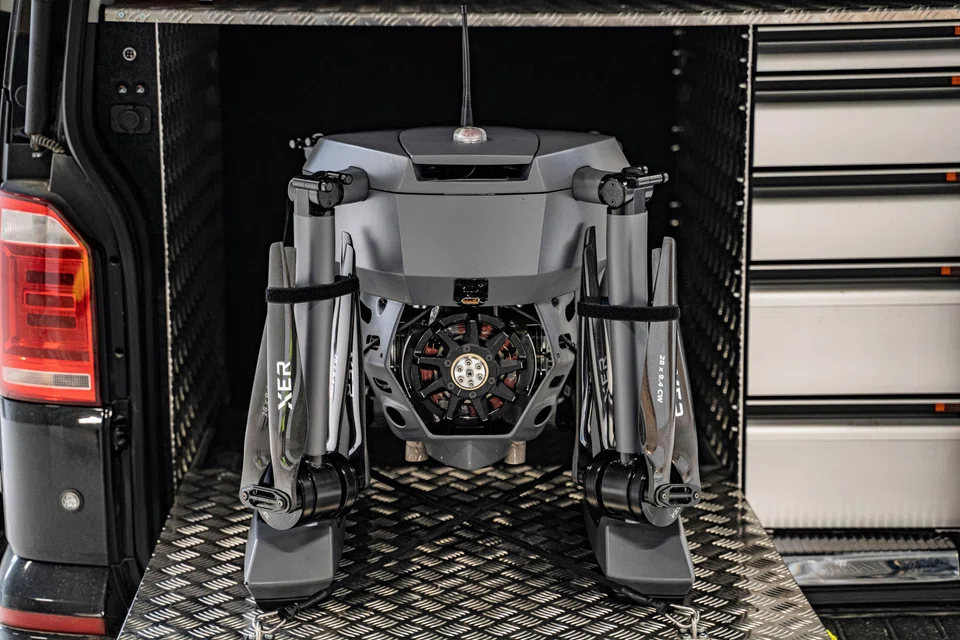
Since then, Rex has announced investments in a commercial drone maker called Xer Technologies, and a Swedish medtech startup called Moroxite T.
The investment in Zurich-headquartered Xer was done over two transactions: Rex first paid US$1 million for a 40 per cent stake, and then another US$1 million to raise its stake to 53 per cent. Rex has committed to inject a further US$3 million, subject to the achievement of certain technical and sales milestones.
Rather glaringly, the latest transaction values the drone maker at a significantly higher price even though it is still loss-making. Xer was in the red by US$189,000 for the six months ended June 2022.
Rex explained that it isn’t “uncommon” for companies developing new technologies to make losses at the initial stage. It also said the acquisition would enable it to become a majority shareholder of Xer, which it believed would be accretive to the group. Rex is hopeful that Xer, which sold its first drone through a tender to the Swedish government, will sell more units this year.
The acquisition of Moroxite T, meanwhile, was at a nominal figure of US$0.10. But it also comes with a commitment to invest up to US$4.12 million, subject to certain conditions. This amount includes a “non-refundable” capital contribution of US$900,000 to Moroxite T, even if the transaction fails to get shareholders’ nod at an extraordinary general meeting slated to be held by May 30.
Moroxite T, which is developing a platform for targeted cancer therapy, earned nothing for the six months to June 2022.
Granted, Moroxite T’s solution is a potential game changer for treating tumours if it eventually comes to market. Yet, there is significant risk for Rex’s shareholders.
It doesn’t help that both deals are interested party transactions (IPTs).
Rex’s controlling shareholders are Swedish brothers Hans Lidgren and Karl Lidgren. The latter is also the company’s executive director. Both Xer and Moroxite T are being acquired by Rex from Lidgren family members.
“We have no way of knowing what other assets the Lidgren family would like to inject into Rex. It is not at all clear the Xer and Moroxite deals will maximise value for minority shareholders,” said Nicolas Van Broekhoven, who publishes on Smartkarma.
In a report issued on Tuesday (Mar 21), UOB Kay Hian deemed Rex’s recent acquisitions, which could total US$8.2 million, a “concern”. It raised questions about the company’s commitment to its oil and gas businesses. It also said the IPTs could lead to governance-related concerns among some investors.
Not all is fine and dandy at Rex’s mainstay oil business either. Its recently released report card for FY2022 was disappointing. At a time of elevated oil prices, the group swung into the red with a US$1 million net loss, from a profit of US$67 million in the previous year.
The chief culprits for the weak showing were production stoppages in both Norway and Oman. Rex’s Malaysian ambition to develop oilfields under a pact with the country’s state-owned Petronas is also uncertain, given rising equipment costs as a result of high oil prices.
These concerns have clearly weighed on the stock. Deemed a favourite pure oil play on the SGX not too long ago, Rex shares have lost more than 35 per cent this year.
Rex may not be done picking up new non-oil related businesses, but it should expect its next moves on the diversification front to draw greater scrutiny. A burst of positive news or better visibility from the group’s upstream oil activities could remedy the market’s souring sentiments over the firm’s prospects. But for now, this too remains in doubt.
TRENDING NOW

Inside Singapore’s government team that kills its own products

Once staunchly pro-China, Malaysian Chinese businesses are now distancing themselves from Beijing

Cliff Tan has 7 million followers and a 4-month waitlist. Why won’t he expand his business?

Grab CEO’s wife Chloe Tong on life with Anthony Tan and finding her purpose

