Sensors, cameras and microphones: How F1 teams tap data, AI to make real-time decisions on the track
Each car usually generates more than 1.5 terabytes of data across a single race weekend

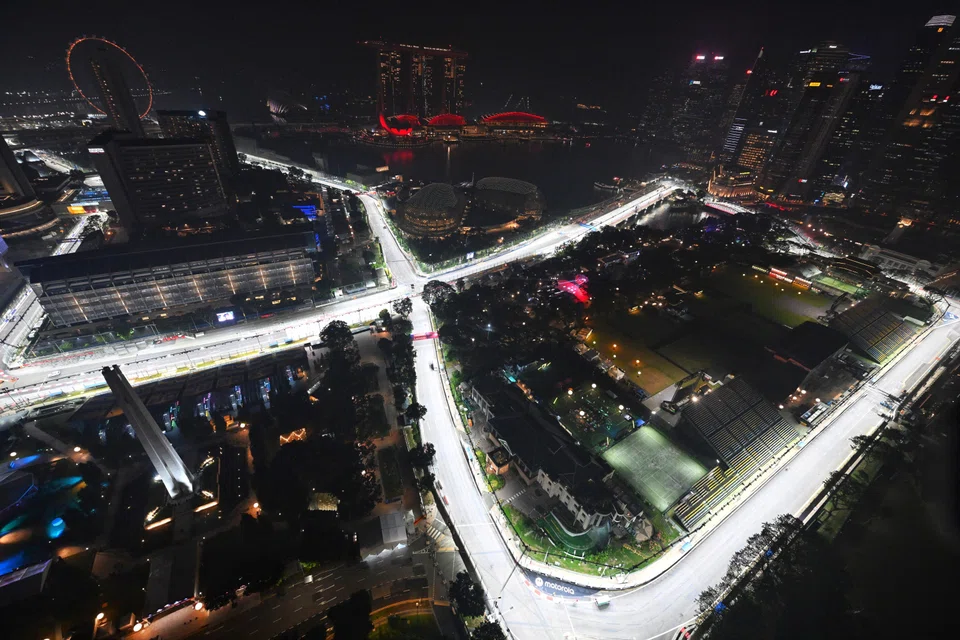
[SINGAPORE] Formula One (F1) is not just about the fast cars, bright lights and the high-octane adrenaline. There is also an immense amount of data – hundreds of terabytes of it or more – that the drivers and officials study and analyse before, during and after the races to finetune their strategies.
At every F1 race around the world, each car typically generates more than 1.5 terabytes of data across a single race weekend.
A senior executive from the Aston Martin Aramco F1 team – one of the 11 participating teams this season – said their cars are equipped with more than 200 sensors.
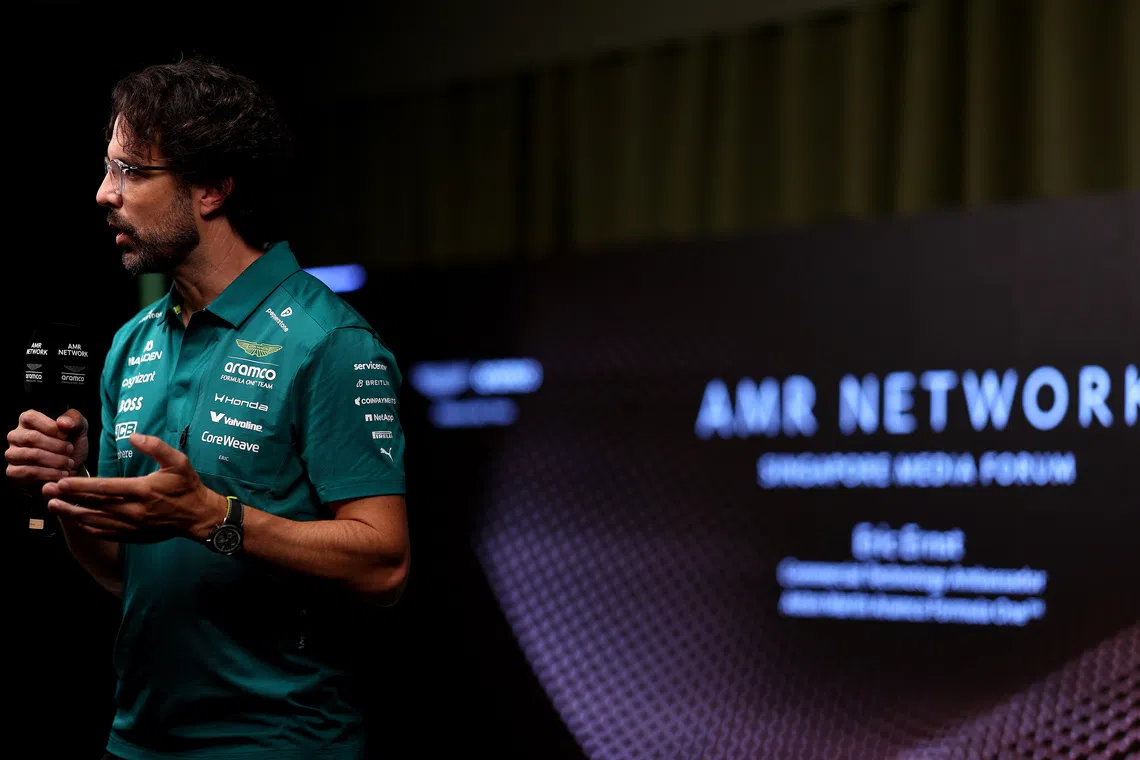
The live data that is collected is then quickly streamed to more than 60 engineers at the team’s mission control in Silverstone, England with just 0.3 seconds of latency, said Aston Martin’s commercial tech ambassador Eric Ernst.
Each car generates more than a million data points a second, he said at an event at the Singapore Grand Prix on Saturday (Oct 10) ahead of the main qualifying session that involved the team’s racers Fernando Alonso and Lance Stroll.
Ernst said that Aston Martin then uses artificial intelligence to sieve out the data points that matter.
These insights, he added, will eventually translate to actual decisions that will be made on the racetrack. One example of how real-time race data is used is to adjust the brake bias of vehicles on the go, he said.
Data integral for every driver
Still, some drivers say that data is not everything. For Jak Crawford, the reserve driver for the Aston Martin Aramco F1 team, his take is that racing is “more of an 80 per cent feel and 20 per cent data”.
“If you are struggling with oversteer in the car, it might not be visible on the data. But you can feel it,” said the 21-year-old American. “(We are) the ones who have to... feel comfortable and drive the car.”
He noted, however, that data remains integral for every F1 racer.
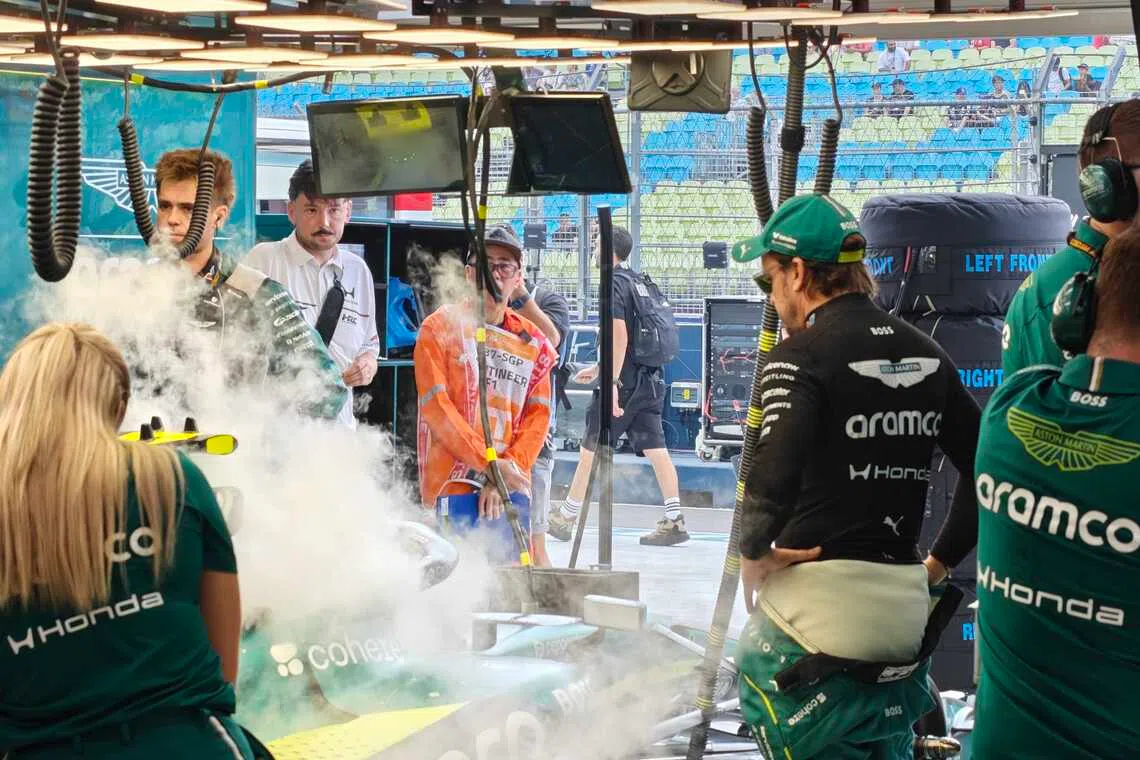
“I have been looking at data ever since I was seven,” he said, adding that he does not feel overwhelmed by it.
Even veteran drivers, such as 45-year-old Alonso, use data as part of their race, said Crawford.
He was speaking to the media during a garage tour on Saturday, the same day as the first Sprint race to be held in Singapore.
The F1 Sprint is a short, 100 km race, which is about 21 laps around the Marina Bay Street Circuit. Red Bull Racing’s Max Verstappen won the inaugural event in Singapore, ahead of Ferrari’s Lewis Hamilton and Charles Leclerc.
The Sprint meant that F1 teams at the Singapore Grand Prix could get just one practice session on the tracks, instead of the usual three.
Crawford, however, said it was business as usual for the team with most of the hard work already done even before the first practice session.
“We do a lot of running in the simulator,” he said, noting that he has spent “hours” in the simulator accounting for various factors on the track, such as the high humidity and wet weather.
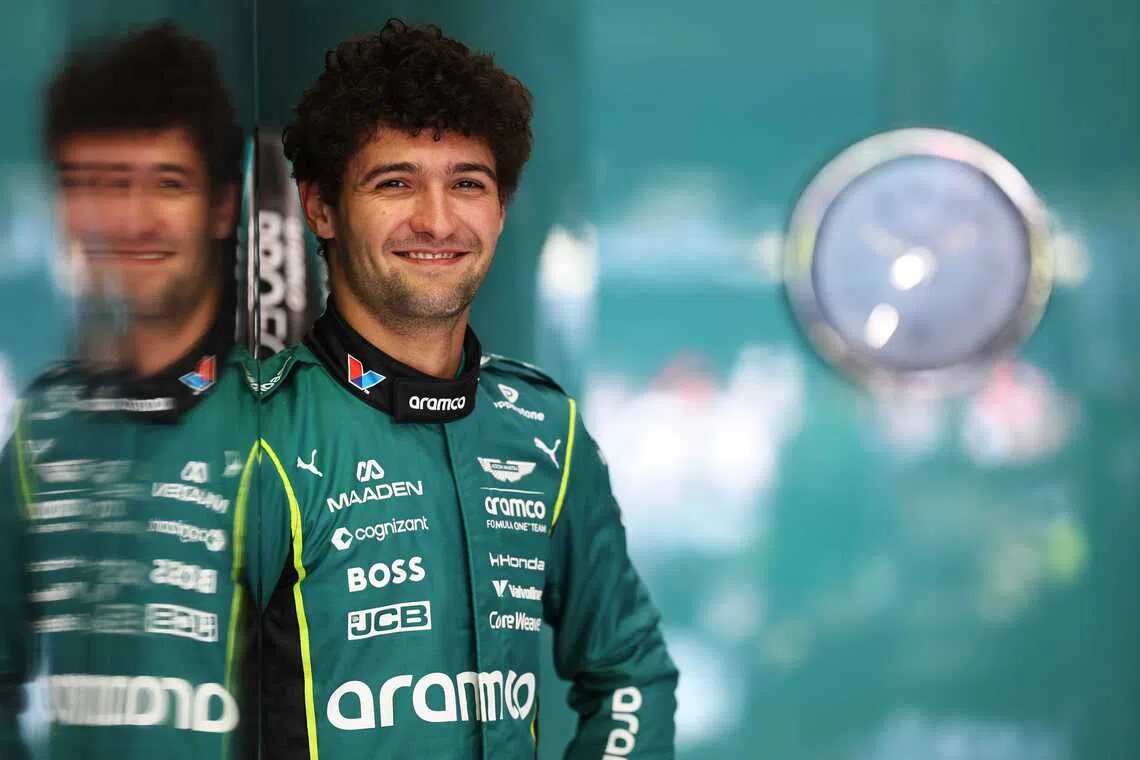
The main drivers and reserve drivers across all 11 teams put in hours in simulators to get a better understanding of the track, while also fine-tuning their driving styles.
AI off the track
The F1 teams are not the only ones on the track that are busy processing large volumes of data.
For the race to reach TV screens all around the world, Tata Communications – which has supported F1’s broadcast operations since 2012 – built a network designed to handle 650 TB of data across a single race weekend.
The data comes from various sources such as more than 100 on-board cameras, 28 ultra-HD cameras and 150 microphones across the racetrack.
In addition, Singapore is “one of the more technically demanding events on the F1 calendar” due to several operational complexities, said Dhaval Ponda, global head of media and entertainment services at Tata Communications.
Some challenges he listed include Singapore being a street circuit with the race held at night, as well as the dense urban environment around the track.
“Urban environments can make route diversity more complex due to shared utility corridors and communications infrastructure,” he said.
To ensure the consistency of the stream, Tata utilises AI-powered monitoring to spot anomalies and “predict potential service degradation”, he added.
This allows the team to reroute traffic before the issues impact race operations.
“From a broadcast perspective, the challenge is ensuring that viewers experience the same seamless race regardless of the complexity happening behind the scenes,” said Ponda.
In addition, Tata engineers began laying 58 km of fibre around the circuit before the race to ensure the performance and low-latency connection.
Turning complex data into accessible insights
IBM – the official fan engagement and data analytics partner for race team Scuderia Ferrari HP – also utilises AI to optimise the experience of users using its application.
To do so, the app’s AI features draw on Ferrari’s current and historical data that is managed and curated on IBM’s own data platform, said Catherine Lian, general manager and technology leader at IBM Asean.
“(AI) enables fans to explore the team, drivers and racing history through the AI companion, while also turning complex race and performance data into accessible insights, summaries and interactive experiences,” she told The Business Times.
The application – which has seen monthly active users increase by 23 per cent over the past year – also uses AI to generate race summaries using its own large language model.
Every AI-generated race summary is reviewed by both IBM and Ferrari teams before it reaches fans, said Lian.
“This combination of trusted data, AI governance and human oversight helps ensure fans receive timely insights while maintaining confidence in the information they see,” she said.