

Singapore capital eyes Hong Kong’s commercial bargains, student housing plays
City-state accounts for 46% of total foreign commercial investment volume in year to date

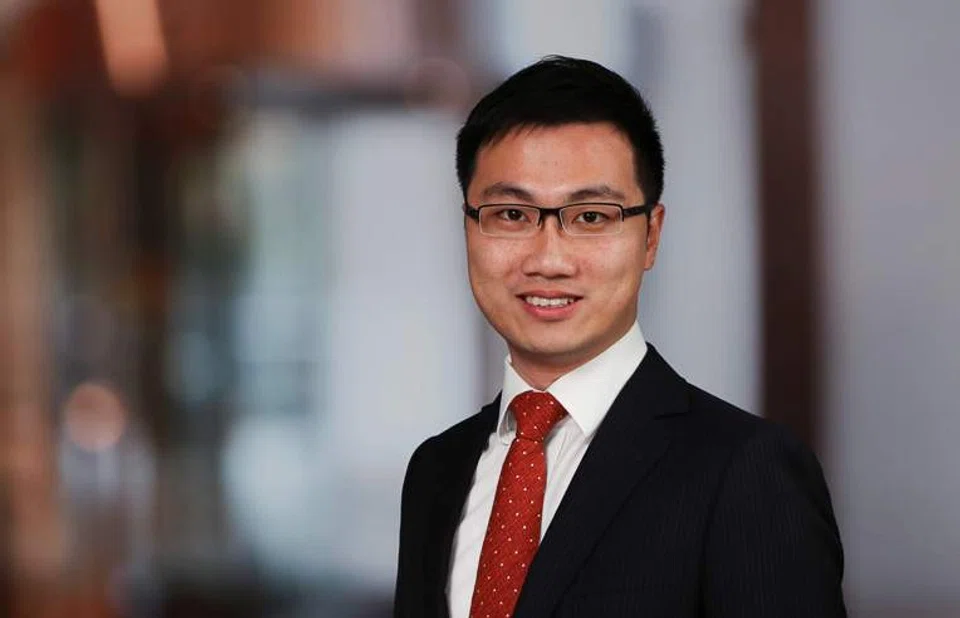
[HONG KONG] Singapore capital is flowing into Hong Kong’s property market, targeting yield-driven commercial assets as they are easier to manage remotely, said Godfrey Cheng, senior director and head of the chief investment office in Savills Hong Kong.
He said in an interview with The Business Times that Singapore buyers are gravitating towards commercial assets where rent collection and management are more straightforward; residential deals are a tougher sell.
He said of these investors: “They prefer commercial, which is easier to handle; for residential, they may face very fierce competition from local and Chinese investors.
“(Residential properties) are more local, so it may be difficult for Singaporeans to understand.”
Singapore investments in Hong Kong real estate in transactions of HK$50 million (US$6.4 million) and up are growing. The 2026 year-to-date figure is around 25 per cent higher than the full-year investment amount in 2025, noted Savills.
“Singapore is currently the dominant overseas capital source in Hong Kong commercial real estate,” said Esther Liu, director and head of research and consultancy for Greater China in Knight Frank.
“In the year to date in 2026, Singapore accounts for 46 per cent of total foreign commercial investment volume, up significantly from below 20 per cent in the 2024 to 2025 period.”
The scale of recent activity shows a variety of commercial transactions in offices, residential and retail sectors.
Most recently, New World Development is in talks to sell its 50 per cent stake in the Hyatt Regency hotel in Kowloon to Singapore-listed UOL Group, in a potential transaction that would value the property at around HK$3 billion. Abu Dhabi Investment Authority, which owns the other half of the hotel, is also in discussions to sell its stake to UOL.
But Cheng noted that, despite the deal flow, Singapore players could find it hard to compete because their due diligence could take months; local buyers move much more quickly.
That gap is compounded by differing ownership styles: Singapore family offices tend to be more structured, run by hired industry experts; their Hong Kong counterparts favour a more hands-on, family-run approach, he said.
Reeves Yan, managing director, head of capital markets, Hong Kong, CBRE, agreed that there is more Singapore capital eyeing Hong Kong now due to the deep adjustment in price and market recovery.
Student housing stands out
Among commercial opportunities, purpose-built student accommodation (PBSA) stands out as a key opportunity for Singapore investors, Cheng said.
CBRE’s Yan, citing deals by Singapore Exchange-listed Wee Hur and Centurion, said that student housing is in the cross hairs of most Singaporean capital, with the living sector, a broader classification, being the primary focus now.
In a statement, Wee Hur noted that its asset will be repositioned as PBSA, subject to regulatory approvals; this will be the company’s second such investment in Hong Kong, following Starvia by Y Suites on Fortress Hill.
The company said that its moves were driven by strong fundamentals: Government policy has been to grow the city as an international education hub, but the supply of PBSA has not kept pace. There is thus a shortage of this type of housing.
Centurion entered Hong Kong’s rental housing market in 2024, securing master leases for two student housing projects in Kowloon. This month, it signed a provisional agreement to acquire the Yan Woo building at 70 Java Road for HK$364 million.
Knight Frank’s Liu noted that offices continue to capture the bulk of the capital, but student housing is seeing the sharpest rise in interest.
“Student accommodation is in high demand, supported by non-local student quotas and steady yields, as seen in the institutional joint-venture acquisition of Hotel Ease Mong Kok,” she said.
“With convertible hotel supply tightening over the next one to two years, competition for these assets is heating up fast.”
Savills’ Cheng said that Singapore investors see interest in the space because of their exposure to hotel and PBSA deals at home, in Japan and in Australia.
A report by Savills in June, titled Apac Living Sectors: How Investment Strategies are Evolving, noted 13 instances of hotel conversions in the past year in Hong Kong, worth about HK$6.4 billion, with the bulk of these properties acquired for student housing or co-living conversion.
However, the report cautioned that deals in this space in Hong Kong are bespoke: Demand-side underwriting depends on the inflow of mainland students for the Hong Kong strategy, which is policy-driven.
It also noted that capitalisation rate evidence on stabilised converted PBSA remains limited, and district-level conversion approvals are not standardised.
Office assets beyond CBDs a harder sell
Cheng noted that commercial office rents have risen sharply in 2026, with Savills making a full-year forecast of 5 to 7 per cent growth for prime Central and Tsim Sha Tsui rental.
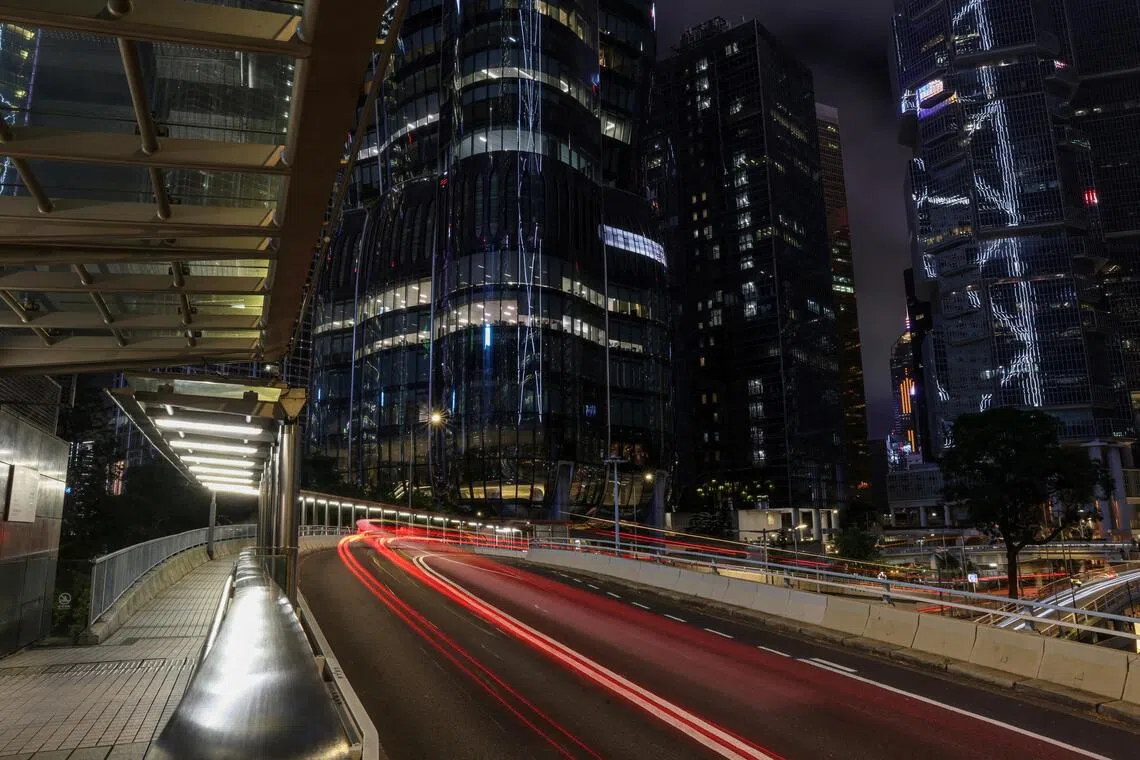
He said this was fuelled by leasing demand from hedge funds, family offices and asset managers – following Hong Kong’s tax reforms aimed at attracting funds and talent.
On Jun 12, 2026, Hong Kong gazetted a Bill to expand tax breaks for funds and family offices, and which proposes extending favourable tax treatment to investment professionals themselves, not just funds.
The strength in Hong Kong’s rents, though, has been more concentrated in areas like Central, the city’s prime central business district.
Cheng noted that in areas outside the main central business districts, office assets are a harder sell for investors and are more suitable for those with a longer-term horizon of more than 10 years.
He cited a building in Kowloon East that was acquired at roughly HK$16,000 per square foot (psf) and is now being marketed near HK$5,000 psf – about a third of its former price and below replacement cost.
Despite the “more attractive price”, he warned that with a vacancy rate at about 40 per cent, it is difficult to support a 3 to 4 per cent yield without a long investment horizon.
South-east Asia clients next
Beyond Singapore investors, he pointed to South-east Asian countries like Thailand and Indonesia as a key source of fresh capital, with the region’s ultra-high-net-worth individuals looking to diversify into cheap or bargain deals globally – including those in Hong Kong.
“We will have more presence in South-east Asia, where new money comes from,” he said.
But Cheng warned that the window of opportunity to invest in Hong Kong would not stay open indefinitely.
Roughly HK$200 billion in non-performing loans still sit in the banking system.
“We have maybe one, two, at the maximum, three years – a window to have a chance to try some bargain deals,” he said.
TRENDING NOW

DBS, OCBC, UOB rout lops billions off STI as inflation, rate concerns spook investors

Grab CEO’s wife Chloe Tong on life with Anthony Tan and finding her purpose
OCBC sheds S$8 billion in value as shares close nearly 6% down; analysts cautious on banks

Deal between tycoon friends sparks scrutiny of Philippine power sector

