

Singapore healthcare stocks: no more a defensive play as pandemic boost fades

Megan Cheah
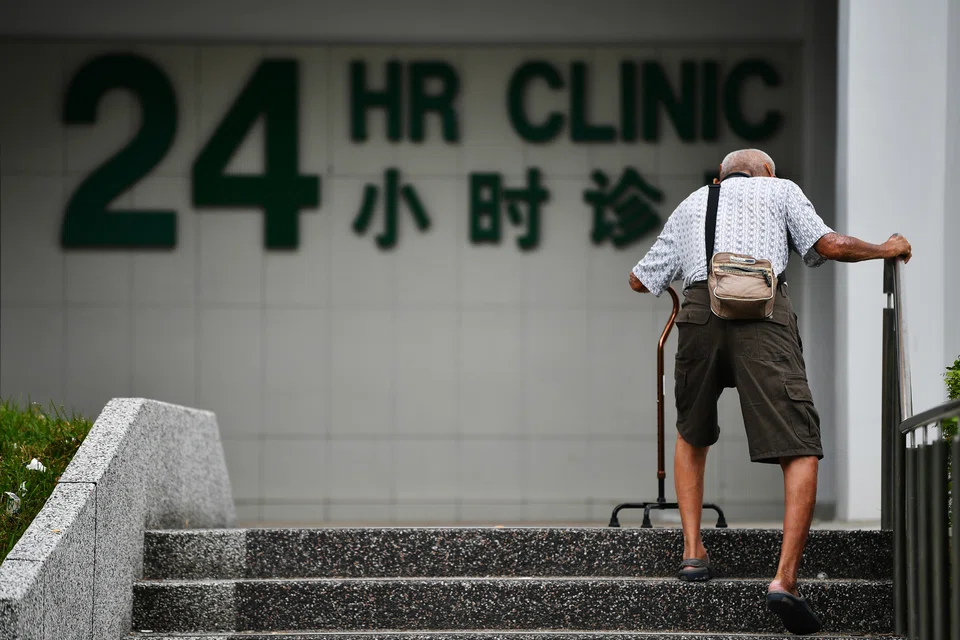
SINGAPORE-LISTED healthcare players have witnessed retreating earnings and share prices this year, but analysts said that they continue to see good prospects for select stocks.
The iEdge Singapore All Healthcare Index delivered total returns of minus 2.5 per cent in the year to Monday (Nov 6). In comparison, the benchmark Straits Times Index was up 2.3 per cent over the same period.
These stocks may be correcting from their pandemic highs. The index generated total returns of 70.3 per cent in 2020, against an 8.1 per cent decline for the bourse’s blue-chip barometer.
Analysts who spoke to The Business Times said earnings of companies in various healthcare sub-sectors have been hit by post-Covid business normalisation.
Maybank Securities analyst Eric Ong noted that front-line healthcare players have benefited from a rebound in medical tourism and the resumption of higher-margin elective procedures, which were not allowed during the pandemic. These gains have, however, been offset by the adverse impact from the tapering of Covid-related activity.
“We see most Singapore Exchange-listed healthcare players reporting flattish to lower earnings compared to FY2022,” said Ong.
A case in point is Raffles Medical Group , which missed most analysts’ estimates when it posted a 67.4 per cent drop in profit to S$12.4 million for the third quarter ended Sep 30, from S$38 million in the year-ago period.
For its full year ended June, Thomson Medical Group posted a 32 per cent drop in earnings to S$36.6 million – despite a 6.6 per cent rise in revenue to S$355.8 million. The group attributed the decline in earnings mainly to lower income from project-related services and a reduction in government grants received during the period.
More weakness expected
“We expect weakness in the healthcare sector due to margin pressure from higher operating costs such as nurses and more competitive bidding of services such as transitional care facilities,” said Phillip Securities research head Paul Chew.
Meanwhile, medical items manufacturers – particularly glove makers – continue to struggle. Customers built up healthy stocks during the pandemic, so demand has weakened significantly.
RHB Singapore head of equity research Shekhar Jaiswal said glove manufacturers had contributed much of the outperformance of the healthcare index during the pandemic, due to the need for medical gloves at the time.
“ Top Glove and Riverstone share prices were up around 301.8 per cent and 140 per cent, respectively, in 2020,” he noted.
Both have since come down. Shares of Top Glove closed at S$0.215 on Oct 18 – a long way from their 2020 peak of S$3.13. Shares of Riverstone, which hit a high of S$2.34 in 2020, have fallen to S$0.59.
The reversal in investor sentiment is in line with a drop in the companies’ earnings.
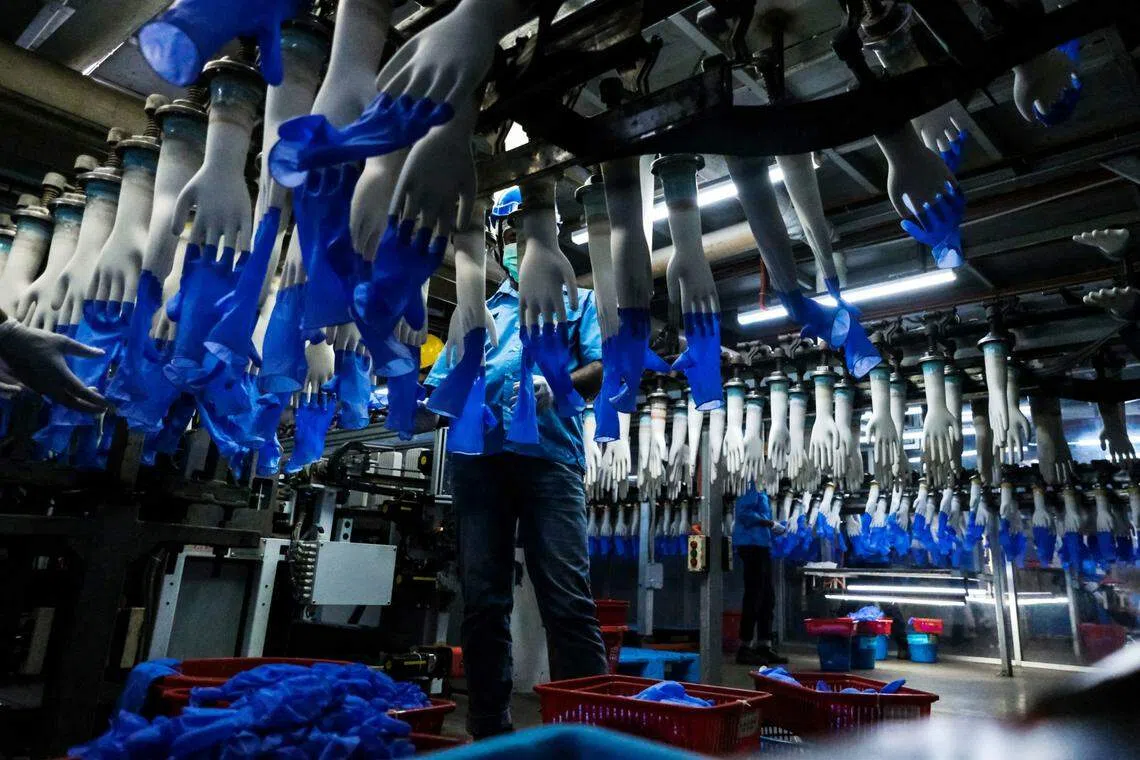
Top Glove posted a net loss of RM926.6 million (S$269.1 million) for its FY2023 ended August, reversing its net profit of RM225.6 million in FY2022. Riverstone recorded a net profit of RM93.6 million for its H1 ended June, 55.2 per cent lower than its earnings of RM208.9 million in the corresponding year-ago period.
Market watchers believe the future of glove manufacturers is still unclear.
UOB Kay Hian analyst Jack Goh said: “Although the worst is over, we believe that Malaysian glove manufacturers will face an upward slope to restore their pre-pandemic profitability, given that the pandemic-induced oversupply and suboptimal utilisation will potentially take another six to eight quarters to normalise.”
Following Top Glove’s earnings call in October, Citi analyst Megat Fais noted uncertainty around the company’s volume recovery and margins, as well as its “negative near-term earnings momentum”. He said: “A sustained recovery in volume and signs of better pricing power are key for us to revisit our view on the stock and the sector as a whole.”
Bright spots
RHB’s Jaiswal noted that the declines came after peak earnings cycles, which happened only due to the anomalous pandemic.
Overall, however, he explained that the healthcare sector is seen as defensive in nature – a boon in a volatile equity market environment – and could still attract investor attention.
In particular, private healthcare providers are likely to see a continuing rise in demand due to the ageing population, said Jaiswal. The government’s push for these players to become a part of Healthier SG, the national preventive healthcare programme, could also drive this demand.
“We think primary, secondary and tertiary healthcare service providers that have a presence in Singapore and within the region, as well as providers of services that address the needs of an ageing population, would be the key outperformers,” he said, citing examples such as nursing home operators and assisted living services.
Maybank Securities’ Ong said that local healthcare players will embark on more regional expansion plans for the rest of the year. This will be done via organic growth, such as Raffles Medical’s China operations, or through mergers and acquisitions.

DBS analyst Rachel Tan said that while Raffles Medical’s earnings appear to have moderated more than expected, she is “long-term positive” on the potential ramp-up of the group’s China hospitals.
The group recently gained a majority interest in American International Hospital in Vietnam’s Ho Chi Minh City. On this, Maybank Securities’ Ong said: “Leveraging its strong balance sheet, we believe this is an integral part of Raffles Medical’s long-term strategy to expand its income stream, while diversifying the group’s hospital operations beyond Singapore and China.”
On the other hand, Phillip Securities’ Chew pointed out that the Healthier SG programme would place “pressure on GP (general practitioner) clinics and drug margins”.
Nonetheless, he added, specialist care will continue to command premium pricing and margins.
Phillip Securities’ sector pick is Thomson Medical, which Chew said is “aggressively expanding its bed capacity in Malaysia, where healthcare services are priced more competitively in the region”.
The group also recently acquired Far East Medical Vietnam, the owner and operator of a range of healthcare facilities in Vietnam, including FV Hospital.
Although the company’s public free float has dipped below 10 per cent, Chew said the major shareholder of the company has “the ability and experience” to restore the free float by the deadline of Dec 10.
The way analysts such as Jaiswal see it, the earnings outlook for most healthcare companies will get better only in 2024. “Investor interest could be very selective within the sector, with a focus on companies that are expected to see a quicker return of earnings growth,” Jaiswal said.
TRENDING NOW

Malaysian king buys stake in Singapore-listed mining firm expanding into rare earths

Family offices ‘kept captive’ by relationship managers turn to independent advisers, direct deals

Once staunchly pro-China, Malaysian Chinese businesses are now distancing themselves from Beijing

Could stablecoins be the future of money?

