

SLB moves beyond property development
It's scaling back property development and raising exposure to fund management and alternative asset classes.

Kalpana Rashiwala
Singapore
THE risk involved in embarking on property developments in the current climate is prompting SLB Development to modify its strategy.
The company is the property development arm of mainboard-listed construction firm Lian Beng Group that was spun off via a Catalist listing in April 2018.
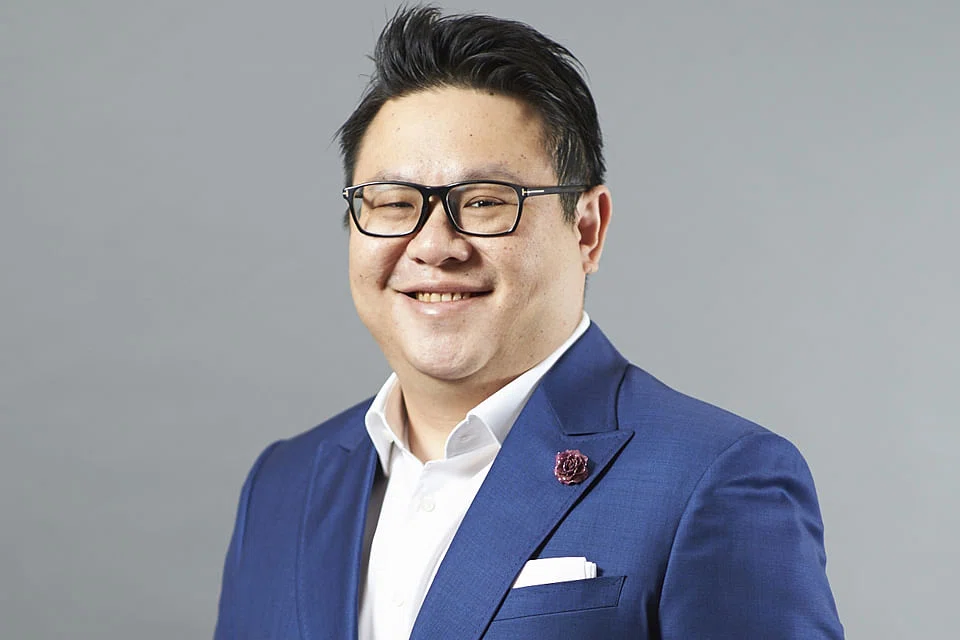
Says SLB Development's chief executive, Matthew Ong: "Whatever property with redevelopment potential that we buy now, it must also come with an existing income stream.
"In case of any uncertainty, we do not have to go all out and redevelop the asset. Instead, we can hold on to it for a while since it is generating a stable income."
He cites a couple of risk factors stacked against embarking on property development ventures in Singapore at this juncture: the impact of the Covid-19 pandemic on businesses globally and what he terms "local policy changes", probably alluding to Singapore's property cooling measures.
While waiting for the right time to redevelop any newly acquired property, SLB will seek to add some value over the medium term, for instance, by refurbishing the asset and enhancing its rental income, said Mr Ong.
"Such an approach helps us to better manage our risk profile. As a young company, we have to be nimble, adapt to changing market conditions and create our own niche," he said in an interview with The Business Times. "Thus we have decided to scale back on development projects and increase our exposure to value-add opportunities, fund management and alternative asset classes."
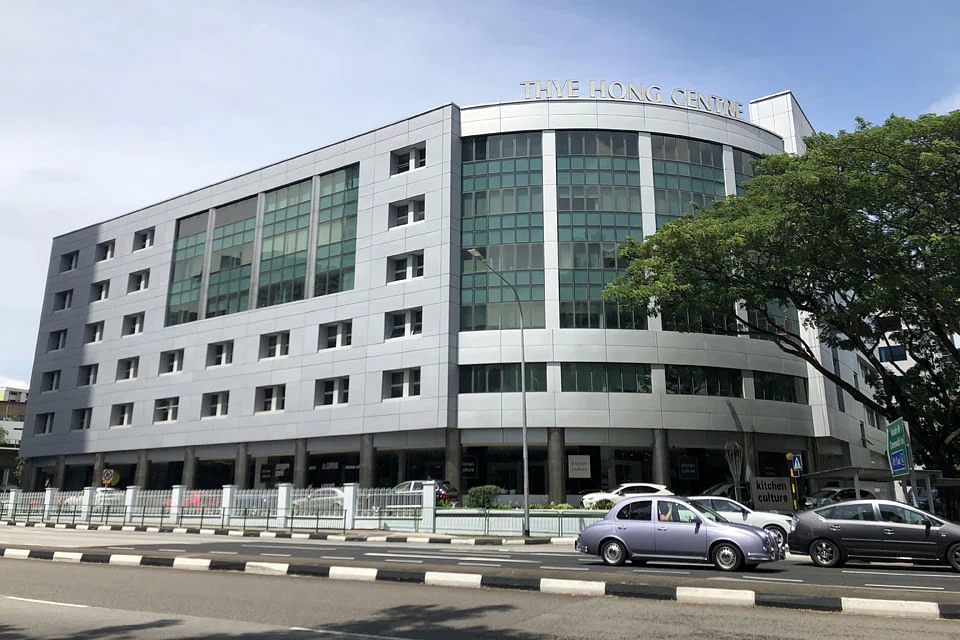
Take for example, the group's S$112.5 million recent acquisition of Thye Hong Centre at 2 Leng Kee Road.
Although SLB will be exploring the redevelopment possibilities for this freehold asset near Redhill MRT station, its medium-term plan is to collect rental income from this property.
The six-storey building's net lettable area (NLA) of 146,834 sq ft is fully occupied. The net yield on the purchase price is in the high-3 per cent, said Mr Ong.
The group will squeeze out some additional NLA and spruce up the common areas and ground floor. It will also inject lifestyle elements such as a garden, gym and fitness corner on the rooftop - to create a more conducive working environment.
Thye Hong Centre
Thye Hong Centre is on a 64,067 sq ft site with 2.5 plot ratio and zoned for Business 1 use under Master Plan 2019, which means that it is suitable for clean and light industrial use.
"Redeveloping the site and doing strata sales may be challenging now as most local businesses are in cash-conservation mode and will tend to delay allocating funds for big-ticket items," said Mr Ong.
Nevertheless, he is sanguine about leasing prospects for light industrial space on the back of increased demand for storage and warehousing facilities amid the e-commerce boom. Moreover, some companies may meet the criteria to house their back-end offices in such premises.
Mr Ong points to the potential of developing residences on the site. "We are very fortunate to be able to acquire this asset. It is near the Jervois/Tanglin precinct; the location would be ideal for a residential development.
"Although our purchase was based on the current usage and zoning, we shall explore all possible options and permutations for this asset with the relevant authorities."
Value-adding is very much part of SLB's DNA, going back to the days when it was the property development division of Lian Beng Group.
Mr Ong was already the director of the division when, in 2014, Lian Beng led a consortium that acquired a 92.8 per cent stake in Prudential Tower in Singapore's CBD from Keppel Reit. It resold the space progressively.
The lower stack in the building had two strata titles per floor and the upper stack, just a single title per floor. The consortium subdivided the strata titles on a few floors into smaller units; it also spruced up the lobby and common areas. "We sold the final batch of space in Q4 2018 - making a profit on the entire venture," recalled Mr Ong. The 38-year-old is the son of Lian Beng Group chairman and managing director Ong Pang Aik whose father, Ong Sek Chong, founded Lian Beng in 1973. Lian Beng owns 77.58 per cent of SLB.
During Mr Matthew Ong's days at Lian Beng, there were three instances when the group bought properties in Melbourne during the 2015 to 2017 period and resold them within short spans of time ranging from 11 months to just over two years - for handsome gains.
Observers said the gains were largely a function of the buoyant Australian property market back then. That said, Lian Beng's efforts may also have played a part - such as obtaining approval from the authorities for a redevelopment scheme, or buying a vacant building and filling it up with new tenants.
SLB Development has also diversified into property fund management, taking a one-third stake in 32 Real Estate (or 32RE). The outfit was co-founded in October 2019 by Jeremy Choy, formerly from BlackRock, where he held several positions including head of real estate (Greater China).
Also holding a one-third stake in 32RE is a vehicle owned by Wee Teng Chuen, son of UOB chief executive Wee Ee Cheong. He is 32RE's managing director. An entity controlled by Mr Choy holds the rest of 32RE.
Said SLB Development's Mr Ong: "Under 32RE, we are looking to set up thematic platforms to build scale within certain niche sectors - rather than just doing standalone, random transactions."
In June, 32RE established its first platform - a S$150 million equity joint-venture with Hong Kong-based Weave Co-Living. The JV will acquire, develop, refurbish and operate co-living and rental accommodation assets in Singapore under Weave or its affiliated brands. Said Mr Choy: "We are scouting for suitable hospitality assets here to buy for conversion into a Weave Co-Living property."
Alternative asset class
32RE also plans to establish more platforms in other property segments in Singapore and the Asia-Pacific, added Mr Choy, who is 32RE's CEO.
SLB has also has its finger in another pie - the UK private rented sector (PRS). Akin to the multi-family residential sector in the US and Japan, PRS is seen as a resilient segment of the UK housing market, where home ownership rates are not as high as, say, in Singapore.
SLB will have exposure to this segment through its investment in the Pinnacle Residential Fund, managed by Pinnacle Investment Management Limited (PIML). SLB also holds an equity stake in PIML, a fund management subsidiary of UK-based Pinnacle Investments (Holdings) that aims to build a series of funds focused on the PRS across the UK.
SLB's ongoing private residential developments here include the Riverfront Residences and Affinity at Serangoon condos. It is a member of separate Oxley Holdings-led consortiums developing the two projects.
On a solo basis, SLB is developing Mactaggart Foodlink near Tai Seng MRT station; this is a five-storey facility with 28 strata food factory units.
Property development used to be SLB's bread-and-butter business. "We will be looking to evolve into a more dynamic real estate firm, merging a higher returns approach (of redeveloping properties), and a stable-income strategy through value-adding and fund management," said Mr Ong.
TRENDING NOW

Could stablecoins be the future of money?
Once staunchly pro-China, Malaysian Chinese businesses are now distancing themselves from Beijing
Vietnam’s data-centre investment rush faces reality check on power and site constraints
‘My grandfather’s legacy’: Sherman Kwek lays out three-year plan for CDL to drive returns

