

Tariff pressures leave GP Industries hunting growth in new niches
Battery-maker will pivot to own brands and product innovation to drive growth, amid rising costs and brutal price competition

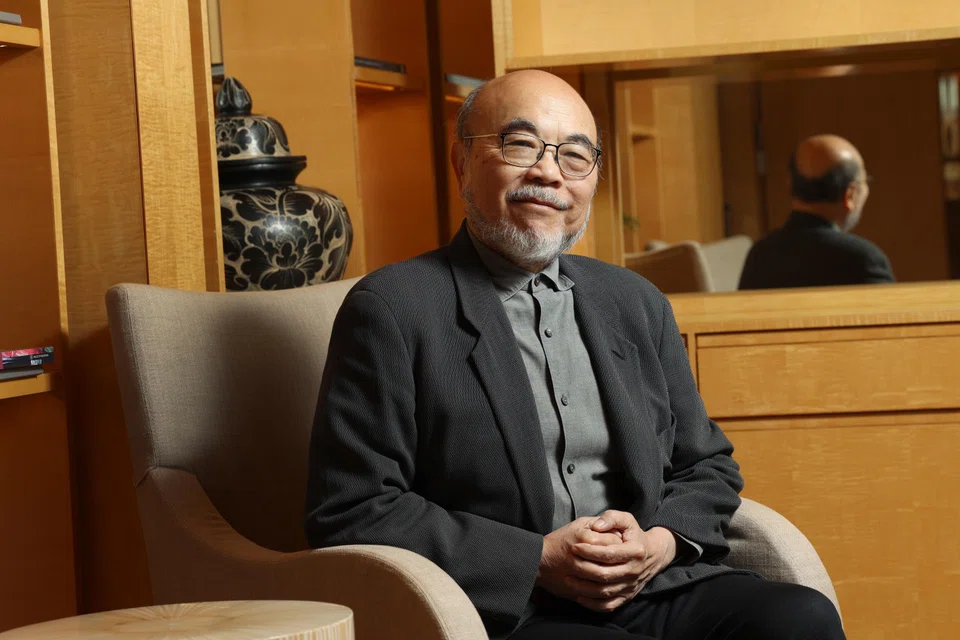
[SINGAPORE] As tariff risks push up costs and pricing competition, GP Industries sees long-term growth coming from developing innovative products and focusing on its own brands.
This strategy is being made possible as the group spent the last five years moving its manufacturing facilities from China to South-east Asia – a move that began soon after United States President Donald Trump announced his first wave of tariffs during his first term.
The Hong Kong-based battery-maker manufactures consumer batteries under the GP brand and high-end audio equipment. It had diversified into the acoustics business in 1992 when it acquired leading high-end British brands, KEF and Celestion.
A third business is in industrial investments, where it takes a stake in companies that manufacture and trade parts and components aligned to its battery solutions and acoustic businesses.
GP now operates seven factories in South-east Asia, including six battery plants and one audio facility, and also runs two small audio factories in the United Kingdom.
“We responded to tariff changes probably sooner than most of our competition in China,” said Victor Lo, chairman and chief executive of GP Industries, in an interview with The Business Times in Singapore. “In hindsight, it was a blessing. We started early.”
Starting from scratch
But the transition has not been without pain. Lo, who was in Singapore to celebrate GP Industries’ 30th anniversary, noted that overall efficiency remains higher in China, where the group benefits from decades of industrialisation and a robust supply chain.
Within an hour’s drive of its major factories in Guangdong or Ningbo, GP Industries has access to 60 to 70 important suppliers.
In contrast, setting up in locations such as Vietnam – where workers have never seen a battery factory – requires extensive training from scratch. The shift also means managing two sets of facilities and teams, while still sourcing many components from China, which ties up finances and lengthens lead times.
“Labour costs in South-east Asia are cheaper than China, but in our experience, overall efficiency in China is still higher,” Lo said.
Still, labour costs were not the most important factor in deciding its locations in the region. Ultimately, the group considered the expertise, talent and the types of products it wants to produce in the respective countries.
“How long or how short the learning curve is, is a major factor, and what existing local talents there are for our respective industry is another major concern,” Lo said.
For instance, in Malaysia, GP Industries simply added a third factory to its existing two facilities, allowing it to leverage an established workforce.
In Vietnam, the group had operated a joint venture making batteries for 15 years, providing a ready staff base. Meanwhile, in Thailand, it acquired a small audio company just before the Covid-19 pandemic, giving it access to workers with experience making audio products.
Pivot and innovate
To offset these challenges, the group has been doubling down on cost reduction and brand-building.
For its first-half ended Sep 30, 2025, the SGX-listed company reported that net profit rose 12.7 per cent to S$16.3 million, from S$14.5 million, even as revenue dipped slightly – to S$556 million, a 2.5 per cent fall from S$570.5 million.
The improvement came largely from streamlining efforts over the past four months, said Lo.
But, going forward, cost reduction will not be the most effective way to grow the group’s top line, he added.
“You can only cost cut so much,” Lo cautioned. “In the meantime, we have to speed up our development, our investment in new products, new technology.”
A key part of that strategy is growing its own brands and distribution channels, which now account for roughly 40 per cent of the group’s business. This provides a crucial buffer against the brutal price competition facing contract manufacturers, who must tender for orders alongside multiple Chinese suppliers.
“If you make products for other people’s brands, every time there’s a big order, it’s a tender. They invite three, four, five suppliers in China to bid. It’s no fun,” Lo said. “How can you make profit with that kind of business model?”
Battery business sales to Americas dropped 23.5 per cent, said the company in a bourse filing on Nov 12, without specifying exact figures. At the same time, total revenue from markets in the Americas fell to S$126.6 million from S$142.1 million across all segments.
The group is also targeting faster-growing niches within the maturing consumer battery market. Coin cell batteries – the small, flat batteries used in remote controls, Internet of Things devices, electronic price tags at supermarkets, and tyre pressure sensors – have been growing at double-digit rates globally for the last three to four years.
“We just have to move faster into these newer and faster growing sectors. Otherwise, we’ll be dragged deeper and deeper into the price war,” Lo said.
Data centre race
GP Industries has a market capitalisation of around S$250 million and its shares are up around 7 per cent this year.
The group’s parent company is pushing ahead with a major bet on nickel-zinc batteries for data centres and uninterruptible power supply systems. The parent, Gold Peak Technology Group, has taken majority ownership of this project, with GP Industries holding a 14 per cent stake.
Gold Peak plans to invest roughly US$150 million over the next five years to build this into a US$500 million revenue business, with a new facility in Johor.
Lo said the group has a three-year window to establish nickel-zinc as a mainstream technology in a sector where “there are 50 other battery companies developing other systems”.
“Speed and volume and reliability and quality are the key,” he said.
Looking ahead, Lo said the manufacturing sector faces continued instability from Trump’s tariff policies. The consumer battery business, in particular, is expected to remain highly competitive for another 12 to 18 months as Chinese factories that lost US business try to capture market share in other regions by dropping prices.
“What Trump is achieving is exactly the opposite of stability. He’s bringing new instability every other month,” Lo said. “As one company, the only thing we can do is whenever there is change, we can make important decisions very fast and cope rapidly.”
The group’s strategy is to outlast competitors by responding faster and maintaining a healthy financial structure, while continuing to invest in brands and innovation for the long term.
“If you keep cutting back, cutting back, you start to hurt your mid-term future,” Lo said. “Management has to maintain the balance.”
TRENDING NOW

Malaysian king buys stake in Singapore-listed mining firm expanding into rare earths
Family offices ‘kept captive’ by relationship managers turn to independent advisers, direct deals

Once staunchly pro-China, Malaysian Chinese businesses are now distancing themselves from Beijing

Could stablecoins be the future of money?

