Tight supply expected to provide support for cocoa, coffee prices in 2025
The agri-commodities have been drastically impacted by this year’s El Nino phenomenon, the most severe in nearly a decade

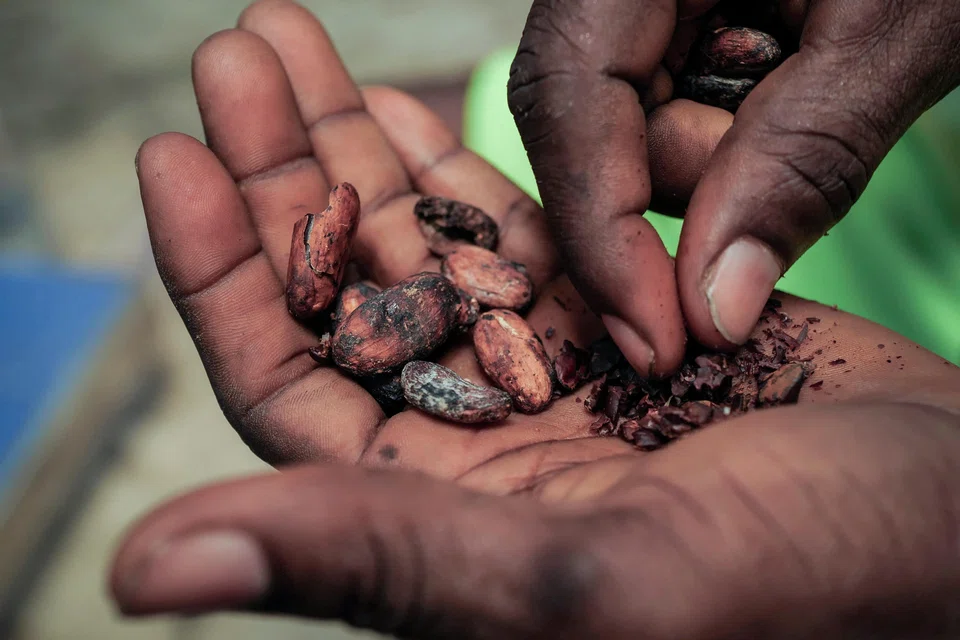
PRICES of agricultural commodities cocoa and coffee are expected to ease from historical highs recorded in 2024, but remain elevated amid supply disruptions.
The El Nino phenomenon this year was the most severe in almost a decade, which had a drastically negative impact on global cocoa and coffee production.
Jonathan Parkman, head of agricultural sales at commodities broker Marex, noted that the Ivory Coast and Ghana had both oversold the amount of cocoa they had produced.
The two countries account for about 60 per cent of global cocoa supply.
On top of the cocoa-bean shortage in West Africa, aggressive hedge-fund buying and a significant increase in margin requirements at the Intercontinental Exchange (ICE) have been challenges for the entire market, said Dixon Poh, vice-president of soft and agricultural commodities for Asia at broker StoneX.
Prices of ICE-listed cocoa futures have climbed more than 180 per cent this year to settle at US$10,821 per tonne on Dec 12.
“While supply-side concerns continue to support historic cocoa prices, we believe these factors will maintain elevated prices throughout 2025, although we expect prices to ease from their current level,” BMI said in a note on Dec 5.
BMI forecasts cocoa prices to average at US$7,200 per tonne in 2024 and US$5,900 per tonne in 2025.
The way to balance the market this year is “further demand destruction”, which is likely given the high price levels currently, said Marex’s Parkman.
Considering the extreme situation facing cocoa stock, however, he added that even small supply disruptions in 2025 could ripple into huge price volatilities.
Poh of StoneX noted that both the Tropical Research Services and The Cocoa Research Association have reduced their cocoa surplus forecasts for the 2024-2025 season, in light of adverse weather conditions in the main producing regions.
Therefore, he said, the cocoa market should not rule out any surprises.
“It is becoming more possible the market could see new record prices in 2025,” he added.
On coffee, BMI head of commodities research Sabrin Chowdhury noted that Arabica coffee prices have not only outperformed other agri-commodities in 2024, but also all other commodities from other asset classes as well.
As at Dec 12, ICE-listed Arabica coffee futures had climbed more than 70 per cent, while Robusta coffee was up more than 98 per cent. Prices were supported by supply concerns due to late rains and high temperatures late in the 2024-2025 season crop cycle in major producers.
“Market sentiment and prices of Arabica coffee will remain strong in 2025,” said Chowdhury. She added that inventories in major exporters Brazil and Vietnam have shrunk over the past 12 months, likely rendering the market even more sensitive to harvest volumes.
“That said, as prices are at a high base, we expect some cooling in 2025 and 2026 compared to 2024,” she said.
“Our annual average price forecast for second-month ICE-listed Arabica coffee (Coffee C) futures for 2025 is US$2.15 per pound, compared to US$2.25 per pound in 2024.”