From tokens to outcomes: Google Cloud’s global startups head sees AI cost shift, expands Singapore push
Darren Mowry is looking to grow the customer service and support, engineering and ecosystem teams

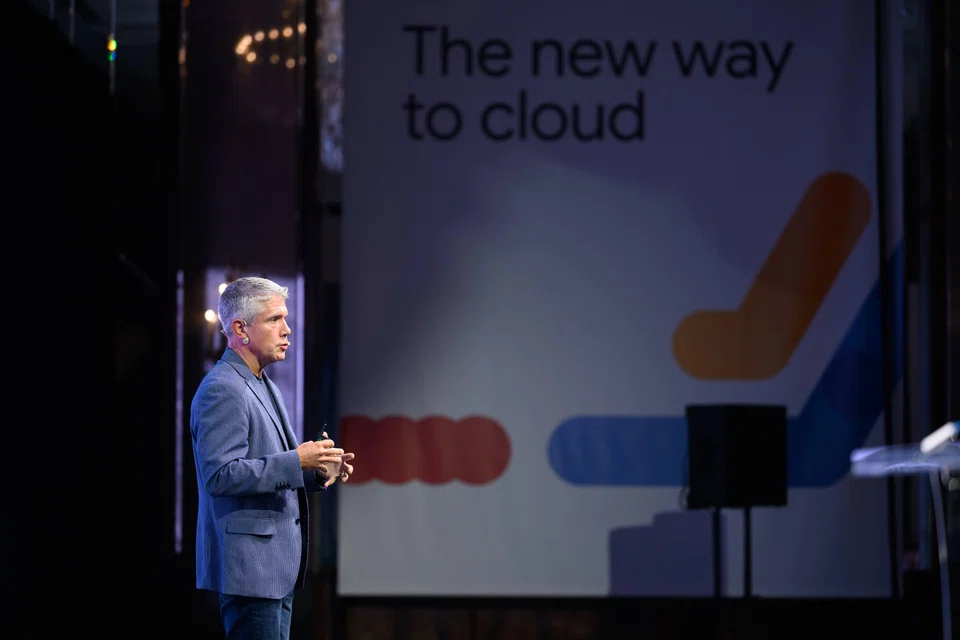
[SINGAPORE] As artificial intelligence usage grows, more startups are shifting from measuring the cost of tokens used, to completing a task or achieving a business outcome.
This is changing how founders choose AI models, with more of them using a mix rather than relying on a single one, as they balance cost and performance in different use cases, said Darren Mowry, head of global startups at Google Cloud.
The framework of measuring and managing how tokens are used, priced and optimised is defined as tokenomics.
“There’s actually a shift... from tokenomics to something more like cost per outcome or cost per task,” he told The Business Times.
AI models typically charge users based on the number of tokens consumed, but for companies, comparing models purely on token prices does not capture the true cost of getting a job done.
The cheapest model, for example, may not necessarily be the most cost-effective, if it requires more resources to derive the right results.
As a result, Mowry said that cost control is a recurring topic in his conversations with founders, with the focus increasingly on choosing the right model for the right use case.
Venture capital companies are also taking a broader view, looking beyond the AI model a startup uses to consider the overall costs of using AI. As startups become more discerning about how they deploy AI, Google Cloud is also stepping up its engagement with the ecosystem.
In Singapore, Mowry aims to grow his team to support the Republic and the wider South-east Asian market.
While Google has its own commercial AI model, Gemini, he acknowledged that it may not be suitable for every task.
Startups can choose from models beyond Gemini, as Google Cloud supports other AI models on its platform.
“I’m a big believer that the open-weight models are going to be a core part of the AI story going forward. I don’t see them going away,” he added.
He likens the current AI landscape to the cloud-computing landscape back in the 2010s, in which the hypothesis was that customers would pick a single cloud provider for all their needs.
But this was proven wrong, as companies went with a multi-cloud model instead.
“For us to come forward and say a customer is going to rely on only one model, I don’t think that’s realistic,” he added.
More than credits
With many options available for startups to choose from, the bar is now being raised for cloud providers.
Offering credits is “table stakes” at this point, noted Mowry. With many providers offering such incentives, the credits themselves provide little differentiation.
Instead, the difference lies in the other resources that can be bundled together with credits to enhance their value.
Mowry noted that leaving customers to decide how to use the credits would often result in them being quickly consumed, prompting requests for more.
“While we do not have an unlimited (automated teller machine) of credit, we believe credits are one thing, but credits used intelligently is where the magic is,” he said.
He recalled one founder commenting that while credits help to cover costs, their real value lies in the access to customer engineers to help build their infrastructure.
For Google Cloud, a big challenge Mowry faces is deciding where to deploy its resources. This is leading to a “stress of opportunity”, he added. “The biggest challenge that I have daily is to look at all our demands across the business and figure out the bets that we want to make,” he said.
Deepening growth in Singapore
Singapore is among the markets where Google is looking to deepen its investments.
The Republic was chosen as one of the few locations for DeepMind – Google’s AI research lab – alongside cities such as London, New York City and Zurich. It opened in November 2025.
“For DeepMind to say we’re going to pick Singapore and use it as a hub to ask really big questions around the big environmental and systemic impacts that AI can have, I think is one signal of the continued investment that we’re going to make,” said Mowry.
Mowry is also looking to expand his team here in Singapore to support growth locally and in South-east Asia.
The growth will be in the customer service and support, engineering and ecosystem teams, but he declined to give a figure.
There is also the startup accelerator established in May 2026, Google for Startups Accelerator: South-east Asia, which aims to help founders build and commercialise proprietary agentic AI products.
The accelerator offers technical residencies in Silicon Valley and Singapore, as well as AI engineering and go-to-market partnerships, with Google Cloud for selected participants.
Of the 25 startups selected for the accelerator, 21 are based out of Singapore, including Accelerated Materials.
It is a deep-tech startup that reduces material development timelines and costs by up to 90 per cent, with its solution that pairs machine-learning software with automated microreactor hardware.
“We’ll be taking these folks through a multi-week intensive boot camp of engineering assistance, credits and investments. We’re bringing them to the Bay Area into our product teams and helping them connect with other founders,” said Mowry.
Globally, the accelerator has raised US$6.6 billion in funding for over 200 startups since 2018, with more than 11,000 jobs created.
“The scenario I have in my head is, while this is early for Singapore, if 21 out of 25 of this latest cohort are Singaporean, and if we have this track record of success, we could be at the beginning of something super exciting for the Singapore startup market,” he said.