

Top-tier maritime players to boost sales, margins on oil rebound and tight vessel supply
Between 2014 and the first quarter of 2016, oil prices have fallen by more than two-thirds to under US$35 per barrel

THE rising tide of strong demand for vessels in the oil and gas sector, amid tepid supply, has lifted Singapore-listed maritime players.
According to Maybank analyst Jarick Seet, the tight market conditions may have happened as a result of a lack of investment in the space after the crash in oil prices in 2016.
Between 2014 and the first quarter of 2016, oil prices fell by more than two-thirds to under US$35 per barrel.
Seet noted that after the crash, South-east Asian banks have been “quite unwilling” to lend to investors in the oil and gas sector due to a number of defaults during that period.
Oil prices have risen since 2016, with Brent crude oil contracts this year hovering in the US$80 to US$90 per barrel range.
“With the lack of bank loans, you’re seeing investments into this space being very slow…there’s a surge in demand, but the supply is very muted,” he said.
Since 2016, Seet added, many shipyards have also closed down or consolidated their operations. In China, the number of shipyards has fallen by four-fifths to about 200.
As the industry has shrunk substantially, he said that the top tier players that survived will likely be able to leverage their market positions to get better projects with higher margins.
DBS analyst Ho Pei Hwa noted that containership demand experienced the highest order flows post-pandemic, while tankers have picked up in the past year. She added that bulkers could soon follow suit given that there is currently a low order backlog.
“Almost half of the containership orders are dual-fueled with cleaner alternative fuel such as liquefied natural gas and methanol. The decarbonisation trend continues to drive such fleet rejuvenation demand,” she said.
These factors have translated into significant growth opportunities for maritime players in Singapore.
UOB Kay Hian analyst Adrian Loh raised his estimates and target price on Yangzijiang Shipbuilding in a report on Mar 1. This was after the company appeared confident that it would be able to maintain its margins in 2024 at an investor meeting.
The Straits Times Index constituent saw its net profit rise 57 per cent year on year to RMB 4.1 billion (S$770.8 million). Loh noted that the margins of the company’s shipbuilding segment stood at 22 per cent, beating his expectation of 16 per cent.
Furthermore, he noted that the company expects its shipping segment to have better profits on a year-on-year basis as well. Most of its shipping fleet has been time chartered to customers, he added.
“The company will be targeting US$4.5 billion of new orders in 2024 compared with its historical guidance of US$2 to 3 billion and believes that this level of order wins could persist into 2025. Note that as at end Feb 24, YZJ has won US$1.35 billion worth of new orders, or 30 per cent of its 2024 target,” he said.
He maintained a “buy” call on the company with a target price of S$2.19, up from S$1.92.
Meanwhile, Lim & Tan Securities analyst Nicholas Yon initiated a “buy” call on Marco Polo Marine with a target price of S$0.083 on Apr 5.
He noted that there has been a mismatch in demand and supply in the market for anchor handling tug supply vessels despite an influx of new builds coming into the market. Such vessels mainly help to handle an oil rig’s anchors and secure rigs in place.
“Marco Polo Marine’s strategy of opting for relatively shorter renewal rates positions them advantageously to recalibrate pricing more frequently, thereby enabling them to capitalise on the ongoing upswing,” he said.
The company has also signed contracts with wind turbine makers Vestas and Siemens Gamesa in November 2023 and March 2024, respectively. Yon said that the contracts ensure revenue visibility in the coming years, with both agreements expected to contribute to revenue from fiscal year ending September 2025.
Furthermore, he said that the company has emerged “significantly more robust and well-structured” ever since its restructuring in 2017 and now has a net cash position of S$60.8 million.
He added that the company’s decision to reinstate dividends reflects the company’s “renewed stability and potential for sustained growth”.
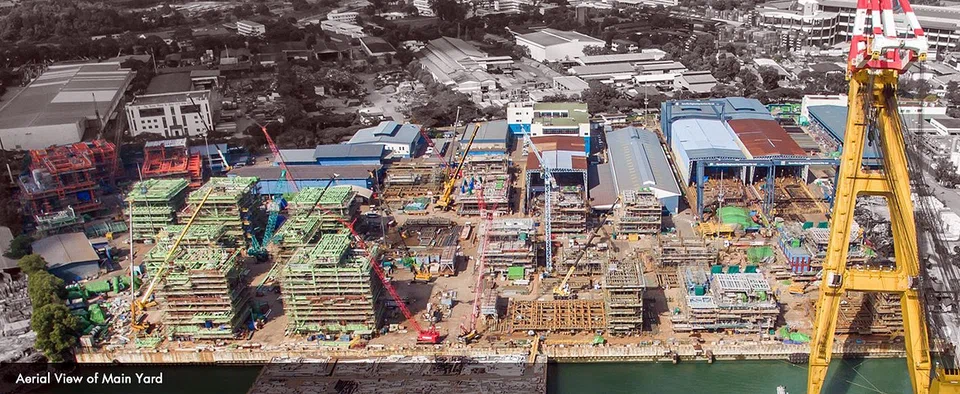
Another maritime player to look out for could be Dyna-Mac, which does engineers and manufactures topside modules for the oil and gas industry.
The company announced that it achieved a record S$896 million net order book on Apr 3.
Maybank’s Seet maintained his “buy” call on the company and lifted its target price to S$0.46 from S$0.42, noting that the main contract the company secured is the largest it has ever won and involves the construction of process modules.
He expects that more orders are in the pipeline as Floating Production Storage and Offloading (FPSO) vessel charter rates are still trending up due to a lack of supply.
The modules that Dyna-Mac manufactures will be in greater demand as the pipeline of upcoming FPSOs is still strong, Seet said.
“We expect Dyna-Mac to win another S$100 to S$200 million worth of contracts by H2 2024 and it has increased its capacity by 50 to 60 per cent while also upgrading its capabilities to allow further optimization of construction methodology and production workflow,” he added.
TRENDING NOW

Malaysian king buys stake in Singapore-listed mining firm expanding into rare earths

Family offices ‘kept captive’ by relationship managers turn to independent advisers, direct deals

Once staunchly pro-China, Malaysian Chinese businesses are now distancing themselves from Beijing

Could stablecoins be the future of money?

