

Cat A COE premium eases as demand is diverted to Cat B
With the gap in premium between the two categories narrowing, buyers may prefer bigger cars, say observers

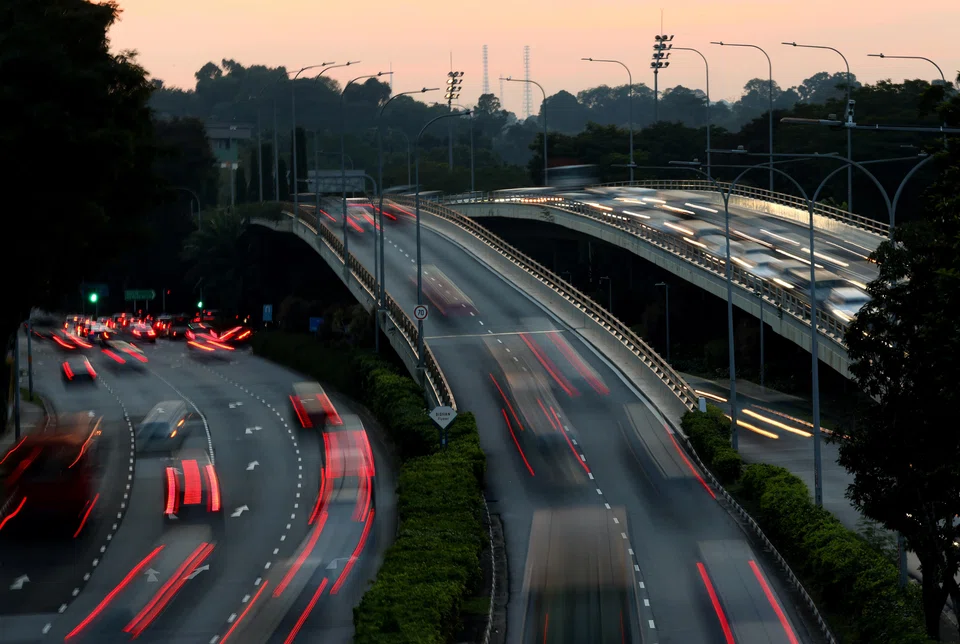
[SINGAPORE] The Certificate of Entitlement (COE) premium for smaller cars eased in August’s first bidding round as demand was diverted to bigger cars.
This follows the gap between Category A and Category B premiums narrowing in recent exercises, and a record-high premium for Category A in July.
Anthony Teo, managing director of automotive group Motorway, pointed out that car owners will go for Category B when premiums for A and B are close, which could explain the 1.7 per cent slide in Category A’s premium on Wednesday (Aug 5).
The two categories’ premium difference has been less than S$2,000 in each exercise from June to the first bidding in July, with Category A’s S$123,847 even higher than Category B’s S$123,502 at the Jun 17 tender.
Adelene Tan, managing director of BYD distributor and dealer Vantage Automotive, observed that there has been a shift in demand to Category B cars from those in Category A after the latter’s premium hit an all-time high of S$129,000 in the first tender exercise in July. This has contributed to weak orders for smaller cars, she said.
Raymond Ng, managing director for MG and IM distributor Eurokars EV, noted that Category A COE premium being above S$120,000 in the latest round is still psychologically on the higher side, especially for consumers in this more price-sensitive COE segment.
Category A applies to mainstream cars that have engines of up to 1,600 cubic centimetres (cc) in capacity or up to 97 kilowatts (kW) of power, or electric vehicles with up to 110 kW of power. Its premium was S$123,890 on Wednesday, from S$126,000 on Jul 22.
Category B, for larger, more powerful cars with engines of more than 1,600 cc in capacity or have more than 97 kW, or for EVs with more than 110 kW of power, had a premium of S$129,910 on Wednesday, a marginal S$20 increase from the S$129,890 at the previous tender.
“While we continue to see strong showroom footfall in Chinese EV brands like MG and IM Motors, the rest of the non-Chinese brands may be facing relatively weaker demand. This weaker demand is evident in Category A, as it was only oversubscribed by about 24 per cent versus Category B, which was oversubscribed by about 42 per cent,” added Ng.
Vantage’s Tan noted that demand for bigger cars at her company was higher than for smaller cars. “The increase in quota size for Category B actually helped to absorb any upward pressure.”
Premiums for categories B and E “within expectation”
The premiums for categories B and E were within Ng’s expectations. The Category E COE premium rose 0.8 per cent from S$129,971 to S$131,000 on Wednesday.
As Category B had a quota of 926 versus the 1,226 for Category A, the premium for the former rose by only S$20, an increase which he described as “relatively insignificant”.
He added that Category E’s premium being about S$1,000 higher than Category B’s was within expectations as well.
Certificates in Category E can be used to register any vehicle type except motorcycles, but are mostly used for bigger cars. As these certificates are transferable, motor traders often secure them for the flexibility to register cars without waiting for the next tender exercise.
The motorcycle (Category D) COE premium recorded a 3 per cent increase to S$10,503, while the premium for commercial vehicles (Category C) dropped 2.5 per cent to S$91,545.
Lee Hoe Lone, managing director of Premium Automobiles, expects COE premiums to stay elevated at the next bidding a fortnight later as most dealers will try to secure COEs then. Otherwise, they will have to wait for three weeks before the first tender in September.
Prof Walter Theseira, a transport economist at the Singapore University of Social Sciences, said that the COE quota will continue to climb in the years ahead and peak towards the end of the decade, given that most of the cars on the road today are between six and 10 years old.
“I think one of the issues is many buyers don’t really know this, and so many buyers may still be willing to pay fairly high COE prices because they think that the COE prices will go even higher...
“But when you look at history, that’s very unlikely, simply because of the very large number of cars which are going to get deregistered in the coming years; hence the supply will be high,” the academic commented.
Land Transport Authority data showed that cars in this age group made up 44.2 per cent of the car population as at the end of June.
When these cars are deregistered, their COEs will go towards the supply for future bidding.
TRENDING NOW
LTA proposes combining car COE categories, adding rebate-surcharge system

StarHub to acquire MyRepublic’s mobile business amid ongoing telco consolidation

DBS, OCBC, UOB rout lops billions off STI as inflation, rate concerns spook investors

Grab CEO’s wife Chloe Tong on life with Anthony Tan and finding her purpose

