

Differing funding objectives an obstacle to mobilising more philanthropic capital in blended finance
Overall misalignment in funding objectives means that philanthropic capital has been relatively untapped in South-east Asia

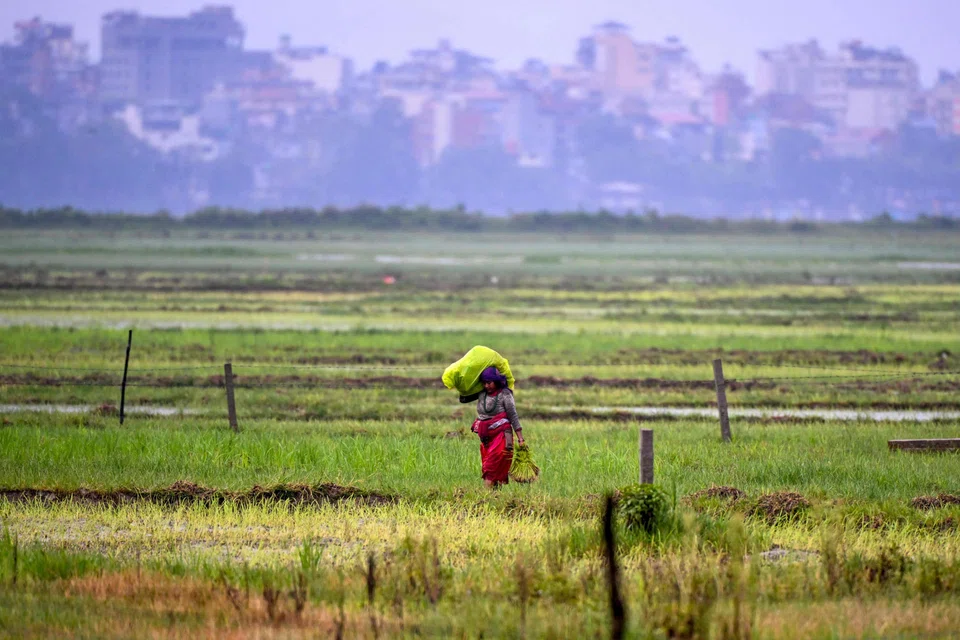
[SINGAPORE] A misalignment between the aims of blended finance initiatives and philanthropies in South-east Asia is holding back the flow of such capital in the region.
Blended finance transactions tend to focus on infrastructure projects that support the clean energy transition.
However, wealthy families in South-east Asia are more interested in projects that have a social impact on communities, be it in the area of nature-based solutions, health or education, said Ritesh Thakkar, senior adviser and head of Asia-Pacific at Convergence, a blended finance organisation.
“We’ve seen many multilateral development banks, development finance institutions and other stakeholders running after philanthropic institutions to fund infrastructure projects – which we believe is a big misalignment,” he said in an interview with The Business Times in the wake of a recent Convergence report on blended finance deals in 2024.
“One has to... figure out this role of philanthropy, and which sectors... resonate better with them,” he added.
Blended finance is a capital-raising approach that leans on investors with higher risk appetites, such as multilateral development banks, development finance institutions, philanthropists or governments, to provide concessional or catalytic capital to pull in more commercial investors.
Such a financing mechanism is typically utilised to kick-start unbankable or marginally bankable projects, though project developers still need to present a pathway towards commercial viability over time.
While there may be a few philanthropic organisations that could be interested in financing the clean energy transition in South-east Asia, the overall misalignment in funding objectives means that philanthropic capital has been relatively untapped in South-east Asia.
Part of the problem arises from the fact that a toolkit or playbook on how philanthropies can deploy their capital towards infrastructure projects related to the clean energy transition has not been developed.
Thakkar pointed out that agriculture is one sector which could be the gateway for philanthropies to play a bigger role towards decarbonisation of the economy.
This is because blended finance deals in the sector will likely have some impact on the farmer and surrounding communities. They also have implications for food security issues in Asean.
Health and nature-based solutions are two other sectors which philanthropies can support, as they show potential for commercial viability. The education sector, however, remains challenging.
Besides philanthropic capital, another source of funding that remains relatively untapped in South-east Asia is public finance, said Thakkar.
Government funds have traditionally been used in the form of grants via welfare schemes.
But Thakkar said there are opportunities for public finance to be deployed through local development finance institutions.
While multilateral development banks and international development finance institutions are traditionally the entities helping to arrange blended finance transactions, they usually provide financing solutions only in hard currencies, rather than local currencies.
This could increase the costs of capital, making it harder for projects to take off.
Home-grown solutions
Local development finance institutions, however, are able to provide more home-grown solutions in local currencies, by working with the local government and other stakeholders in a way that aligns with their own policy priorities and national climate targets.
“The governments can set the direction for the country itself, and then look at what solutions, products or sectors should be catalysed through the local development finance institutions,” said Thakkar.
Local mobilisation is even more important now, with foreign aid being cut on several fronts. The United States has dismantled its foreign aid agency USAid, while the United Kingdom and several European governments have also reduced their funding for Official Development Assistance.
Donor agencies from these developed markets have been one of the most frequent investors in blended finance.
Several South-east Asian countries – including Indonesia, Vietnam and the Philippines – already have their own local development finance institutions.
“What role could they play, which can then catalyse more of these home-grown solutions, local currency solutions, to work in that direction? So I think, to me, the answer is really a whole aspect of local mobilisation,” said Thakkar.
He added that Convergence is currently working with the United Nations Development Programme to develop a framework for blended finance for emerging Asian markets so that there can be more local capital mobilisation suited to their country’s context.
Given that South-east Asia has a healthy gross domestic product per capita, decent savings rate, strong financial sector with ample liquidity, as well as relatively developed capital markets, Thakkar said that the region already has the right mix of ingredients to pull local pools of capital into areas where it is not currently flowing.
“I think a bit of a regulatory intervention, a bit of thinking through this very strategically – both from the concessional as well as the commercial actors – and... looking at some form of platforms that standardise ways to do blended deals would be a good recipe,” he said.
TRENDING NOW

DBS, OCBC, UOB rout lops billions off STI as inflation, rate concerns spook investors

Grab CEO’s wife Chloe Tong on life with Anthony Tan and finding her purpose
OCBC sheds S$8 billion in value as shares close nearly 6% down; analysts cautious on banks

Deal between tycoon friends sparks scrutiny of Philippine power sector

