

Blended finance not a silver bullet to solving the climate financing gap
Ultimately, the right enabling environment through policy support is the crux that will attract private capital

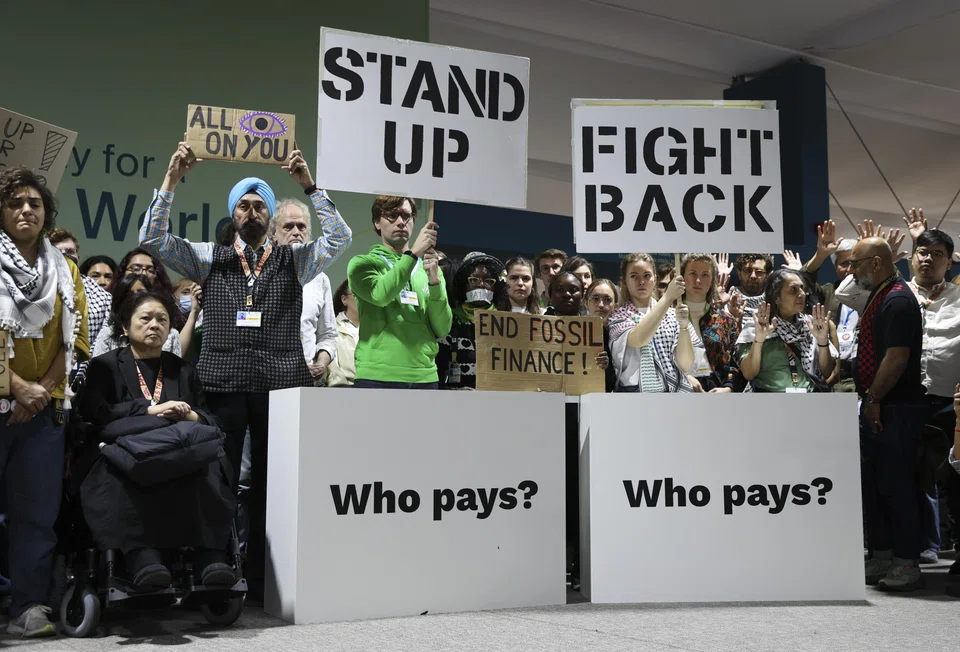
THE failure of the recent United Nations’ annual climate conference to secure a climate finance target of US$1 trillion – which economists said is required annually to help developing countries cut their emissions and manage climate disasters – has now meant that blended finance schemes have become even more important to meet the shortfall in the climate financing gap.
That is because blended finance structures – when designed well – should be able to attract and crowd in private investments that would otherwise not have taken place, without catalytic or concessional funds coming in from capital providers such as development funds and philanthropists or governments that typically take on higher risks.
The new climate finance agreement hammered out at COP29 – which came about after two weeks of intense negotiations in windowless tents with some negotiating parties staging a walk-out – eventually settled on a quantum of US$300 billion per year till 2035, more than 32 hours after the summit overran in Baku, Azerbaijan.
It was arrived at much to the chagrin of developing countries, and the sum far below the US$1 trillion annual target.
The new deal, which supersedes the previous target of at least US$100 billion a year expiring in 2025, is part of a wider effort to scale up climate financing to US$1.3 trillion every year until 2035, with the remaining US$1 trillion to be mobilised “from all public and private sources”. But details on how this could be achieved remain unfinished.
Under the Paris Agreement, developed countries – which are historically responsible for the bulk of global emissions – are obligated to provide climate finance to developing countries as they often bear the brunt of the worst impacts of climate change despite contributing the least emissions.
The huge shortfall, coupled with unfinished details on how the rest of the money is to be mobilised, leaves emerging markets – many of which are in Asia – facing the daunting task of having to undertake system-wide energy transition efforts, implement climate adaptation projects and cope with natural disasters, all on a tight budget.
Getting things moving
Before the finalisation of these details though, Singapore already got things moving with the launch of a blended finance initiative – known as the Financing Asia’s Transition Partnership (Fast-P) – at COP28 last year.
The Monetary Authority of Singapore (MAS) has been making a push to scale up blended finance transactions over the last few years as emerging markets in Asia typically are fiscally constrained, and have limited access to private capital.
To this end, the country announced at COP29 – one year after Fast-P was launched – that it will provide up to US$500 million as concessional capital to the initiative, by matching every dollar of concessional capital committed by other partners also involved.
It was a very strategic move considering that the tiny but very rich nation-state has been facing pressure by other developed countries to be a donor country to the climate finance fund. Singapore does not have a mandatory obligation to provide climate finance under the Paris Agreement, as it is treated as a developing country in international negotiations.
The idea is for Fast-P to build up concessional capital of US$1 billion in total – if other partners can match Singapore’s commitment – and then utilise this pool to crowd in up to US$4 billion of commercial capital.
This brings the total amount that could be potentially mobilised to US$5 billion, which is the target Fast-P aimed to reach when it was first announced one year ago.
A step forward
This move, which has been commended by industry observers, is definitely a step forward in mobilising the capital this region needs for climate action.
The hope is that this initiative may help de-risk climate projects in Asia, and encourage more private-sector participation. Businesses in the region can develop a pipeline of investable projects, which can then be vetted to ensure it meets environmental and financial standards to increase confidence among private investors.
Blended finance is not new. It has historically been used in the development finance and impact finance sectors, but such transactions are often bespoke and complex, hindering its scalability.
The approach adopted by MAS aims to overcome some of these challenges. Instead of structuring such transactions on a project-by-project basis, Fast-P seeks to build three different portfolios – with different investment focuses – through this pool of money before it gets deployed to multiple projects.
By designing blended finance mechanisms in such a manner, various sources of capital can help to achieve a diversity of risk and returns. It also helps to scale such transactions as investors would not have to re-negotiate the terms of how their capital is to be blended for every individual project.
However, blended finance is not a silver bullet to solve the climate financing gap in emerging Asia.
Even for blended finance initiatives such as Fast-P that try to break away from convention, there is still a lot of time spent trying to meet the different investment mandates, risk appetites and time horizons of various stakeholders.
Multi-development banks may have a long time horizon, but private investors typically have a shorter timeframe of about 10 years, beyond which they expect to be able to recycle their capital. Governments are committed for the duration that the assets being invested in will remain on their territory.
The attributes of climate-related projects are also very different from one another, though Fast-P has sought to mitigate this by differentiating them into three pillars. One is focused on green investments, the second is on energy transition including the early closure of coal plants, and the third is on hard-to-abate sectors, recently launched at COP29.
Bridging these differences and carving out a portfolio that satisfies the different needs of each investor require a lot of negotiation, and all these take time.
Even after these get sorted, there is also no guarantee that there is a ready pipeline of investable projects.
Ultimately, the right enabling environment through policy support is the crux that will drive private capital into climate-focused investments in emerging Asia.
Central to the theme of blended finance is the use of concessional capital to mitigate risks for private capital. Policy can achieve the same outcome, and may even be able to do so more efficiently.
When projects are commercially viable on their own – whether through the setting of a carbon price or the development of robust institutional frameworks – private investors will naturally seek them out.
Once that has been achieved, there may no longer be a real need for blended finance.
TRENDING NOW

Malaysian king buys stake in Singapore-listed mining firm expanding into rare earths

Family offices ‘kept captive’ by relationship managers turn to independent advisers, direct deals

Once staunchly pro-China, Malaysian Chinese businesses are now distancing themselves from Beijing

Could stablecoins be the future of money?

