Anutin’s win steadies Thai politics, but the economic test lies ahead
Thai people also participated in a referendum on whether to amend the 2017 constitution, with more than 60% agreeing with the change
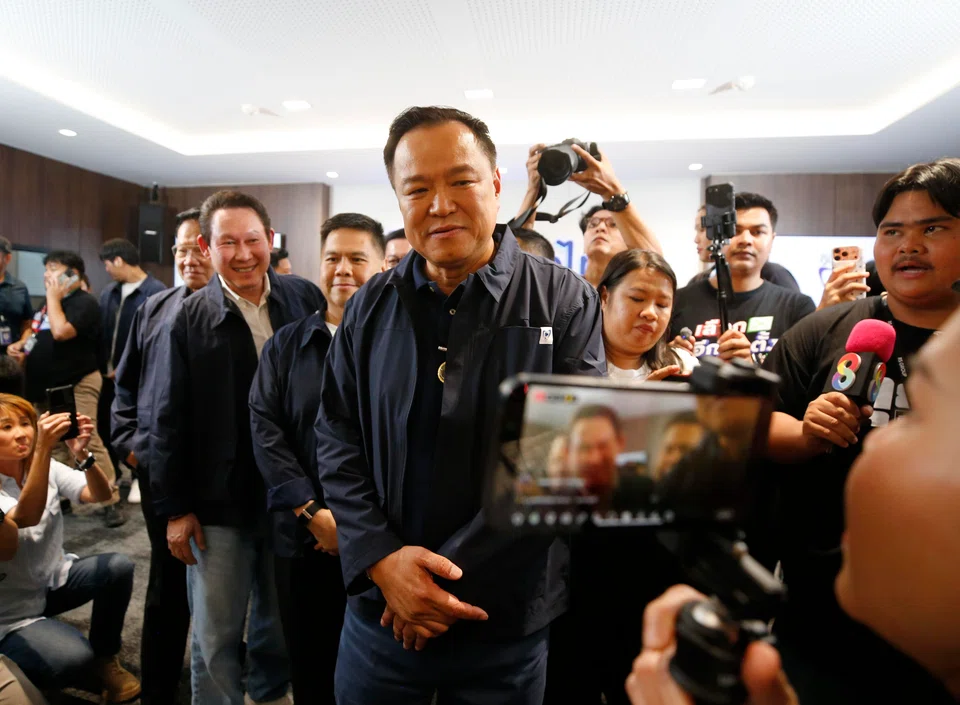
[BANGKOK] Thailand’s conservative Bhumjaithai Party (BJT), led by current caretaker Prime Minister Anutin Charnvirakul, won a decisive victory on Sunday’s (Feb 8) polls, on a promise of stability and economic stewardship.
While the outcome shores up short-term political certainty, it casts fresh doubt over the country’s longer-term growth trajectory.
“Bhumjaithai’s decisive electoral margin, combined with backing from Thailand’s elite establishment, should provide greater governmental stability than we’ve seen in recent years,” said Pavida Pananond, professor of international business at Thammasat University.
“A more stable political environment would, at minimum, restore some degree of business confidence, though whether that translates into actual policy coherence and implementation capacity remains to be seen,” she said.
According to unofficial results released on Monday morning, Bhumjaithai has won 194 out of 500 contested seats in the Lower House of Parliament – considerably above the 116 seats won by its chief rival, the progressive People’s Party.
The once popular Pheu Thai Party, whose founder and de facto leader Thaksin Shinawatra is currently in jail, won 76 seats. This makes it a likely coalition partner in a BJT-led government, along with the wildcard Klatham Party which fared surprisingly well with about 58 seats.
In the last election in May 2023, the People’s Party (PP), formerly Move Forward Party, led with 151 seats – compared with BJT’s 71 and Pheu Thai’s 141.
However, its charismatic leader Pita Limjaroenrat was blocked from assuming the prime minister post by the then military-appointed Senate.
Thailand’s 200-seat senate no longer has the power to block the selection of the prime minister. Even if it did, it is most likely that they would pick BJT’s Anutin, known to have the support of a strong faction within the conservative, non-elected body.
“Anutin is seen as having establishment backing,” said Thitinan Pongsudhirak, professor of international relations at Chulalongkorn University. The professor added: “They (BJT) also have the backing of the custodial agencies.”
Push for reforms
The outcome of Thai elections has increasingly shifted from the votes of the people to the so-called custodial agencies – independent non-elected bodies such as the Constitutional Court, the Election Commission, and the Anti-Corruption Commission.
These agencies were strengthened by the 2017 constitution, drafted when Thailand was under military junta rule following the 2014 coup.
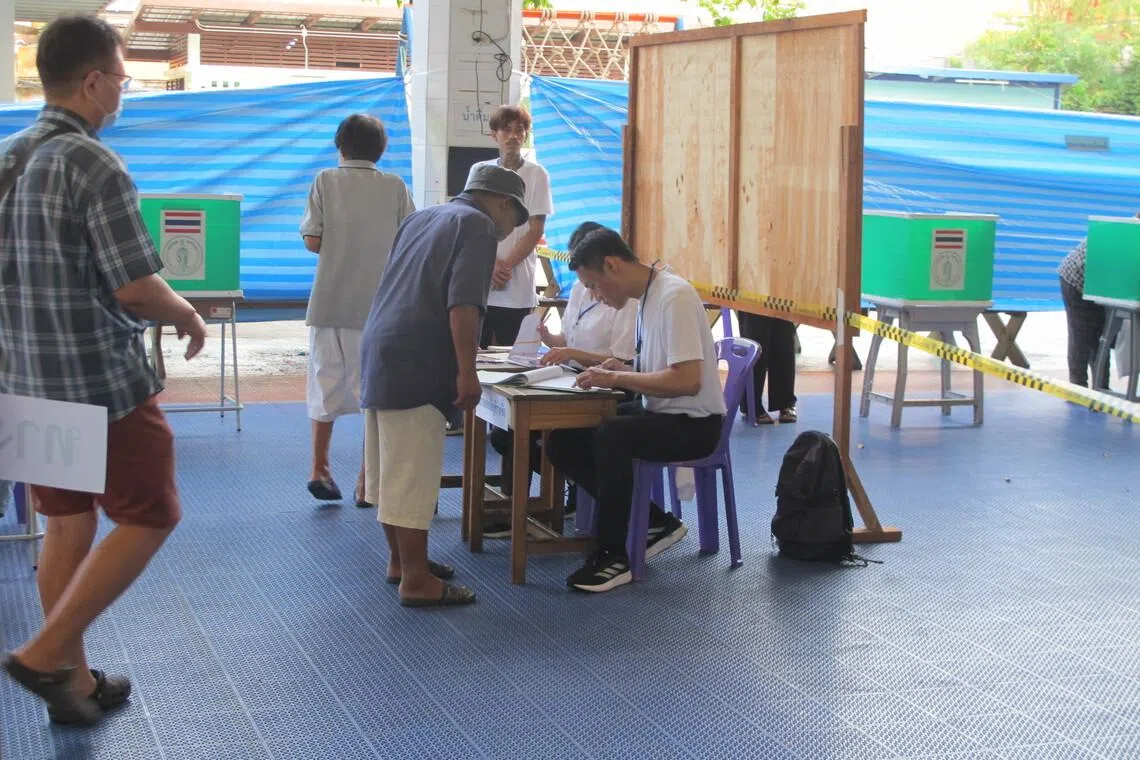
On Sunday, the Thai people also participated in a referendum on whether to amend the 2017 constitution, with more than 60 per cent agreeing with the change.
While this may be good news for Thailand’s political parties in the future, an amendment will take time, and requires two more referenda before promulgation.
Meanwhile, Thailand’s independent agencies continue to play a powerful role in determining election outcomes and politicians’ careers.
The Constitutional Court dismissed former Pheu Thai prime minister Srettha Thavisin in 2024 for a controversial Cabinet appointment and again dismissed his successor Paetongtarn Shinawatra for her role in the Thai-Cambodian conflict in 2025.
This led to the rise of Anutin and the BJT as a minority government in September 2025. Anutin dissolved Parliament on Dec 12, leading to the Sunday election.
The National Anti-Corruption Commission may decide on the fates of 44 PP members on Monday, who have been investigated for their roles in an attempt to amend the lese majeste law, which protects the monarchy.
No such rulings are expected against Anutin, a staunch royalist, who has burnished his nationalist credentials during election campaigning by taking a strong stance on preserving Thai sovereignty in the latest Thai-Cambodian border clashes from July to December.
It is for this reason that there appears to be relative stability under the BJT-led government.
Dream team
Anutin has burnished his party’s credentials on the economic front by choosing three respected professionals to join his eventual Cabinet, comprising Sihasak Phuangketkeow as foreign minister, Ekniti Nitithanprapas as finance minister and Suphajee Suthumpun, former CEO of IBM Thailand, as commerce minister.
The so-called “dream team” manned these same posts in the short-lived BJT minority government from September to December, and Anutin has vowed to keep them on.
While the dream team are well-respected by the Thai business community and the government bureaucracy, there are questions about their ability to tackle some of Thailand’s immediate challenges from scam centres and money laundering to widespread corruption, often involving politicians.
“I don’t think Ekniti, Suphajee and Sihasak can tackle the corruption issue. They will just perform their jobs,” said Picharn Sukparangsee, an international lawyer at Bangkok Global Law.
Ekniti Nitithanprapas, whose public career includes several senior posts at the finance ministry, is expected to prioritise the restoration of Thailand’s fiscal stability.
His agenda focuses on stabilising the country’s public debt – currently at 66 per cent of gross domestic product – and addressing household debt, which has ballooned to 90 per cent of GDP.
To achieve this, he aims to facilitate lending to SMEs, implement stricter fiscal discipline, and expand tax revenue through structural reforms.
But the new government will need more than just fiscal stability to pull Thailand out of its “the sick man of Asia” label. The economy is expected to grow between 1.5 and 1.7 per cent this year, well below Thailand’s South-east Asian peers.
To invigorate growth, Thailand needs to embark upon the kind of comprehensive economic reforms that were the main platform of the progressive People’s Power, economists say.
Without liberalisation the kingdom is likely to become at least “the forgotten man of Asia”, among foreign investors, said Kasikorn Bank’s chief economist Burin Adulwattana.
“How do we become more attractive?,” Burin asked participants a recent forum. “We need to create a more level playing field. We need a lot more competitive electricity prices. We also need less interference from the government.
“I think the new government’s legitimacy will be defined by how it performs on the economy, so some changes will come,” said Burin. “It doesn’t matter which party will run the government. If they don’t deliver on the economic front, they will not be in power long.”