Batam emerges as data centre hub, rivals Johor for investments
Indonesia is promoting Batam as a digital hub, leveraging its proximity to Singapore, to compete with Johor for spillover investments

[JAKARTA] Indonesia’s Batam is emerging as a prime destination for global investors in the data centre sector, positioning itself as a formidable competitor to Malaysia’s Johor for spillover investments from Singapore.
The competition with Johor Bahru is set to intensify, especially with the upcoming inauguration of a special economic zone (SEZ) in the Johor city in September, underscoring the need for Batam to accelerate its preparations to stay competitive.
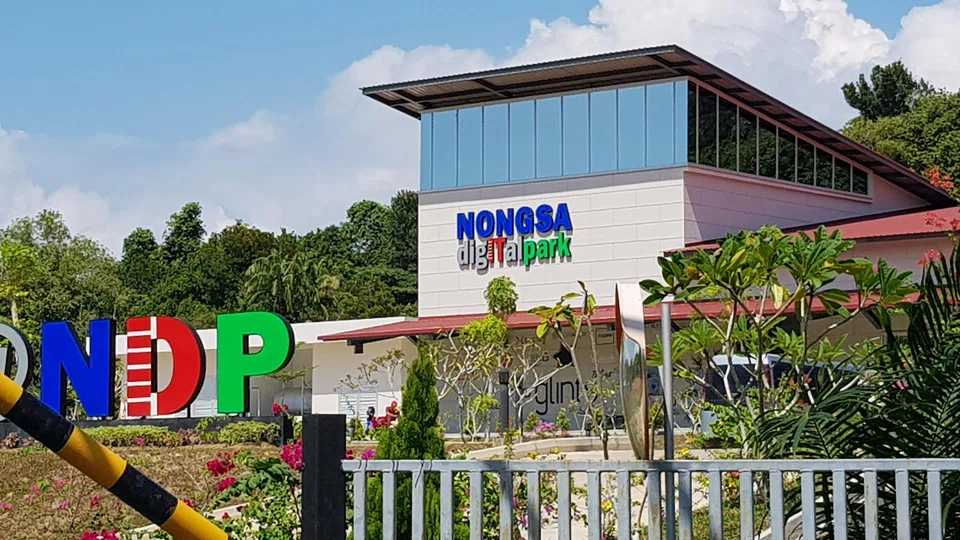
Batam is planning four additional hyperscale data centres in Nongsa Digital Park, a dedicated SEZ aimed at becoming a hub for digital investment, said Muhammad Rudi, mayor of Batam and chief of the Batam Development Authority, in an interview with The Business Times.
Bolstered by Singapore’s five-year moratorium on data centres, the island could attract up to 25 trillion rupiah (S$2.1 billion) in investments this year, said the Batam Development Authority. Major international players from China, the US and Japan are leading the charge.
A moratorium on data centres in Singapore, implemented in 2019 and lifted in January 2023, spurred developments in Batam, adding nearly 80 megawatts (MW) of IT capacity in 2021.
This growth continued, expanding to more than 157 MW in 2022, and is expected to surpass 200 MW this year, driven by Telkom’s NeutraDC and Princeton Digital Group projects.
Batam now hosts 10 data centres, most of them concentrated in Nongsa Digital Park, except for NeutraDC and Aesler-Greenix.
Nongsa Digital Park, spanning 166.45 hectares, has nine specialised clusters for the data centre industry. Rudi said eight clusters are fully occupied from the influx of investors seeking new land for data centres.
Tailing Johor Bahru
Indonesia is determined to capitalise on the data centre investment boom sweeping across South-east Asia.
The government is striving to establish Batam as the central hub for international and domestic fibre-optic cable networks to support data centres, targeting Singapore as the primary market, said Susiwijono Moegiarso, secretary at the Coordinating Ministry for Economic Affairs.
Batam is in a close race with Johor Bahru to attract spillover investment from Singapore, he told BT recently.
“Our competition with Johor Bahru is getting more intense, especially with Johor Bahru and Singapore set to inaugurate (an SEZ) in September. Naturally, we don’t want to fall behind in preparing Batam,” he said.
Vivian Wong, senior analyst at DC Byte, said both Johor Bahru and Batam are strong contenders as spillover markets for Singapore.
However, Wong noted that Batam now has a golden opportunity to capture investment spillover from Johor Bahru, which is facing challenges related to power and water shortages, particularly with the growing demand from data centres.
“In Johor, many data centre projects are scheduled for completion by 2026, with numerous developments having a 24-month timeline. I see this as an opportunity for Batam to capture some of the deals that may face delays in Johor,” she said. She added that as Johor’s initial construction wave progresses, Batam can capitalise on its immediate availability of energy and water resources.

Shifting away from Jakarta
Hendra Suryakusuma, chairman of Indonesia Data Center Provider Organization, said the pandemic sped up investment in data centres in Indonesia significantly, driven by rapid digital transformation and increased Internet usage across the country.
South-east Asia’s largest economy recorded substantial investment in data centres, with the Greater Jakarta area dominating data space demand, accounting for a third of market uptake in 2023, Knight Frank indicated.
In recent years, major global tech giants such as AWS, Alibaba and Microsoft acquired significant land in Greater Jakarta for new data centres, either through colocation schemes or by developing their own facilities.
However, due to competition with real estate firms seeking to develop office spaces in metropolitan areas, data centre investments are shifting to secondary cities, including Batam.
“As (an SEZ), Batam offers plenty of tax incentives, competitive land and electricity prices; it is also near many main cities, including Singapore,” Suryakusuma said.

Strong connectivity to Singapore
With a total population of 1.2 million, Batam has emerged as a new hotbed for foreign direct investment (FDI) in recent years. Last year, it attracted US$3 billion in FDIs, thanks to tax perks and supportive policies for foreign investors.
Batam’s strategic advantage lies in its proximity to Singapore – just 20 km separate the two places. This proximity sweetens its appeal for data centre investments, in that there is seamless connectivity to Singapore, a global financial hub.
The Indonesian island is also linked to other South-east Asian countries and the world through multiple submarine cables and fibre optic networks, enhancing its attractiveness for investors.
Connected by a total of 15 submarine cable systems, data centres in Batam will be able to tap the low-latency connectivity and serve applications that require high-speed data transfer, such as cloud computing and online gaming.
Batam’s submarine cable infrastructure is set to strengthen, following Singtel’s memorandum of understanding with Indonesian carrier Telekomunikasi Indonesia International (Telin) last June.
The agreement aims to develop a 100 km-long submarine cable system connecting Singapore and Batam, with the project expected to be operational by Q4 2026.
More power, more water
While there is optimism about Batam’s potential to serve as a data hinterland for companies in Singapore, experts warn that the industry is extremely energy-intensive and requires a steady and significant supply of water and power.
Data centre energy capacity in Indonesia is projected to reach 210 MW in 2024, marking a 44.8 per cent increase over that in the previous year, based on the Indonesian Data Centre Association. The energy capacity is expected to jump to 2.3 gigawatts by 2030.
Poised to emerge as the new epicentre for data centres in the region, Batam is gearing up to meet the growing demand for energy by aiming to provide a more stable and reliable power supply.
Mayor Rudi said: “Currently, there are plans to add 1,944 MW of electric power generation by 2032 and establish a 500 MW interconnection between Sumatra and Batam, which has been included in the projection of data centre electricity needs.”
The island plans to meet half its energy needs through solar-power generation projects now being built. The island is looking to ramp up Batam Bintan Karimun Solar PV Park, with 1,000 MW expected to be generated commercially by 2026.
DC Byte’s Wong mentioned electricity prices are a critical factor for data centre investors when choosing a location, given the long-term energy demands required to operate these facilities.
“Sustainable energy resources are very important for data centre market development in the years to come. I think this is also an opportunity for Batam to capture this market share in terms of renewable energy, and also let the local players participate in the game.”