How Vietnam’s richest man Pham Nhat Vuong catapulted Vingroup to global conglomerate
Jamille Tran
[HO CHI MINH CITY] Walk along the streets of Vietnam these days and it is likely that Vingroup – the country’s largest conglomerate – has its brand present in one way or another.
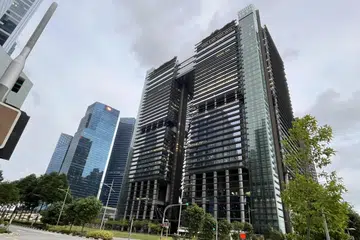
There is Vinhomes, a commercial real estate developer behind many high-rise buildings, including the Landmark 81 skyscraper in Ho Chi Minh City. Vincom Retail opened its first shopping mall in Vietnam 20 years ago, and is now the largest owner of retail space in the country.
Check out the cars on the roads and chances are high many of them are made by VinFast, the automaker that celebrated its listing on Nasdaq in the US in August 2023.
There are also Vinpearl’s hotels and resorts, private, not-for-profit university VinUniversity, and wellness service provider Vinmec.
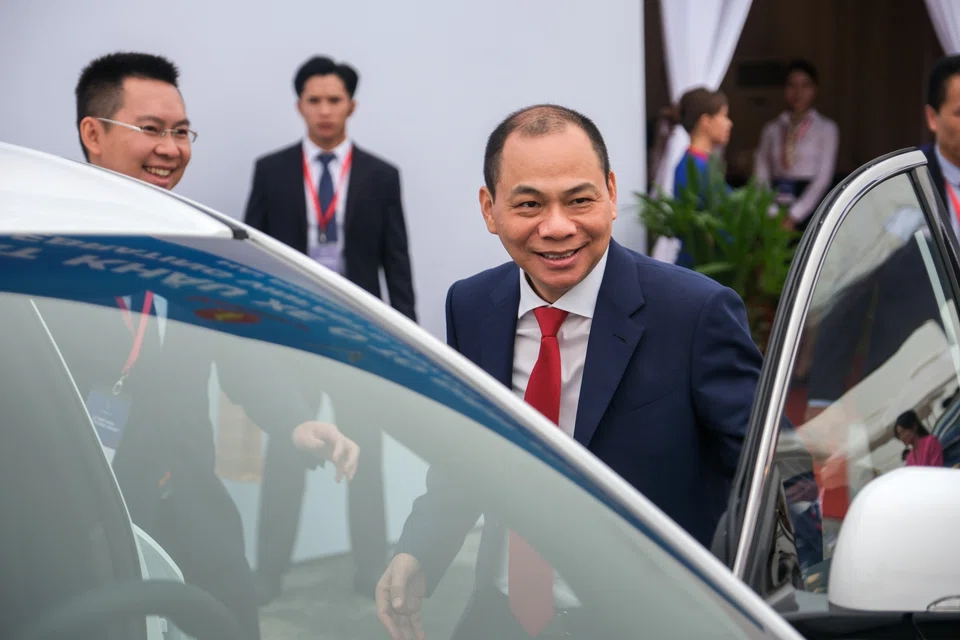
The entrepreneur behind Vingroup’s growth over the decades is Pham Nhat Vuong, the wealthiest person in Vietnam by some distance, according to Forbes’ world billionaires list for 2023.
Born in Hanoi, the 55-year-old is Vietnam’s first billionaire and is Vingroup’s founder, chairman and largest shareholder. Earlier this month, Pham also became VinFast’s new chief executive officer.
On the first day of trading of VinFast’s shares, Pham briefly saw his wealth soar by more than eight times to as much as US$44.3 billion – taking him to the top ranks of Asia’s richest.
As of Jan 18 this year, his fortune stands at a more modest US$4.5 billion – which is not too far off from what he had in 2018 when VinFast introduced its first petrol-powered car models in France.
Early career
Vuong, the eldest son of a family living in the capital Hanoi, finished high school in 1987 and went on to study geo-economic engineering in Russia.
He married Pham Thu Huong in 1993 and the couple have three children. Huong is currently the vice-president of Vingroup.
After spending five years in Eastern Europe, Vuong borrowed US$10,000 from a group of friends to establish a food-processing company called Technocom in nearby Ukraine.
Technocom eventually became Ukraine’s biggest producer of convenience food and condiments, and was well known for its Mivina instant noodles. In 2010, Nestle acquired the company for an undisclosed amount. At the time of the transaction, Technocom had revenues of around US$100 million.
By that time, Vuong, who returned to Vietnam in 2001, had already established publicly traded Vingroup. The company booked net revenue of US$4.4 billion in 2022, and set a target for revenue to reach US$8.1 billion last year.
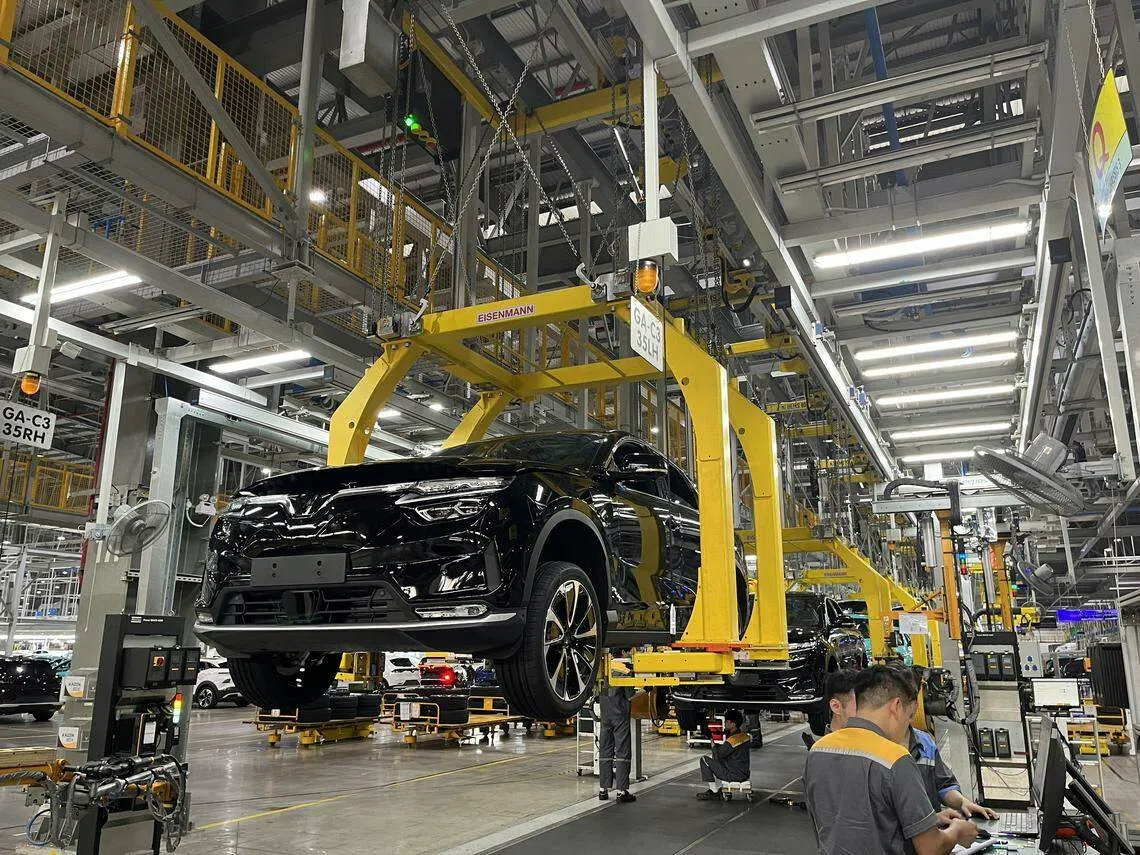
Of all the companies under Vingroup, it is perhaps VinFast that is making the most waves in Vietnam and around the world. VinFast inaugurated its first factory in Hai Phong province in 2019, which was hailed by then prime minister Nguyen Xuan Phuc as “a feat for Vietnam’s entire automobile industry”.
Growing empire
In less than 10 years after its founding, Vingroup skyrocketed to fame as one of Vietnam’s largest private conglomerates. Vuong was also recognised as the first “US dollar billionaire” on Vietnam’s stock market in 2011.
In 2013, he made his debut on Forbes’ billionaires list with a fortune of US$1.5 billion, and has remained there ever since.
With his longstanding philosophy of improving the lives of the Vietnamese people, Vuong grew Vingroup into a catch-all conglomerate, with a business umbrella covering hospitals, schools, shopping malls, apartment complexes and resorts across the country.
An indication of Vingroup’s immense reach and size can be seen in its two money-spinner subsidiaries Vinhomes and Vincom Retail. As at October 2023, those two subsidiaries together accounted for about 17.5 per cent of all free-float shares on the MSCI Vietnam Index. The index covers 85 per cent of the Vietnam equity universe.
One of Vingroup’s most significant milestones was in 2018, when it announced a pivotal strategy to “put Vietnam on the global map of technology and industry”.
Vuong and the management spearheaded a new investment strategy to become an international standard powerhouse in the tech industry in 10 years.
This ambitious plan to transform Vingroup into Vietnam’s standard-bearer of industry was kicked off by its venture into the high-stakes business of car manufacturing in 2017.
Vingroup later set up new technology businesses such as healthtech firm VinBrain, research arms VinAI and VinBigData, battery maker VinES, and cybersecurity company VinCSS.
It has also shut down businesses that have not achieved their projected exponential growth, or for other strategic reasons. For instance, Vingroup closed its electronic devices unit VinSmart in 2021 to mobilise more resources for VinFast, and ditched the manufacturing of petrol cars to double down on electric vehicles (EVs).
VinFast set a target of handing over up to 50,000 EVs worldwide in 2023, and aims to break even by as early as the end of 2024. However, it delivered fewer than expected at only around 35,000 cars last year, citing challenges such as slow EV adoption, stiff competition and an unstable economy.
While such performance is just 14 per cent of the production capacity of its Vietnam plant, VinFast has plans to inject US$2.1 billion more to get other factories operational in the US, Indonesia and India over the next few years, with a combined annual capacity of up to 350,000 units.
Vuong controls 99 per cent of VinFast’s outstanding shares. He and other companies under his control have pumped nearly US$10 billion into Vingroup. Some observers have said that Vuong might see his wealth diminish because of VinFast, which has posted a loss of over US$5 billion since 2021.
He does not seem to be too bothered, however. He was quoted in a Forbes report in 2021 as saying: “I don’t care how much money I make. I want to build things that make life beautiful.”
This is the second of a five-part series in BT on the wealthiest people in South-east Asia