


Indonesian digital lender Superbank betting on the underbanked to supercharge growth
As one of the country’s first digital banks, it aims to serve lower-income groups and leverage the ecosystems of major shareholders Grab, Singtel and Emtek
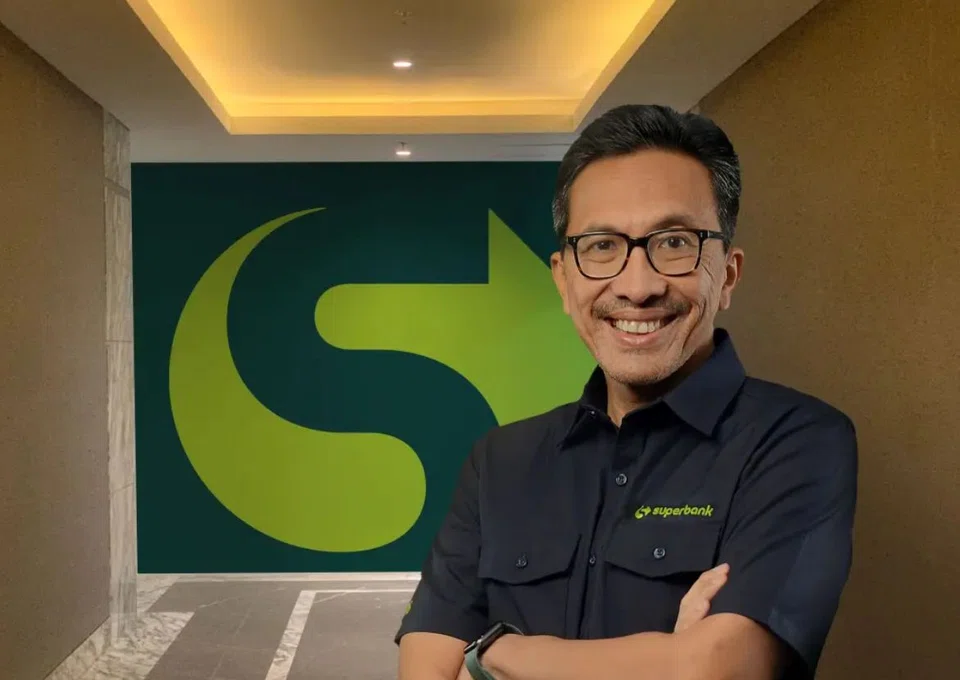
[JAKARTA] After nearly 30 years in traditional banking, Tigor Siahaan thought he had seen it all. But when he took on the task of building one of Indonesia’s first digital banks Superbank – owned by Indonesia conglomerate Emtek, as well as Grab and Singtel – he found himself going back to the drawing board.
“I have managed and run a number of banks in my career, but I had never built one,” said the president-director of Superbank. “I had to put everything in place, including hiring the full team.”
It was no doubt a steep learning curve, especially when marrying technology and banking, which called for a new mindset and approach.
Bridging the gap between bankers and tech experts at Superbank, one of Indonesia’s six standalone digital banks, was one of his biggest challenges.
“In the beginning, the bankers and tech people did not speak the same language, but having a healthy tension was very important to get the best solutions for the customer,” said Siahaan in an interview with The Business Times.
“This is a very regulated industry and you cannot be a cowboy, so there was a lot of learning from both sides.”
Originally established as Bank Fama International, the bank was rebranded to Superbank in February 2023 following its acquisition by the Emtek Group, marking its transition to focus on digital banking.
Having officially launched its services in June this year, Superbank quickly gained traction and has already attracted about two million registered users.
In 2023, the digital bank’s net interest income almost doubled to 301 billion rupiah (S$25.4 million) from a year ago. Net loss widened to 385 million rupiah from 155 million rupiah. Loan distribution surged 189 per cent year on year to 4.9 trillion rupiah, driven by strategic partnerships, while total assets rose 77 per cent to 9.7 trillion rupiah.
Targeting the underbanked
Superbank’s growth strategy is to target Indonesia’s underserved lower-income groups and micro-enterprises, which drive a significant portion of the country’s gross domestic product and are central to its mission of economic empowerment.
Superbank is leveraging the ecosystems of its key shareholders to drive growth: Grab’s extensive ride-hailing and food delivery network, Singtel’s vast telecom customer base, and Emtek’s dominance as Indonesia’s largest OTT (over the top) video platform, surpassing Amazon Prime and Netflix.
“This is a big segment for us to penetrate,” Siahaan said.
“The bottom of the pyramid is very important to us because the more opportunity you give them, the multiplier for the country is bigger.
“The lower-income groups do not have financial statements or collateral but many of them use Grab to sell food. We have thus integrated with Grab to get a better picture of our customers and their track record.”
Emtek, Grab and Singtel own around 35, 21 and 19 per cent of the bank, respectively, while South Korea’s Kakaobank has a 10 per cent stake as at end-2023.
Currently, digital banks make up less than 1 per cent of Indonesia’s banking sector.
“Looking at the statistics and if digitalisation continues to grow, that 1 per cent will grow in multiples and within five years, digital banks could make up 10 per cent of the total banking sector,” he noted.
The key challenge lies in gathering accurate data to build reliable credit models and identify the right borrowers. Grab’s ecosystem plays a pivotal role in providing valuable data points, he said.
“Given the ecosystem, we have a chance to succeed in terms of landing the right customer and underwriting the bottom of the pyramid,” said Siahaan.
Role of digital banks in Indonesia
Digital banks are a recent addition to Indonesia’s rapidly growing digital economy, with the industry projected to be worth more than US$130 billion by 2025. They have emerged to address the needs of Indonesia’s vast unbanked population, which makes up 80 per cent of its 275 million people.
Sensing an opportunity to leverage their ecosystems, tech companies such as GoTo and Grab have invested in digital banks in recent years.
The country’s digital banking sector comprises two main types: digital banks owned by traditional banks and six standalone digital banks established by fintech or tech firms.
Traditional players such as BRI’s Bank Raya and BCA Digital leverage their parent banks’ resources, while there are several tech-driven entrants such as Gojek-backed Bank Jago and SeaBank by Shopee parent Sea.
Despite their differences, all digital banks operate under the same regulatory framework, as Bank Indonesia does not classify them separately.
TRENDING NOW

Prima to move out of historic Keppel Road flour mill building in 2028

Grab CEO’s wife Chloe Tong on life with Anthony Tan and finding her purpose
OCBC sheds S$8 billion in value as shares close nearly 6% down; analysts cautious on banks
As Asia’s food delivery giants rejig the pie, who will win the market?

