Indonesia’s 2025 budget forecasts growth at 5.2%, modest deficit of 2.53% of GDP
Over 400 trillion rupiah set aside for infrastructure, including funding to build new capital city Nusantara

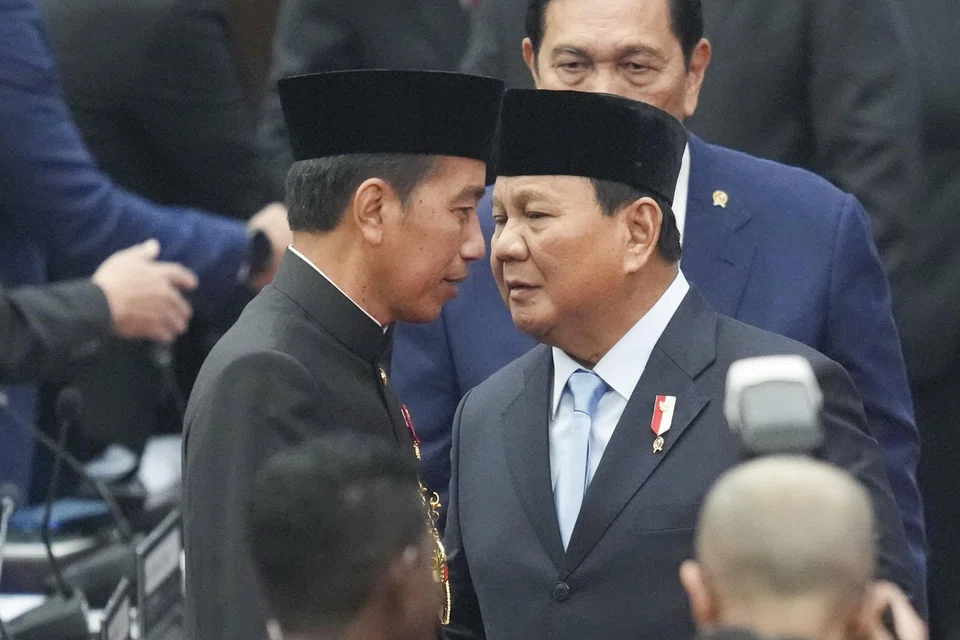
[JAKARTA] Indonesian President Joko Widodo has proposed a budget of 3,613 trillion rupiah (S$303.7 billion) for 2025 to fund the agenda of his successor Prabowo Subianto, including the ongoing development of the new capital city Nusantara.
The 63-year-old Widodo delivered his final state address on Friday (Aug 16), which comes two months ahead of his departure from office on Oct 20.
He said that Indonesia must continue structural reforms and prepare sound fiscal policies to anticipate global uncertainties.
The budget proposal, which was tabled to parliament, marks an 8.6 per cent rise from this year’s spending plan, which has been adjusted to 3,325 trillion rupiah.
Widodo said that South-east Asia’s largest economy should expand by 5.2 per cent next year. This is the same projection that was set out in the 2024 spending plan, but far less than the 8 per cent target that Prabowo has set for his five-year term.
As for inflation, Widodo said the rate should be at 2.5 per cent in 2025, slightly lower than this year’s outlook of 2.8 per cent.
Widodo anticipated that the spending plan will stimulate consumption in the country, which has been sluggish in recent months.
“We will closely safeguard consumer purchasing power by controlling inflation, creating jobs and providing support through social assistance programmes and subsidies,” he added.
Both the government and parliament have up to a month to deliberate on the draft budget before it is finalised and passed into law in September.
Widodo has been laying the groundwork for a seamless transition by supporting the many initiatives championed by Prabowo, including an ambitious free school meal programme that’s projected to cost a whopping 71 trillion rupiah in its first year alone.
Focus on infrastructure
Infrastructure development will remain a key focus for the government next year, with particular attention on the food, energy and connectivity sectors.
Infrastructure was allocated 400.3 trillion rupiah, including the funding for Widodo’s flagship project to construct the new capital city Nusantara in East Kalimantan
In his speech, Widodo also highlighted the importance of expanding value-added processing for agricultural products, building on the success of the nickel ore export ban, which has positioned Indonesia as a significant player in the electric vehicle sector.
The government aims to manage these new expenditures while maintaining fiscal discipline, targeting a modest budget deficit of 2.53 per cent of gross domestic product, well below the 3 per cent legal cap.
Emerging concerns
Several ratings agencies have in recent months flagged concerns that Prabowo’s ambitious spending initiatives could strain the nation’s budget.
David Sumual, chief economist at Bank Central Asia, said the deficit limit set by Widodo for Prabowo was notably prudent given the significant external challenges, including the global economic slowdown
“With a deficit of 2.5 per cent, I think Indonesia can still uphold its credibility with rating agencies,” Sumual told The Business Times.
Widodo’s proposal also projects an average rupiah exchange rate of 16,100 rupiah per US dollar and a 10-year bond yield of 7.1 per cent, up from last year’s assumption of 6.7 per cent.
In a bid to increase state revenue and keep the deficit below the limit, the government has set an ambitious target for revenue collection.
The budget proposal targets government revenues to rise 11 per cent next year to 2,996.9 trillion rupiah, from this year’s 2,698.3 trillion rupiah.
The government will introduce a series of new fiscal policies next year, including raising the value-added tax from 11 per cent to 12 per cent.
Indonesia also plans to impose excise taxes on plastic products and artificially sweetened beverages for health reasons.
Eko Listyanto, vice-director at the Institute for Development of Economics and Finance, noted that the plan is likely to lead to higher prices for goods, which could drive up inflation and constrain Bank Indonesia’s ability to ease its monetary policy.
“Indonesia’s economy needs a larger stimulus next year to boost purchasing power and offset weaker exports. This proposed tax increase could negatively affect consumer spending and potentially slow economic activity,” he said.
“The 2025 budget assumption is broadly in line with what was previously detailed in July,” Wee Khoon Chong, a senior Asia Pacific markets strategist at BNY Mellon in Hong Kong, was quoted as saying in a Bloomberg report on Friday.
“We do not think this could fully address near-term investors’ concerns on the new administration’s fiscal strategy. Budgets do change and Indonesia is no exception,” he said.
Widodo will depart the presidency after a decade at the helm with a legacy of stable economic growth of around 5 per cent and major infrastructure projects – such as roads, bridges and airports – designed to improve connectivity across the archipelago.
“In the past 10 years, we have been able to build a new foundation and civilisation with Indonesia-centred development – building from peripheries, building from villages, and building from outermost areas,” Widodo said.
“I would like to extend our apology to anyone who feels disappointed, for every hope that has not materialised, and for every dream that has not been realised.”