


Indonesia’s biggest IPO of 2025 surges 500% as tycoon Pangestu fever grips the market
Since Chandra Daya Investasi debut earlier this month, the stock has added nearly US$7 billion to his fortune this year

[JAKARTA] Chandra Daya Investasi, the latest public listing from Indonesian tycoon Prajogo Pangestu’s business empire, has skyrocketed more than 500 per cent since its Jul 9 debut on the Indonesia Stock Exchange (IDX).
The listing – reportedly one of the most oversubscribed in the bourse’s history – has breathed new life into a sluggish equity market, helping offset sharp foreign capital outflows totalling 59 trillion rupiah (S$4.6 billion) so far this year amid global trade tensions and investor caution over Indonesia’s growth outlook.
Analysts say the stock’s surge also signals Pangestu’s growing pull in Indonesia’s capital market, as investors, especially retail players, flock to stocks tied to his sprawling petrochemical-to-ports conglomerate, Barito Group. They are drawn by its prospects, financial muscle, and the backing of a billionaire whose name still carries weight.
“We see that the influence of (this) conglomerate remains very strong, as seen in how companies associated with the Pangestu name are highly sought after in the market, whether already listed or fresh IPOs (initial public offerings),” Herditya Wicaksana, head of retail research at MNC Sekuritas, told The Business Times.
Chandra Daya isn’t Pangestu’s only shining star in the market.
It follows earlier standout listings such as coal miner Petrindo Jaya Kreasi and Barito Renewables, which Pangestu holds majority stakes in. Both companies went public in 2023 and quickly gained traction with investors.
Since listing, Petrindo Jaya Kreasi has seen its share price explode more than fifty times over, while Barito Renewables has surged nearly eight times, highlighting the red-hot investor demand for stocks tied to Pangestu’s empire.
Riding the wave of these gains, the tycoon’s net worth – based on his holdings across Barito Group entities – has jumped US$6.45 billion so far in 2025, a 21.7 per cent increase from last year, according to the Bloomberg Billionaires Index.
With a net worth of US$36.2 billion, Pangestu now sits at the top of Indonesia’s rich list.

Stellar newcomer
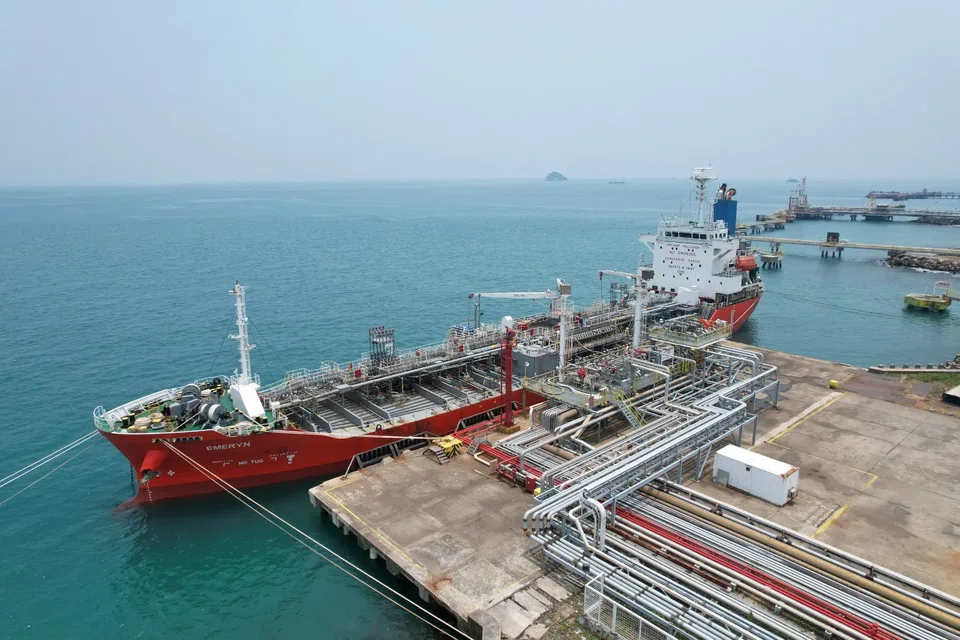
Chandra Daya Investasi is an investment management firm with a diversified portfolio spanning energy, ports, logistics, storage, and water treatment.
The company is majority-owned by Chandra Asri Pacific, the petrochemical arm of Pangestu’s business empire and one of Indonesia’s top producers in the sector.
Chandra Daya raised 2.4 trillion rupiah in its IPO by offering 12.48 billion shares, around 10 per cent of its total issued capital, making it the largest public listing in Indonesia so far this year.
Demand for the IPO was driven by institutional buyers, including foreign investors and individuals, whose bids exceeded their allocated shares by more than 560 times.
“Chandra Daya’s IPO oversubscription is possibly the highest in the history of the bourse,” said Fransiskus Ruly Aryawan, the company’s president director during the listing earlier this month.
Trading at 1,515 rupiah per share, the company’s market capitalisation has soared to 189 trillion rupiah, putting it among Indonesia’s big-cap stocks – nearing the ranks of giants like automotive firm Astra International and state-owned lender Bank Negara Indonesia.
Chandra Daya aims to scale up its infrastructure portfolio by acquiring vessels and investing in the development of port and warehouse facilities, tapping into the momentum of President Prabowo Subianto’s push for energy security.
Oktavianus Audi, vice-president and head of marketing, strategy and planning at Kiwoom Sekuritas, said Chandra Daya’s valuation has become increasingly attractive, driven by the rapid expansion of Indonesia’s logistics and maritime connectivity sectors.
He noted that the company’s IPO allocation was relatively conservative, at less than 15 per cent, minimising dilution risk and giving the company greater flexibility for future corporate actions.
“We see this as a key driver of strong investor demand, though we cannot deny that, subjectively, the figure of the owner has also instilled high confidence in the market, especially among retail investors,” Audi said.
Chandra Daya’s sharp rally prompted the IDX to halt its trading nine times, after the stock repeatedly hit the upper auto-reject limit, a rule that pauses trading when a share price climbs more than 7 per cent in a single day.
The exchange temporarily suspended trading of the company’s shares on Jul 17 after issuing an unusual market activity alert, citing irregular trading patterns driven by a sharp cumulative price increase.
According to the IDX, the suspension was intended as a cooling-off measure to encourage more cautious investor reassessment. Trading resumed the following Monday, Jul 21.
Conglomerate’s long game
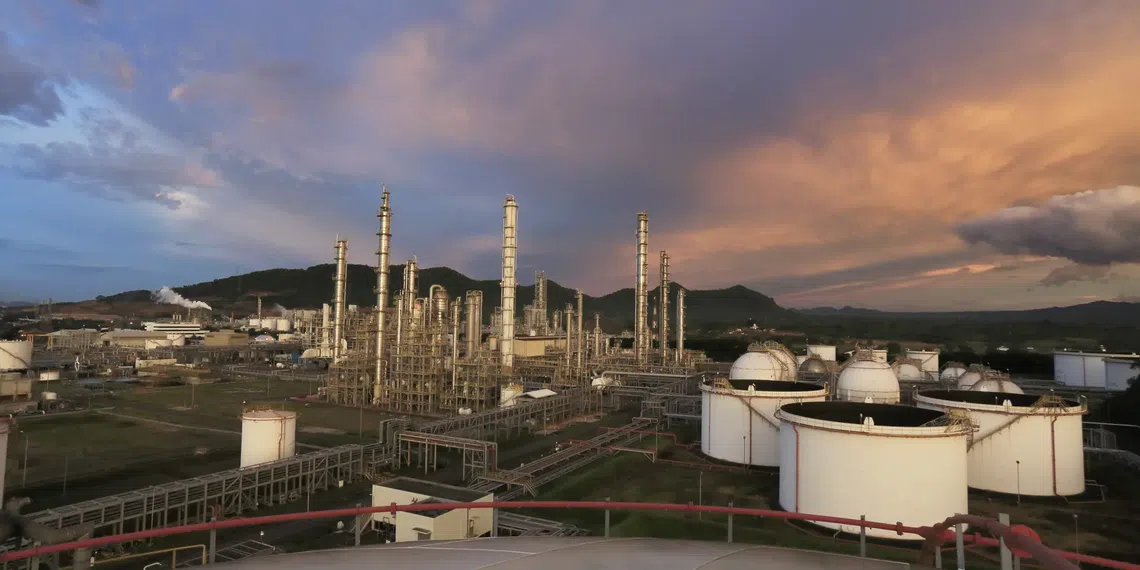
Pangestu’s business empire holds a solid position in key sectors such as energy (both renewables and infrastructure) and mining.
The tycoon, who started Barito Pacific in 1979, has been trying to diversify its renewable energy portfolio amid a push by Indonesia, one of the world’s biggest CO2 emitters, to hit net-zero targets.
Chandra Daya’s parent company, Jakarta-listed Chandra Asri, is also spreading its wings across the region. In Indonesia, it’s investing US$800 million to build a new chemical plant near its existing facility in Cilegon, about 100 km west of Jakarta.
Meanwhile in Singapore, it has teamed up with Glencore to acquire Shell’s refinery and Chevron Phillips’ polyethylene plant, marking a bold step into South-east Asia’s energy and chemicals landscape.
Wicaksana from MNC Sekuritas said growing focus on renewable energy has created strong psychological momentum in the market, fuelling investor interest in companies linked to this theme.
“This sentiment has extended to other Prajogo-affiliated companies, whose share prices have also climbed, helped by relatively low public float, which tends to amplify price movements.”
Overvaluation risk
Chandra Daya’s valuation surge has outpaced other major energy and logistics firms that have also ventured into the renewable business, such as AKR Corporindo and Indika Energy.
The analyst team at Stockbit Sekuritas cautioned that investors face the risk of overvaluation, even as investment decisions often involve a degree of subjectivity.
Audi from Kiwoom said that from a cautious perspective, Chandra Daya’s sharp price jump after the IPO has made its valuation quite expensive, with a price-to-earnings ratio of 312 times, far above the sector average of 14.3 times.
“We’re staying careful in case the market pulls back suddenly. We don’t want to get caught in a sharp drop,” he said.
TRENDING NOW

Philippine power giant First Gen rebuffs foreign offers, plans up to US$2.6 billion in expansion

Cliff Tan has 7 million followers and a 4-month waitlist. Why won’t he expand his business?

Could stablecoins be the future of money?

From finance aspirant to Asean CEO: TUV SUD’s Jonas Strahberger on finding people who believe in you

