


Malaysia’s poultry industry anticipates reduced production amid government intervention

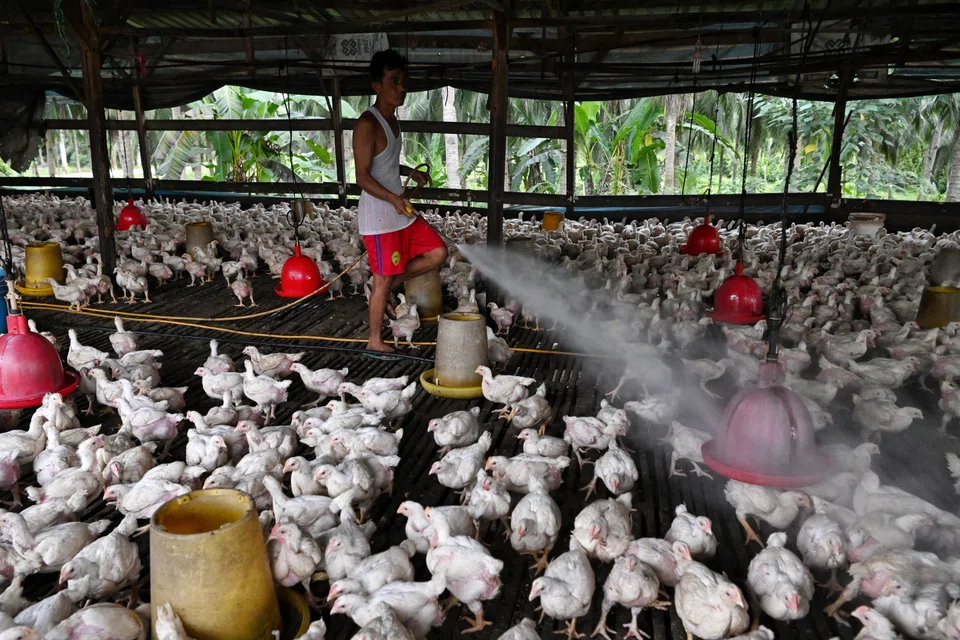
[KUALA LUMPUR] When it comes to the prices of chickens and eggs, Malaysia’s government has intervened heavily – to the tune of billions of ringgit – over the last 18 months or so as it seeks to keep the country’s poultry supplies and prices stable.
Since February 2022, the government has committed over RM2 billion (S$580.7 million) to subsidise chicken prices. A price ceiling of RM9.40 per kilogram was also implemented for standard processed chicken.
These temporary measures were supposed to be in place until the end of June this year, with the intention to allow chicken prices to fluctuate according to market demand. However, Prime Minister Anwar Ibrahim agreed in June to maintain the subsidies and price control mechanism indefinitely.
While industry players said these generous subsidies are beneficial to help keep supplies stable and ensure affordability for consumers, many also cautioned against prolonged government intervention as this could have an adverse impact in the long run.
Jeffrey Ng, adviser to the Federation of Livestock Farmers’ Associations of Malaysia, warned that sustained government intervention could disrupt market dynamics and discourage farm production.
“The inconsistency of the policies, such as the implementation period, makes it harder for the farmers to plan,” he told The Business Times.
Carmelo Ferlito, chief executive officer of the Center for Market Education, a think tank based in Kuala Lumpur, views the government’s measures as a political move to secure voter support, which he said could be detrimental to the market.
He said that fixed prices for chicken do not provide meaningful signals for supply and demand. Price ceilings also create scarcity, which hinders the market from reaching equilibrium, he added.
Highest consumption
Malaysia has the highest consumption rate of chicken in all of Asia, with each person consuming 50 kg of chicken every year on average. There are several reasons for this elevated consumption. Beyond religious considerations, chicken is the most affordable meat in Malaysia, largely due to the government’s subsidies.
According to data from the Department of Statistics Malaysia, the average retail price of chicken is around RM10.20 per kg – roughly one-third of the S$8.76 per kg price in Singapore.
Malaysia has achieved self-sufficiency in chicken production since 1985, and it was only last year that it experienced a rare shortage due to labour disruptions caused by the Covid-19 pandemic.
This prompted Malaysia to impose an export ban to Singapore in May last year, which severely impacted exporters who typically send as many as 3.6 million birds across the border to Singapore each month.
The shortage in Malaysia led to greater imports of chicken parts from other countries in the region, such as Thailand.
Tee Ah Kiat, president of the Malaysian Animal Health and Nutrition Industries Association, said some of these countries that have surpluses are selling their chicken stocks at a lower price, which in turn puts pressure on Malaysian producers struggling with rising costs.
According to the Ministry of Agriculture and Food Industries, Malaysians consume roughly 1.8 million chickens every day. It requires a self-sufficiency level of 104 per cent from the production side to meet domestic demand.
From a level of 110 per cent in 2000, this fell below 100 per cent in 2022, and is expected to stay around the 90 per cent mark this year due to factors such as the hot weather, said Ng.
“If this scenario continues and with price ceilings in place for the long term, industry players (will be) discouraged from increasing their production. Not only will we be losing our exports business, but we may one day need to rely on imports for domestic needs.”
Both Ng and Tee said that while Malaysia’s poultry industry still requires some form of government support to survive, some of the expenditure should be redirected to areas that can enhance the ecosystem and assist smaller farmers. This could involve supporting research and development, automation and feedstock production, they said.
TRENDING NOW

Companies still in search of AI use cases with worthwhile ROI, says Broadcom’s CEO

Beauty World Plaza up for collective sale for S$165 million
Trouble in paradise: Bali runs low on fuel, sparking long lines at pumps

Philippine power giant First Gen rebuffs foreign offers, plans up to US$2.6 billion in expansion

