


Malaysia’s property divide: Johor and Penang sizzle as Kuala Lumpur cools amid condo glut
Johor leads the country’s housing market in early 2025 on JS-SEZ and RTS Link momentum, though older high-rises keep overhang high

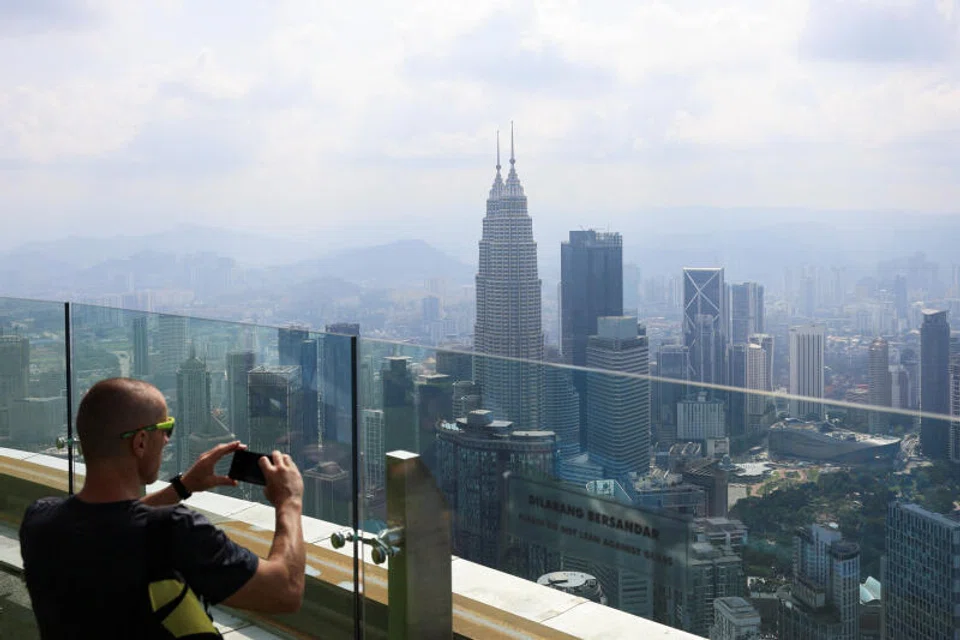
[KUALA LUMPUR] Johor and Penang are defying the chill in Malaysia’s property market, buoyed by Singaporean spillover and industrial demand, even as Kuala Lumpur remains sluggish under a glut of unsold units, particularly in the high-rise segment.
Nationwide, transactions slipped 1.3 per cent in the first half of 2025 to 196,232 units, though values edged up 1.9 per cent to around RM107.7 billion (S$33 billion), suggesting prices remain firm even as sales momentum slowed.
The data from the National Property Information Centre (Napic) shows that while Malaysia’s property market has hit a soft patch, the slowdown is uneven.
In Johor’s property market, cross-border proximity has drawn a surge of foreign interest, with new launches near key transit corridors seeing brisk take-up, even as older high-rises continue to linger on the market.
In Penang, where the market is steadier but more premium-led, experts say limited land supply and strong foreign appeal – especially among long-term investors drawn to its quality of life and thriving electronics hub – have kept prices firm.
That is not to say the capital city of Kuala Lumpur is short on attention – far from it. Foreign interest remains steady, with buyers drawn to well-located condominiums that offer affordable luxury by regional standards, prompting developers to stand firm on their pricing.
“Many of these projects were designed in part for the expat market, so the growing number of foreign buyers will help absorb some of the inventory,” Kashif Ansari, co-founder and group chief executive officer of Juwai IQI, told The Business Times.
According to a report released in April by Juwai IQI, Malaysia has emerged as one of the top 10 destinations for Chinese high-net-worth (HNW) individuals looking to purchase overseas property in 2024, a notable rise given that the country was not on the list in 2023.
“Malaysia ranked fourth among destinations in our report on Chinese HNW individuals’ demand for overseas homes worth at least US$5 million,” said Kashif. He highlighted that Malaysia trailed only Thailand, Australia and Canada, while Singapore placed ninth.
The report also indicated that the vast majority (94 per cent) of these buyers are looking for homes for personal or family use, with the remainder purchasing strictly for investment and often citing emigration as a key factor.
Citing the latest data from the Home Ministry, Kashif noted that the number of foreign expats has hit a high of 120,183, with the majority of them from China, the Philippines, Japan and Indonesia.
Meanwhile, there were 58,468 Malaysia My Second Home pass holders as at February 2025, according to data from the Tourism, Arts and Culture Ministry.
Malaysia’s property overhang deepened, with unsold homes up 16.3 per cent to 26,911 units worth RM16.4 billion – mostly high-rise units, underscoring a structural mismatch in the market.
Klang Valley: Oversupply meets foreign appetite
The Klang Valley remained Malaysia’s most active region but also its most imbalanced.
Kuala Lumpur’s residential overhang was valued at around RM3.2 billion in the first six months of 2025, while Selangor’s stood at nearly RM2 billion. Much of this stock is tied to condominiums and serviced apartments that continue to face slow absorption.
Kashif observed that foreign demand is picking up. Data from Juwai IQI shows that foreign buyers are making 52.5 per cent more inquiries on Malaysian property versus last year.
Most popular are expat-friendly hotspots in KL such as Kuala Lumpur City Centre and upscale suburbs from Bukit Damansara and Bangsar to Bukit Tunku.

He noted that most foreign buyers in Penang and Kuala Lumpur favour high-rise condos, serviced apartments and landed homes priced up to RM2 million, with a smaller pool of luxury buyers.
The growing number of foreign residents is significantly boosting demand, not only for residential properties but also for the commercial and industrial properties that support their businesses, said Kashif.
Selangor is thriving as the country’s industrial hub, accounting for 34.5 per cent of national industrial transactions.
This dominance is underpinned by robust demand for warehouses, terraced factories and industrial plots, largely driven by continued growth in the e-commerce and data centre sectors.
Commercial property also held steady. Selangor topped the nation in shop transactions by value with RM2.7 billion, while Kuala Lumpur’s prime districts such as Bangsar and Jalan Tuanku Abdul Rahman maintained strong rents, with monthly rental rates ranging between RM17,000 and RM34,000.
Johor: Launch leader with Singapore link

Johor dominated the country’s 17.5 per cent residential primary market, accounting for 23.1 per cent of new launches with 5,401 units.
The state’s sales performance hit 44 per cent, nearly double the national average, led by terraced houses and serviced apartments near the Johor Bahru city centre.
Kashif highlighted a surge in Johor Bahru and Iskandar Malaysia areas. “Foreign demand has been amplified by the Johor-Singapore Special Economic Zone (JS-SEZ) and new Johor Bahru–Singapore Rapid Transit System (RTS) Link.”
For example, TSLAW Land’s Skyline (Eastside) project, situated only four kilometres from the upcoming RTS Link, recorded a 70 per cent take-up rate within weeks of its launch in July.
The development attracted a mix of local and foreign purchasers at an average selling price of RM851 per square foot.
Still, Johor ranked among the top states for overhang, with 3,209 unsold units worth RM2.76 billion.
Tan Wee Tiam, executive director of Olive Tree Property Consultants, said new launches in prime locations are selling out, while legacy high-rises that were overpriced or poorly located continue to drag the numbers.
Amy Wong, executive director of research and consultancy at Knight Frank Malaysia, observed an improvement in Johor’s residential property overhang (including serviced apartments and small office/home office units).
The number of overhang units fell by 20.2 per cent, dropping to 12,910 in the first six months of 2025, from 16,182 in H1 2024.

Foreign sentiment is nevertheless strong, as Tan described that the JS-SEZ represents a pivotal shift in Johor’s economic structure.
“Interest is not just speculative, many investors and property buyers have already taken positions within the JS-SEZ region, signalling confidence in Johor’s long-term growth story,” he added.
He noted that the healthy pipeline of future deals is clearly indicated by the ongoing inquiries and active negotiations.
Commercial demand was also robust. Johor led the country in shop transactions by volume, accounting for 21.2 per cent of sales.
Commercial property prices in Johor Bahru rose between 2.3 and 9.3 per cent, while rents along Jalan Wong Ah Fook and nearby areas held steady at RM7,500 to RM9,500 a month, according to Napic’s data.
On the industrial side, Johor contributed 17.6 per cent of national transactions.
“Data centres, logistics, advanced manufacturing and e-commerce are leading the charge. These investments create spillovers that boost demand for housing, commercial units and local services,” said Tan.
Penang: Lifestyle meets electronics
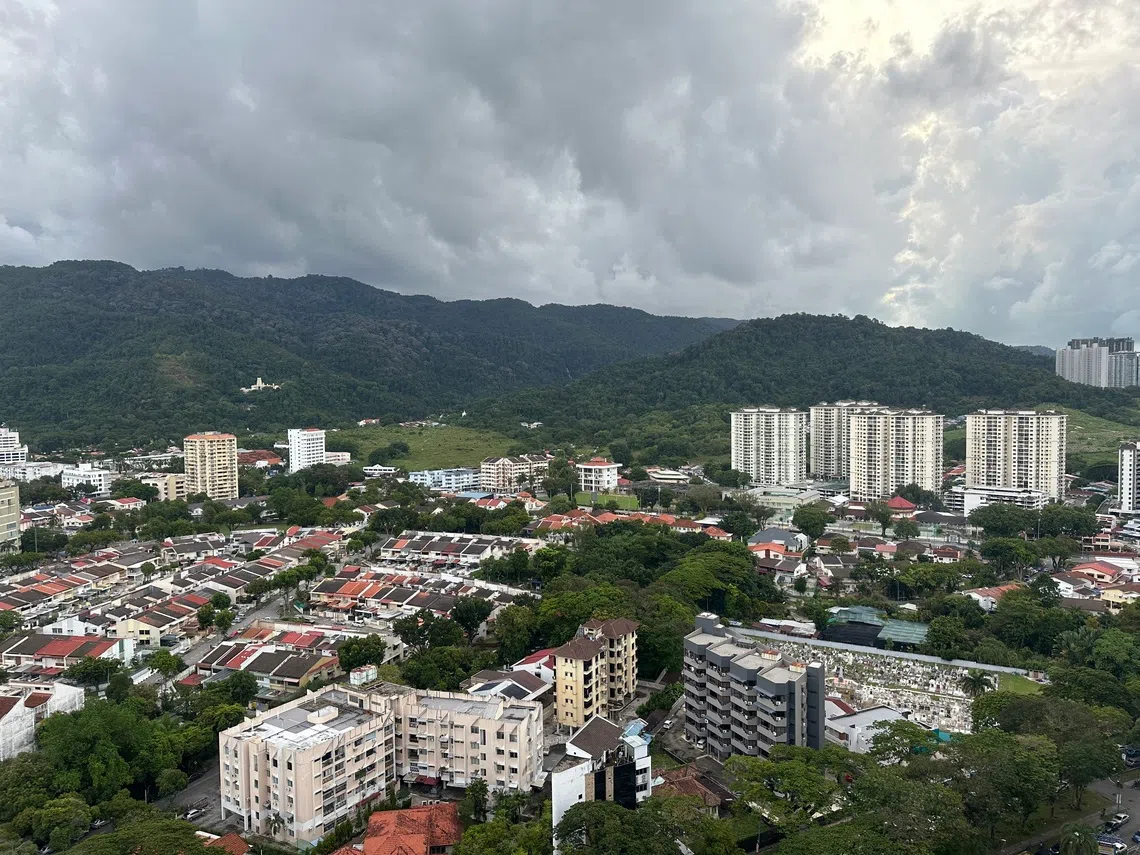
Penang’s property market delivered a more measured performance from January to June 2025, reflecting affordability pressures but also selective resilience.
Residential demand was softer overall, but condominiums and apartments in George Town’s north-east district continued to attract interest from buyers willing to pay a premium for sea views and lifestyle-driven amenities.
Penang Island now has the highest average serviced apartment price in Malaysia at RM879,447 a unit, with the strongest long-term appreciation among major cities, said Juwai IQI’s Kashif.
According to Napic’s data, serviced apartments in Timur Laut and Barat Daya districts on Penang Island transacted at prices ranging from RM588,000 to RM920,000.
“Penang is highly valued by occupiers and investors alike for its strong industrial base and high quality of life,” he added.
The state’s expanding manufacturing and logistics sectors, especially in Batu Kawan and Seberang Prai, continue to drive sustained housing demand.
Meanwhile, the scarcity of developable land on Penang Island contributes to higher prices and necessitates a focus on high-density, vertical development, said Kashif.
Commercial activity slowed in volume but prices held firm, with double-storey shop units in Timur Laut transacting between RM800,000 and RM3.2 million.
The industrial story is underpinned by Penang’s entrenched electronics base.

Knight Frank’s Wong said Penang’s attractiveness is buoyed by its strong electronics supply chain and key infrastructure developments.
Key drivers include the massive Penang Silicon Island project and the major airport upgrading and expansion work, which involves adding a new terminal by 2027.
The Penang Silicon Island project is a state-led, 930-hectare development designed to establish a low-carbon smart city and a leading technology hub in Malaysia. Located on the southern coast of Penang Island, the project is being jointly developed by the Penang State Government and Gamuda.
Stable but cautious outlook
Napic expects Malaysia’s property market to remain stable but cautious through 2025. Residential oversupply and affordability mismatches will persist, but industrial and logistics assets are thriving.
Juwai IQI’s Kashif noted that recent transaction activity suggests a stronger second half. “We see selective signs of growth driven by targeted government support, lower interest rates and improving economic fundamentals,” he added.
Tan believed that the industrial segment will be the key driver, forming the backbone of market growth, underpinned by strong demand from logistics, manufacturing and data centre players.
Beyond industrial, he projects stronger performance for retail and healthcare-related real estate. “This is fuelled by the steady post-pandemic increase in visitor arrivals, not just from Singaporean day-trippers but also tourists from China, India and other countries.”
Knight Frank’s Wong noted that Malaysia’s consistent stance as a neutral ground welcoming investors from all countries is a key advantage.
“This helps to mitigate geopolitical risks and assures a continued open-door policy for foreign direct investment, potentially offsetting concerns arising from trade tensions,” she added.
TRENDING NOW

Philippine power giant First Gen rebuffs foreign offers, plans up to US$2.6 billion in expansion

Cliff Tan has 7 million followers and a 4-month waitlist. Why won’t he expand his business?

Could stablecoins be the future of money?

From finance aspirant to Asean CEO: TUV SUD’s Jonas Strahberger on finding people who believe in you

