New airports, high-speed rails, Olympic complex: Vietnam shifts into top gear
The once-in-a-decade fiscal splurge for infrastructure build-out is a key driver for the country’s 10% growth goal

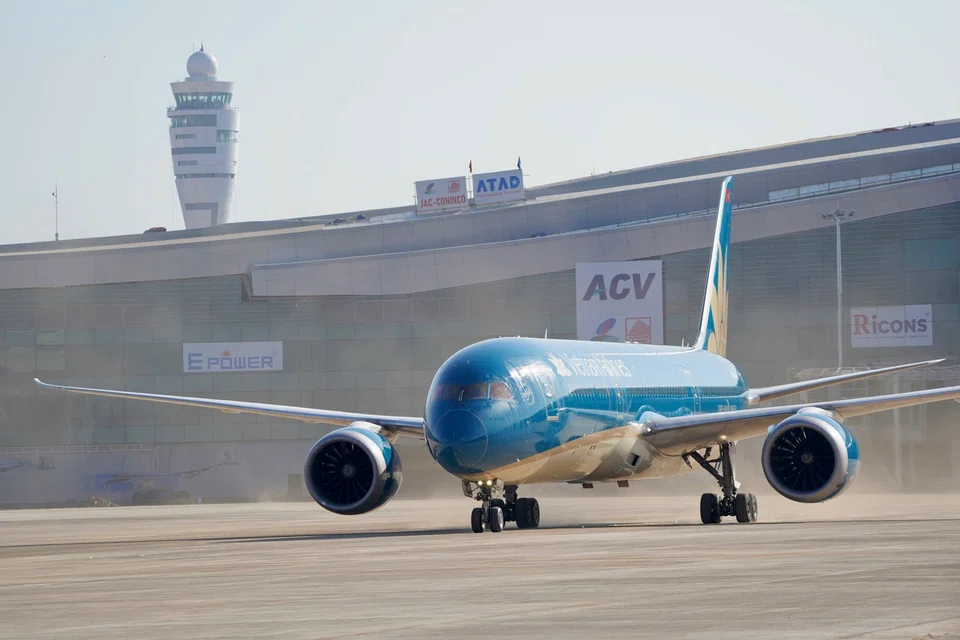
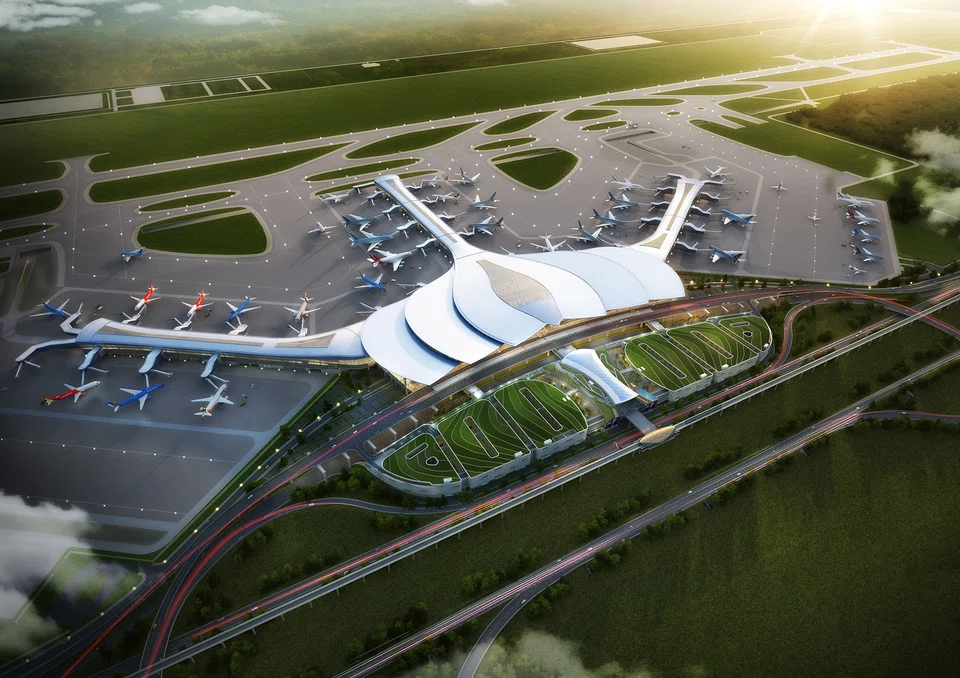
[HO CHI MINH CITY] On the morning of Dec 19, Vietnam welcomed its first arriving passenger flights at Long Thanh International Airport – a flagship infrastructure project located 40 km east of Ho Chi Minh City and designed to eclipse Tan Son Nhat as the country’s largest aviation gateway.
This milestone is just one piece of a much bigger effort, underpinned by the government’s push for development at “breakneck pace” and with “audacious execution”.
Vietnam is spending more on infrastructure than any other Asean country, with a wave of projects coming on stream as the country tries to lay the groundwork for faster growth from 2026.
More than 230 projects, with a combined value of 3,400 trillion dong (S$166.6 billion), were launched or broke ground nationwide on Friday (Dec 19) – a snapshot of both the scale and urgency of Vietnam’s infrastructure push.
The slate is sweeping in scope, from new and expanded airports to high-speed rail links tying northern Vietnam more closely to China, as well as long-awaited metro lines in Ho Chi Minh City, Hanoi and Phu Quoc.
It also stretches across steel factories, power plants, hospitals and a web of new tourism, urban and industrial hubs.
At the top end are headline megaprojects, including Hanoi’s planned 9,000-hectare Olympic Sports City – a US$35 billion development intended to position the capital to host major regional and global events, from the Asian Games to even the Olympics, by 2030.
This December milestone far outweighs a similar push four months earlier. While the August round involved a higher number of projects – about 250 – their combined value, at just over 1,200 trillion dong, was only a third of the scale seen this month.
This week also marks a key inflection point. According to the Ministry of Construction, by Dec 19, 2025, the country would have completed more than 3,500 km of highways, alongside the first phase of the Long Thanh International Airport with an initial capacity of 25 million passengers.
From 2021 to 2025, the country’s total highway network tripled, with construction advancing at an average of around 400 km a year – more than four times faster than the previous period, the ministry reported.
“These key transport projects will create new value for land and urban development, reduce travel time and logistics costs, lower input costs for products, boost competitiveness, and improve mobility for citizens and businesses,” remarked Vietnam’s Prime Minister Pham Minh Chinh after the Dec 9 meeting of the State Steering Committee for Key National Works.
Earlier this year, several high-priority projects, including components of the North–South Expressway and Tan Son Nhat Terminal 3, were also completed ahead of schedule.
Surge in public works
Vietnam’s 2026 budget allocates about 1,100 trillion dong to public investment, the highest level on record. This is expected to push public investment to nearly 9 per cent of gross domestic product, surpassing the previous peak reached in 2012.

“This level is comparable to China’s during the period of significant development of infrastructure (between 2000 and 2015),” said analysts at JP Morgan Securities on Dec 3.
They also expect Vietnam’s public infrastructure spending to remain the highest in Asean in 2026, providing a tailwind for banks, consumer discretionary companies and industrial firms.
Despite global tariff uncertainties, Vietnam recorded GDP growth of close to 8 per cent in the first nine months of this year, buoyed in part by development investment expenditure that increased 43 per cent from a year ago.
“The once-in-a-decade fiscal boost in 2025 will become the new normal in the medium term,” JP Morgan analysts added, pointing to a steep fiscal expansion in Vietnam’s 2026 infrastructure budget and the next three-year investment plan.
“The strong capex cycle should set the stage for urbanisation and a broadening of growth,” the bank’s broker-dealer arm wrote.
Vietnam’s government is now targeting at least 10 per cent annual GDP growth between 2026 and 2030, which would mark the country’s fastest expansion since 2010.
Private sector catalysis
The public-led infrastructure boom also hopes to draw more private capital following a slew of reforms and deregulation.
Recent changes to public-private partnership regulations have streamlined project approvals, decentralised authority to ministries and local governments, and strengthened investor protection.
Key measures include raising the public capital contribution cap for qualified projects from 50 per cent to 70 per cent, making large-scale infrastructure investments more attractive to private players.
These form part of an ongoing set of ambitious reforms since the landmark “Doi Moi” era of the 1980s, with the most fundamental change being a shift towards making the private sector the most important driving force in Vietnam’s economy.
They also include public-sector downsizing, provincial mergers, a 30 per cent cut in red tape, stronger investment in science, education and infrastructure, as well as the creation of dozens of national champions tied into global value chains.
Over the past year, local conglomerates such as Vingroup, Thaco, Masterise and Sovico have expressed interest in investing in major projects ranging from metro lines and the North–South high-speed railway to new airports and seaports.
In fact, 82 per cent of the 3,400 trillion dong in projects announced on Friday came from private capital, with the remainder funded by the state.
“For a one-party communist state to declare the private sector the ‘most important driving force’ of the economy is nothing short of revolutionary,” said Nguyen Khac Giang, a researcher in Vietnamese politics at the Iseas-Yusof Ishak Institute in Singapore. “If Vietnam can turn this into reality, it has a genuine chance of escaping the middle-income trap.”
Risks of overheating
Still, economists caution that Vietnam’s growth ambitions are not without risks. Maybank economists Brian Lee and Chua Hak Bin noted that exports account for roughly 90 per cent of GDP, leaving the economy highly exposed to global trade cycles.
“The 10 per cent GDP growth target is achievable, but only under a blue-sky scenario with strong exports and full realisation of public investment plans,” they wrote in a Dec 9 note.
The two economists also warned that Vietnam’s credit-to-GDP ratio has climbed to a record high of above 150 per cent this year. Credit growth in 2025 is projected at 19 to 20 per cent, up from about 15 per cent last year, and could accelerate further as the State Bank of Vietnam plans to pilot the removal of bank credit quotas in 2026.
“The economy risks overheating if the demand-side push through public investment and credit turns overly aggressive,” the Maybank economists said, flagging the possibility of higher inflation and tighter monetary policy.
Mickael Driol, chief executive of Mekong Partners, which provides corporate solutions for cross-border investments across Asia, added that Vietnam is reaching a point where industrial demand is outpacing grid capacity.
Foreign investors also expect greater clarity on how Vietnam intends to integrate renewables, strengthen its grid, and secure transitional fuels.
“A country can only industrialise as far as its infrastructure allows, and Vietnam is now confronting that truth directly,” he stated.
Execution risks linger
Many industry players worry about execution and have raised questions on how quickly these infrastructure investments will translate into tangible economic growth.
“Investors often tell us that they trust the central direction but must carefully evaluate local execution capacity,” said Driol.
Land clearance delays, lengthy approval processes, fragmented responsibilities across provinces and ministries and risk aversion among officials have historically hampered disbursement and project roll-outs.
For public investment, by November 2025, only over 60 per cent of the annual spending plan had been disbursed, even after administrative streamlining.
For instance, authorities disbursed just 76 per cent of the total investment in the Ben Thanh-Suoi Tien metro line – Vietnam’s first urban rail system in the south – by November 2025, despite it entering operation in late 2024.
“The developments of 2026 will determine whether Vietnam becomes a stable anchor in global supply chains or remains limited by infrastructure and execution gaps,” Driol added.