


‘Our moat is our people’: GXBank CEO backs passion-driven teams to serve Malaysia’s underserved
About half of the bank’s customers are low-income Malaysians earning under RM4,000 a month

The strategies and stories that shape today’s leaders
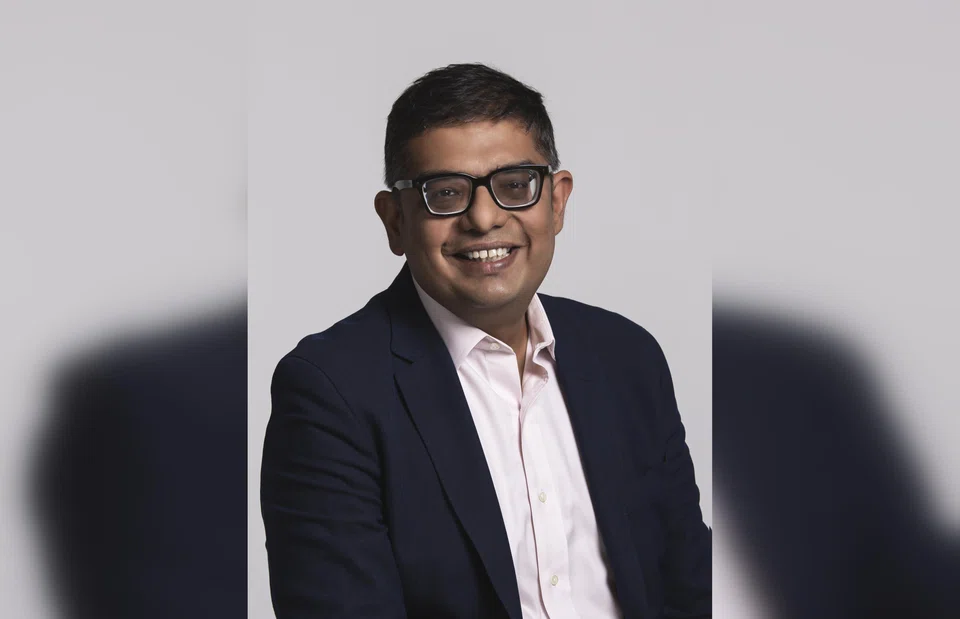
[SINGAPORE] For GXBank CEO Kaushik Chowdhury, building a digital bank has never just been about the tech stack.
Strong digital capabilities and operating within the Grab ecosystem have enabled the Malaysian digital lender to tap Grab’s wide range of data to assess credit risk, with a system of optimised processes that allows the bank to approve a loan within 10 minutes.
“But the tech is available for everyone, both our competitors and traditional banks,” he said in an interview with The Business Times.
Rather, Chowdhury believes that the most critical element driving GXBank and its vision for financial inclusion in Malaysia is a team that is committed to the bank’s values of building economic empowerment, by making financial services affordable and accessible to all.
GXBank operates in Malaysia under the Singapore-based GXS group, a digital bank backed by Grab and telco Singtel. GXBank also counts Malaysian conglomerate Kuok Group among its major investors.
After Malaysia’s central bank, Bank Negara Malaysia, first issued five digital licences for lenders that could “meaningfully address financial inclusion gaps” in the country in 2022, GXBank became the first to launch publicly in November 2023.
Since then, four other digital banks have launched, the most recent being Sea-backed Ryt Bank in August 2025.
Serving the underserved
For the past three years, meeting the financial needs of underbanked communities has become the bank’s central “problem statement”, Chowdhury told BT.
About half of the bank’s customers are low-income Malaysians earning a monthly salary of under RM4,000 (S$1,274), he explained. For about half of those within this segment, it was their first time taking a loan, GXBank found after conducting an internal survey.
Traditional banks have historically been reluctant to serve such customers, Chowdhury noted. Principal loan amounts within these segments are far smaller than regular bank loans, with ticket sizes as low as RM500.
GXBank’s revolving line of credit, FlexiCredit, offers small, fully digital credit lines with approvals in as little as 10 minutes, where a traditional bank may take three to five days. The bank’s average loan size is about RM2,000.
The other main goal of the bank is to unlock the micro, small-and-medium enterprise segment, which typically faces difficulties accessing credit.
The bank said that it has reached RM1 billion in loans since the launch of its lending products for both retail and business, serving more than 1.4 million customers across Malaysia.
But addressing the needs of underserved segments has not been straightforward, he said. “These are hard problems to solve.”
Still, it is the unique operational know-how of GXBank’s 400-strong employees that helps the bank build products specifically for these segments – giving the lender an edge over its competitors, said Chowdhury.
For example, through the bank’s Biz FlexiLoan product, interest is recalculated daily rather than monthly, allowing small businesses with uneven cash flows to lower borrowing costs by repaying loans earlier.
“It’s the fact that we have assembled a team who have a purpose which goes beyond just ‘I am doing this job for Bank X or Y’,” noted the lender’s top executive.
“I am inclined to say that this is a defensible moat if we can institutionalise this knowledge,” he said. “You cannot replicate the people and the knowledge easily.”
For instance, the bank has built artificial intelligence tools designed to detect fraud, particularly by examining Employees Provident Fund statements – the public pension system in Malaysia which GXBank uses in its underwriting process.
The bank also has digital systems that use data from Grab’s ecosystem to assess whether a borrower has the ability to repay their loans, even if they do not have a formal credit history.
Mission-driven work
Chowdhury himself was one of the first three employees at the bank, having joined “before the first line of code was written” as its chief commercial officer. About one year ago in June 2025, Chowdhury took on the role of CEO.
To Chowdhury, luck played a key role in finding the right people that share the bank’s vision. To him, they had a leg up from the get-go – simply because GXBank had a first-mover advantage.
“The regulators gave a licence and said: go solve inclusion, go solve access to credit,” he recounted. Naturally, the prospect of introducing a novel financial service in the country attracted passionate and driven staff.
“As we were the first to launch, and we were backed by Grab, we could perhaps get the best quality of people who truly believed in this purpose,” he said. “If you asked me to replicate this today, I may struggle.”
A people-first philosophy also shapes how Chowdhury thinks about hiring and leadership. Contrary to traditional wisdom, he rarely looks at just the technical proficiency and hard skills when hiring.
“I am now convinced that hiring is more a function of whether you have a common purpose, whether you’re a collaborator and whether you’re a first-principles thinker,” he noted.
Building on foundations
One year into his leadership, Chowdhury has clear milestones in mind for GXBank to reach.
Digital banks in Malaysia, under a Bank Negara Malaysia licensing framework, are limited to a RM3 billion asset cap within their foundational phase, or the first three to five years of a digital bank’s lifetime.
This means that GXBank is eligible for a “graduation” from the foundational phase in September upon reaching the three-year mark since its launch in 2023, which lifts the asset cap and allows the bank to expand its loan book. In its most recent annual financial statement in June 2025, GXBank’s assets stood at about RM1.6 billion.
This foundational phase can last as long as five years, said Chowdhury. But he expects that the bank can graduate and move forward with its plans as soon as it reaches eligibility – a crucial step towards breaking even and reaching profitability, which Chowdhury believes could be achieved by June 2027.
Still, the CEO knows that this move is not a foregone conclusion. He explained that the central bank’s assessment of the lender would consider its achievements to date and ability to scale in the future, according to Bank Negara Malaysia’s expectations.
Either way, he does not think that GXBank should rest on its laurels despite its early success.
Chowdhury believes the lender has performed well in its short lifespan. He said GXBank had so far seen healthy performance metrics, including low loss rates on loans.
But he knows that banking can be a punishing business, having worked more than two decades in the industry. Most of his career prior to GXBank was spent at multinational bank Standard Chartered, where he split his time across the bank’s operations in India, Malaysia and Singapore.
It is perhaps this time at a centuries-old institution – which has its roots going as far back as 1853 – that has grounded his perspective of GXBank’s achievements in prudence and pragmatism.
“Lasting institutions are built over really long terms,” Chowdhury said. “Until we know we can handle one full macroeconomic crisis and our loan books are mature, then we can celebrate victory.”
Three questions with GXBank CEO Kaushik Chowdhury
Q: Was there a pivotal moment in your career or personal life that changed your approach to leadership?
About 10 years ago, one of my bosses gave me a piece of feedback that I found very jarring at the time. She told me: “Manage down as you manage up.”
Earlier in my career, I was very driven towards outcomes and success, while treating people as a mechanism to get there. It took me a couple of years to fully understand what she meant, but it eventually became a eureka moment.
I realised that many leaders spend far more effort managing their bosses than supporting and developing the people who work for them. Once I internalised that lesson, it fundamentally changed my approach to leadership.
Q: What is one piece of “unconventional wisdom” you swear by that most business schools would tell you is wrong?
Conventional wisdom would probably tell you not to focus on the segment that we are targeting, because it is a high-risk segment with very small-ticket loans. If there is a geopolitical or economic shock, these customers are usually the first to be affected.
But sometimes the more unconventional the opportunity is, the more likely you are to create a moat, because not many people are looking there.
Q: When you feel burnout creeping in, what’s your non-business-related “panic button” activity or routine that reliably resets your focus?
I have a pet beagle, and bringing him on walks or playing with him helps me de-stress. I also practise mindfulness, although I’m still trying to become more disciplined with it. My mind races sometimes, so trying to slow it down and observe it has been very helpful for me.
TRENDING NOW

S$8 billion wiped off OCBC value as shares slide 5.8% in heavy trade

Grab CEO’s wife Chloe Tong on life with Anthony Tan and finding her purpose

Brookfield denies accusation it cut Soilbuild out of Mapletree deal

8 public officers referred to police over property buys near unannounced MRT stations: Chan Chun Sing

