The quest for global capital: Vietnam eyes MSCI upgrade as Indonesia fights downgrade risk
Latest review shows Asean markets are judged on how easily global capital can get in and out


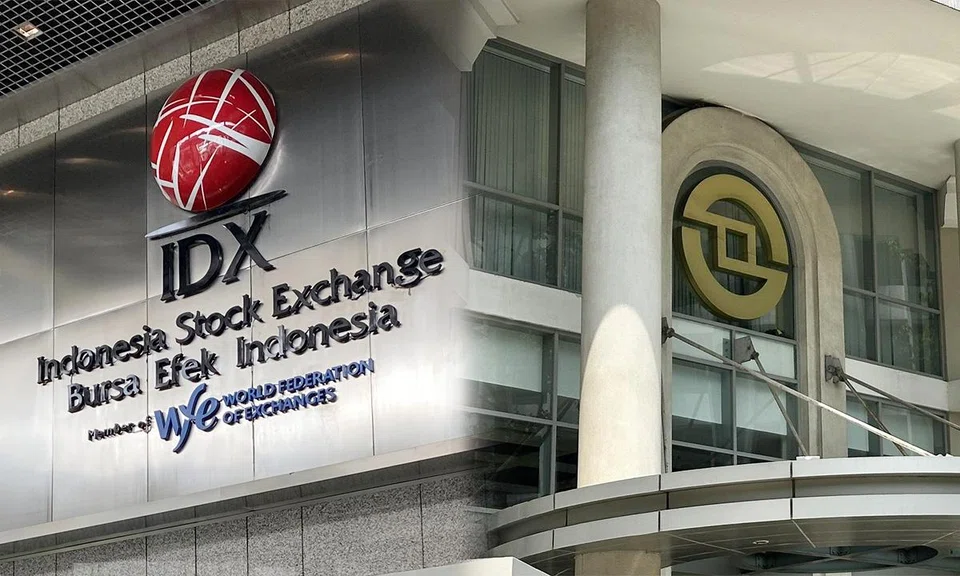
[JAKARTA/HO CHI MINH CITY] South-east Asia’s quest for global capital is increasingly being defined by two sharply diverging stories.
Global index provider MSCI’s latest market classification review, unveiled on Wednesday (Jun 24), kept Indonesia’s emerging market status unchanged but said the country remains under evaluation.
It could also face a downgrade to frontier market status if reforms fail to gain traction before November.
Meanwhile, Vietnam retained its current classification but is pushing – and hoping – for an upgrade to emerging market status in the coming years.
Analysts say the contrasting outcomes put two of South-east Asia’s stock markets on different paths, highlighting a growing reality for investors: Strong economic growth alone is no longer enough to win global capital.
Factors such as market accessibility, transparency, governance standards and the ease with which foreign capital can be deployed and withdrawn are increasingly at the top of investors’ agendas.
Nafan Aji Gusta, senior economist and technical analyst at Mirae Asset Sekuritas Indonesia, said Vietnam’s progress and Indonesia’s struggles are being closely watched because MSCI classifications play a key role in determining how trillions of dollars of global capital are allocated.
Many pension funds, sovereign wealth funds, endowments, exchange-traded funds and quantitative investment managers use MSCI benchmarks to guide investment mandates and portfolio allocations.
As a result, changes in a country’s classification can trigger automatic capital flows as funds rebalance their holdings to align with index requirements.
“MSCI classifications do not merely influence short-term stock prices; they also shape whether a country remains within the investable universe of global capital,” Nafan said.
The two markets have fared very differently this year. Vietnam’s benchmark VN-Index, after rallying more than 40 per cent in 2025, has had a more volatile run this year.
It briefly touched a record high in May and remains up more than 5 per cent in the year to date. Indonesia’s Jakarta Composite Index, by contrast, has slumped nearly 30 per cent.
Beyond the immediate impact on fund flows, reclassification also carries a powerful signalling effect, influencing investor perceptions of market quality and governance.
“It can also affect a country’s cost of capital by altering risk premiums and long-term valuations,” Nafan added.
While Indonesia's weighting in the MSCI Emerging Markets Index is relatively low, the benchmark's vast investor following means classification decisions can still have significant implications for capital flows.
Vietnam, meanwhile, is one of the largest constituents of MSCI’s Frontier Markets Index.
An MSCI upgrade would place Vietnam within the much larger emerging market investment universe, potentially attracting billions of dollars in passive and active capital flows.
Gaps in market accessibility
MSCI’s latest review highlights how uneven the state of market access is across South-east Asia.
Singapore – the only Asean market classified as developed – remains the regional benchmark, with no major issues flagged across foreign ownership, capital mobility, information flow, clearing and settlement, stock lending and short-selling.
Among the developing markets, Malaysia stands out as the most accessible. MSCI found no major issues in foreign room, information flow, clearing and settlement, as well as stock lending.
However, its foreign ownership limits and short-selling still have areas for improvement.
Thailand and the Philippines occupy the middle ground, with some restrictions on foreign ownership and market infrastructure still limiting their appeal to international investors.
The review reveals a more complicated picture for Indonesia and Vietnam, which now find themselves on opposite trajectories.
Indonesia continues to face concerns over foreign exchange market liberalisation, information flow and aspects of its market infrastructure.
That also explains why it remains vulnerable to MSCI’s classification review despite the size of its economy and stock market.
By contrast, frontier market Vietnam has a different profile. Its main hurdle is not growth or investor interest, but market access.
The gap indicates why the case for Vietnam’s upgrade rests less on macro momentum and more on whether reforms can make it easier for global funds to enter, trade and exit.
A full implementation of its central counterparty clearing model, targeted for 2027, is expected to give Vietnam the structural basis for permanently removing pre-funding requirements and strengthening its market infrastructure.
Openness to foreign ownership, however, remains a key constraint and may take longer to resolve.
More than 10 per cent of the Vietnamese equity market remains subject to foreign ownership restrictions, while more than 1 per cent of the MSCI Vietnam Investable Market Index is still affected by low foreign room, restricting foreign investors’ ability to increase holdings in certain stocks.
“Indonesia’s experience shows that MSCI wants foreign room to be genuinely accessible to foreign investors,” said Quan Trong Thanh, head of research at Maybank Investment Bank Vietnam, adding that removing foreign ownership constraints through regulatory changes alone may not be sufficient.
“Vietnam also needs to deepen real investable supply by increasing free float through state-owned enterprise stake sales and public offerings,” he said.
Race to global investor spotlight
MSCI’s latest review of Vietnam and Indonesia comes at a time when global investors are becoming increasingly selective about where they deploy capital.
Intensifying US-China strategic rivalry and the artificial intelligence-driven concentration of investment flows into a handful of technology markets have heightened competition among emerging economies for international funds.
Nafan of Mirae Asset Sekuritas said global investors place a high premium on predictability, making prolonged uncertainty over a country’s market classification a significant drag on investor sentiment.
“When uncertainty persists for an extended period, markets often struggle to achieve a valuation rerating, even when economic fundamentals improve,” he said.
For policymakers across the region, MSCI’s decisions have become a test of whether years of capital market reforms are translating into genuine investability.
Maybank’s Thanh said MSCI’s latest assessment was ultimately a positive signal for Vietnam, as it acknowledged the country’s reform efforts while highlighting areas that still require attention.
He added that regulators remain under significant pressure from the government to further develop the country’s capital markets, which are expected to play a larger role in financing Vietnam’s economic growth towards double-digit rates over the next few years.
Vietnam has already earned recognition from FTSE Russell, which in April confirmed that it would upgrade the country’s status from frontier market to secondary emerging market from September 2026.
With a stock market capitalisation of more than US$400 billion and ongoing reforms, Vietnam is aiming for MSCI emerging market status and FTSE Russell’s advanced emerging classification by 2030.
Indonesia at a crossroads
Indonesia’s challenge is arguably more consequential. Unlike Vietnam, which is seeking promotion, Indonesia is fighting to preserve a status it has held since MSCI established its emerging market category in 1989.
Despite being South-east Asia’s largest economy and home to one of the region’s deepest equity markets, Indonesia has struggled to convince MSCI that concerns over market accessibility of late have been adequately addressed.
In recent months, Indonesia’s market authorities have accelerated efforts to improve such accessibility and governance, introducing measures that include greater disclosure of companies with concentrated shareholdings and raising the minimum free-float requirement to 15 per cent. Wilbert Arifin, equity research associate at Mirae Asset Sekuritas, said MSCI’s final decision will ultimately depend on Indonesia’s ability to sustain its reform momentum and deliver consistent implementation of the measures introduced.
In its latest assessment, the index provider said it would continue evaluating whether those measures are implemented consistently, and whether they produce lasting improvements in market accessibility as well as free-float determination.
If sufficient progress is not made by November, MSCI may consider opening a consultation on whether Indonesia should remain classified as an emerging market.
In the event of a downgrade, Macquarie Capital estimates Indonesia could see about US$4.3 billion leave its equity market, reinforcing the urgency of delivering meaningful and lasting market reforms.
Jeffrosenberg Chenlim, head of research at Maybank Sekuritas, said MSCI-sensitive foreign investors may prefer to remain on the sidelines until there is tangible evidence that reforms aimed at improving shareholder transparency, free-float levels and market surveillance are being effectively implemented.
Still, MSCI is only one marker.
Tan Altundag, investment manager for emerging equities at Pictet Asset Management, said other worries such as fiscal concerns and rupiah weakness have also weighed on foreign investor sentiment.
“Mandate-constrained investors cannot comfortably build positions in a market where the classification itself remains in question,” he said. “The MSCI overhang compounds existing concerns rather than standing alone as the primary one.”
He added that investors will be watching the harder test: whether regulators follow through, and whether policy signals remain credible.