


Ringgit lurching towards 4.80 again as US dollar rallies

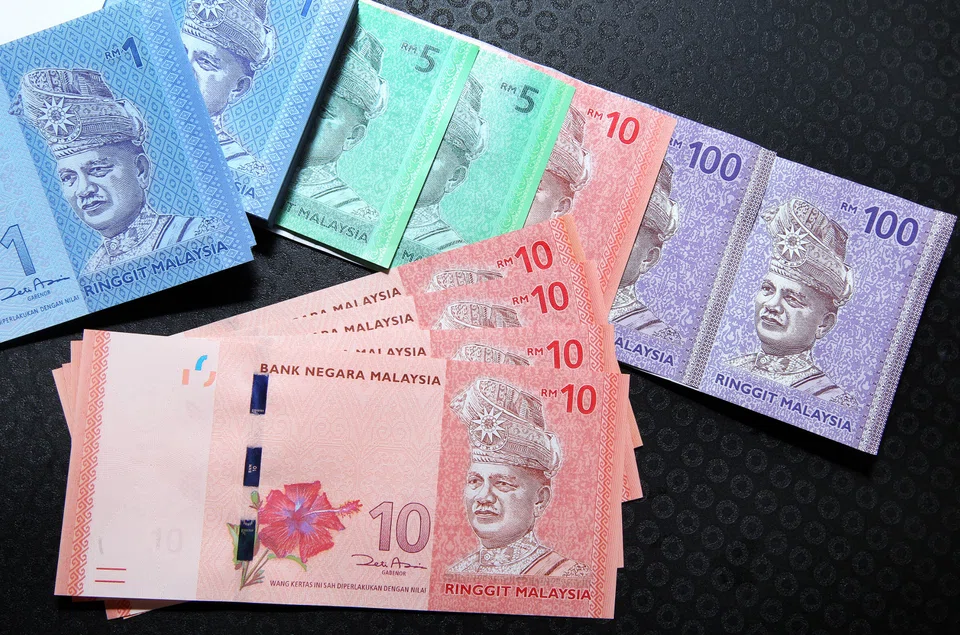
[KUALA LUMPUR] Malaysian Celine Chia is thrilled about her upcoming annual retreat to Hong Kong, but the ringgit’s depreciation has been somewhat of a killjoy, shrinking the funds she has been setting aside for her trip since last year by as much as 15 per cent.
“Although I will continue using credit cards, based on the (current) exchange rate, I will need to cut back on shopping and visits to Michelin-starred restaurants,” said the freelance content creator, who has never missed her yearly vacation to Hong Kong except during the pandemic.
On the other hand, KGV International Property Consultants (Johor) executive director Samuel Tan couldn’t be more relieved that his son has already graduated and found employment in London a few months ago.
Tan coughed up £10,000 (S$16,979) – equivalent to about RM55,000 – a year for his son’s living allowance while he pursued a master’s degree in actuarial science at a Scottish university.
He also incurred university tuition fees of £30,000 annually, which translated to about RM150,000 to RM165,000 when the exchange rate ranged from RM5 to RM5.50 per pound. As of Monday (Apr 15) evening, it was nudging towards the RM6 mark.
“Based on the current ringgit trend, I would have needed to fork out more money (at least another few thousand ringgit) for my son’s expenses had he not graduated yet,” he told The Business Times.
Indeed, the ringgit’s fall this year has been painful across the board for Malaysian consumers and businesses. The currency fell again on Monday to RM4.78 against the US dollar – a depreciation of 8.5 per cent from a year ago. This follows the ringgit’s fall to a 26-year low of RM4.8053 on Feb 21 – the weakest level since the crippling Asian financial crisis in 1998.
Against the Singdollar, the ringgit traded at RM3.51 on Monday, nearly 6.5 per cent lower than a year earlier.
The currency’s slide on Monday prompted a statement from the country’s central bank Bank Negara Malaysia (BNM), which said: “BNM stands ready to deploy the tools at our disposal to ensure the Malaysian financial markets remain orderly and continue to function efficiently.”
The central bank added that it continues to closely monitor conditions in the financial markets and will manage any risks arising from heightened financial market volatility.
It also said that it has engaged with financial market participants, who concur that any uncertainties would recede and stabilise once the geopolitical situation de-escalates.
Prior to Monday’s slide, the currency had capped its earlier loss over the past month following BNM’s reassurance that the country’s fundamentals were intact and the authorities have engaged with government-linked companies to repatriate foreign investment income and convert it into ringgit more consistently.
On multiple occasions, BNM governor Abdul Rasheed Ghaffour had stressed that the country’s currency is undervalued.
The ringgit’s fall against the greenback is unfolding alongside devaluation in other regional currencies owing to a rallying US dollar and a wide interest rate differential gap between South-east Asian countries and the world’s largest economy.
But economists reckon that the US Federal Reserve’s anticipated rate cuts and China’s economic recovery could stem the slide and provide support for the currencies.
Meanwhile, the ringgit’s downtrend could persist to eventually hit the 4.80 level in near term.
Jeff Ng, head of Asia macro strategy for SMBC’s global markets and treasury business, said ringgit may see more headwinds as the FFR (US Federal Funds Rate) cuts are unlikely to happen anytime soon owing to stubborn inflation.
“I think a topside of RM4.80 to RM4.85 is possible due to dollar strength, but it’s not only the ringgit... other currencies such as Japanese yen and Thai baht are also feeling the heat,” he added.
The yen continued to perform poorly on Monday, hitting its 34-year low against the US dollar with analysts expecting the slide to persist this week ahead of the release of key inflation data.
Ng expects the greenback’s weakness to be more prevalent in the fourth quarter of this year and until then, to expect further volatility.
Bank Muamalat chief economist Mohd Afzanizam Abdul Rashid said the rising Middle East tensions have worsened the situation and hence, the ringgit could take some time to recoup its losses.
“The current spectre of geopolitical risk would result in higher demand for the US dollar, given the country’s status as the safe-haven currency. On the other hand, the shift of investors preference will lead to the volatile and soft performance of emerging market currencies,” he added.
Saktiandi Supaat, head of foreign exchange research at Maybank Singapore, likened the current market climate to a deja vu of last year’s third quarter as the market anticipated a continued surge in US treasury yields that could pressure Asian currencies.
He pointed out that despite depreciating 0.55 per cent over the past five days, the ringgit is not the worst-performing currency. Since the release of hot US inflation figures last week and the rise in US yields, the South Korean won, Japanese yen and Philippine peso had fared worse over the same period.
The rise in oil prices could also help support the ringgit marginally, especially if they rise to levels beyond US$90 per barrel, he added.
Saktiandi expects the ringgit to rebound to RM4.55 against the greenback by end-2024, and to RM3.42 against the Singdollar.
TRENDING NOW

Mooted COE changes will solve category issues, but higher premiums likely: observers

Grab CEO’s wife Chloe Tong on life with Anthony Tan and finding her purpose

Once staunchly pro-China, Malaysian Chinese businesses are now distancing themselves from Beijing

Cliff Tan has 7 million followers and a 4-month waitlist. Why won’t he expand his business?

