


Is CP Group scion’s AI startup worth the US$60m it raised?
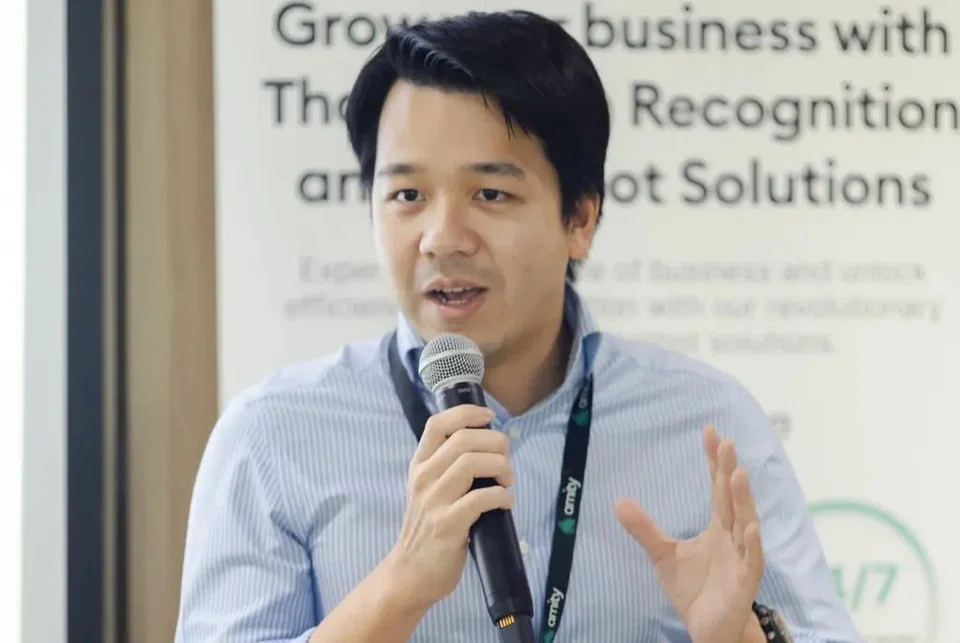
WHEN Amity Solutions, a Bangkok-based generative artificial intelligence (AI) startup, raised US$60 million last month, it made headlines.
Founded by Korawad Chearavanont, heir to Charoen Pokphand (CP) Group – one of Thailand’s largest conglomerates with US$65 billion in revenue – Amity Solutions is already planning to list on the local stock exchange by 2025.
Amity was not always genAI-focused – it started as an employee engagement platform called Eko. In 2020, Eko acquired two more startups, Upstra and ConvoLab, and formed the parent company Amity.
“We are not trying to build a foundational AI technology that will rival those offered by those in Silicon Valley because we know we will never be number one in that,” Chearavanont said.
So is this AI wrapper by the CP Group scion worth the US$60 million it raised?
Not the typical genAI chatbot
The company said that Amity Bots, its AI chatbot solution, can understand any user question and provide responses based on the specific needs of an enterprise client, such as customer engagement.
Touchapon Kraisingkorn, Amity’s chief technology officer, said its chatbot only needs one document as a reference to answer customers’ questions.
“The problem with [a traditional, non-AI chatbot] is there are a thousand ways to ask a question, and a thousand ways to answer it, so it was difficult to scale,” Kraisingkorn said.
The CTO compares Amity Bots’ data processing to training interns for customer engagement, where they may not follow strict scripts but use manuals for guidance.
Kraisingkorn acknowledges that traditional chatbots are still 10 times cheaper than Amity’s AI chatbot. However, he believes that Amity Bots is still more cost-effective for enterprise clients compared to building their own solution.
For instance, Amity Bots does not need to use ChatGPT for every user request. Kraisingkorn said each conversation is “cached” and stored in a smaller model, which the chatbot references for new questions.
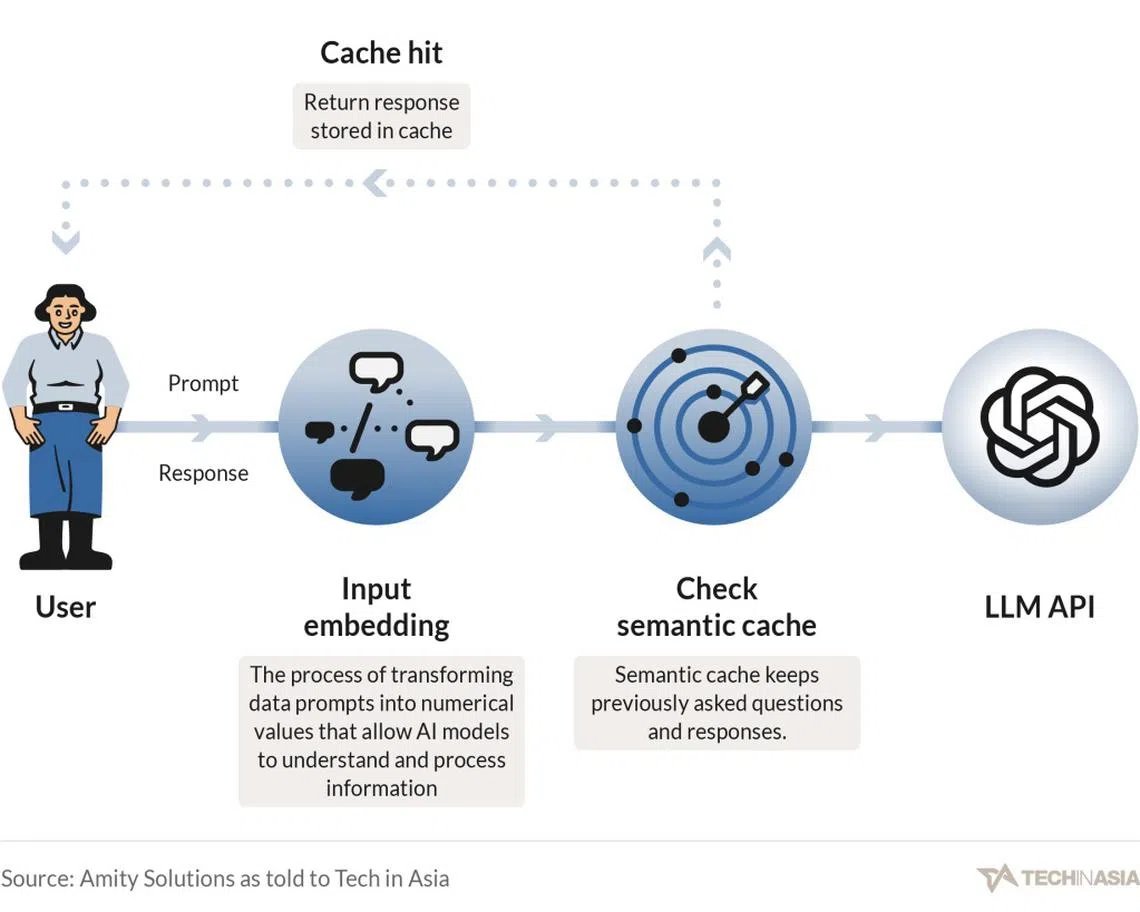
According to him, this reduces the number of prompts sent to ChatGPT, which significantly cuts costs since the model charges users per prompt.
Another product from Amity will enable select employees to access an AI assistant with crucial company data. For instance, Kraisingkorn notes that one of Eko’s clients, a major Thai retailer, has input daily sales data into the platform. A manager can then request the AI assistant to generate a sales report on demand.
The familial clientele
At the moment, Amity said more than 20 enterprises are using its AI solutions. Most of these clients are based in Thailand, including several affiliates or partners of CP Group.
For instance, Amity’s website lists CP All Public Company, which runs 7-Eleven stores in Thailand, and telecom giant TrueID, both of which are partially owned by CP Group. Additionally, Toyota Leasing Thailand is a strategic partner of Amity.
CEO Chearavanont will not share specific numbers, but he said the company has already reached net profitability and is earning “above eight digits”.
Amity Solutions’ 2023 financials accessed through DBD DataWarehouse shows a 72 per cent year-on-year increase in revenue to 90 million baht (S$3.4 million). However, the company’s net loss grew over 6x to 45.5 million baht in the same period.
Still, Chearavanont’s status as heir to a Thai conglomerate carries significant weight. A Boston Consulting Group study on Thailand’s startup ecosystem highlights that the country’s startups often face a perceived “lack of credibility”, especially if they lack “strategic” investors.
“Amity is backed by the country’s largest conglomerate, which helped the startup fight the initial cold start problem you have in B2B SaaS, where first customers are still questioning who you are,” said Hanno Stegmann, managing director and partner of BCG X, the tech solutions arm of Boston Consulting Group.
“When you are backed by CP, a lot of doors suddenly open for you,” he added.
Not taking things for granted
Stegmann notes that Amity’s next challenge will be scaling beyond Thailand and competing with other players in the industry.
For sure, Amity is not the first to offer this type of technology.
US-based Sprinklr, backed by Temasek, provides a similar service and generates US$196 million in revenue, based on data from Tracxn. However, this service is just one part of Sprinklr’s comprehensive suite of offerings.
Amity is adopting a similar strategy, gradually introducing a genAI-enabled version of its employee engagement platform Eko. This platform is akin to Slack, allowing employees to interact and communicate with their teams.
Chearavanont appears determined to leverage his strategic position, planning new acquisitions to expand the firm’s market share.
Earlier this month, Amity also became a major shareholder of a UK-based company called Tollring. This aims to develop the latter’s voice analytics software with genAI capabilities.
Tollring offers a call recording service that clients use to analyse customer engagement. Previously, these calls were reviewed manually, but with Amity’s involvement, a genAI solution may be developed to handle the analysis automatically, according to Chearavanont.
BCG X’s Stegmann is “sceptical” if this is the right strategy for the startup seeking to go public by next year, as he finds M&As a “very expensive route to scale fast”.
But Chearavanont is confident of Amity’s recent bets, for now.
“Every day I see software companies and enterprises saying they can do [what we do] themselves. But it’s not really easy,” he said. “I’d like to see them try.” TECH IN ASIA
TRENDING NOW
Once staunchly pro-China, Malaysian Chinese businesses are now distancing themselves from Beijing

Cliff Tan has 7 million followers and a 4-month waitlist. Why won’t he expand his business?

Could stablecoins be the future of money?

Grab CEO’s wife Chloe Tong on life with Anthony Tan and finding her purpose

