Thailand stares at 1.6% growth in 2026 as reform calls mount ahead of polls
Downshift would make it slowest-growing major economy in South-east Asia outside crisis-hit Myanmar
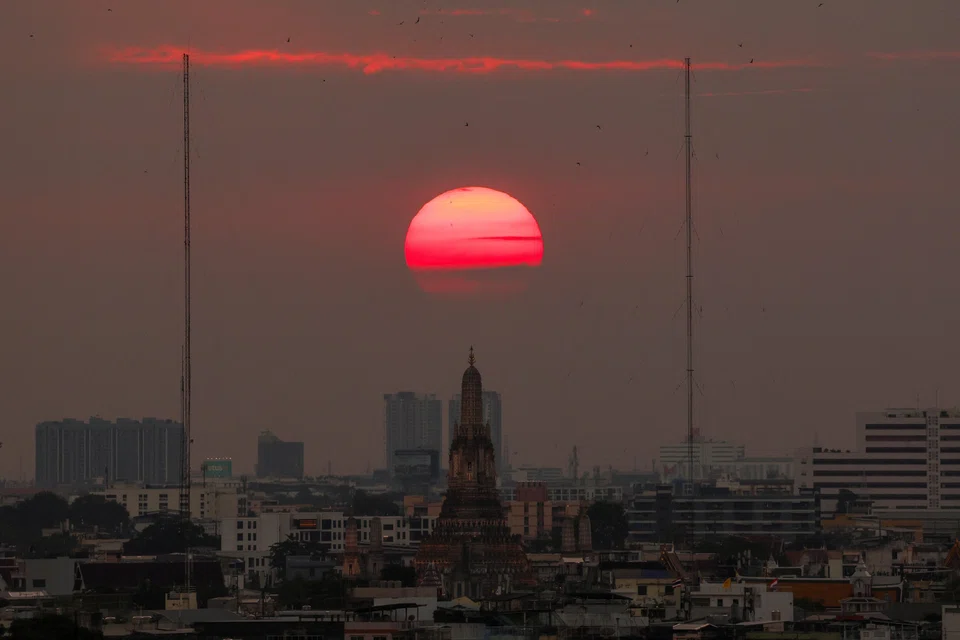
[BANGKOK] Thailand heads into its Feb 8 election with an unenviable distinction. The International Monetary Fund (IMF) expects the economy to expand just 1.6 per cent in 2026, making it the slowest-growing major economy in South-east Asia outside crisis-hit Myanmar, and among the laggards in Asia.
For many economists and business groups, the downshift is not a one-off but the latest chapter in a two-decade pattern of shocks – the 2008 global financial crisis and Covid-19 pandemic pains – and policy drift, compounded by repeated political resets (more than 10 prime ministers in 20 years).
Long-delayed push
With growth struggling to break out of the 2 per cent range, pressure is building for a long-delayed push on structural fixes from slashing red tape and opening up services, to sharpening tax incentives for digital talent and upgrading skills for an artificial intelligence (AI) economy.
Economists argue that Thailand needs to address these or else struggle to push growth beyond 2 per cent, let alone meet its ambition of graduating from middle-income status by 2037.
Louis Kuijs, S&P Global Ratings’ chief economist for the Asia-Pacific, said: “In recent decades, the Thai government has not been as focused on achieving long-term development and growth objectives, and the reforms and measures needed to achieve that, as some of the peers in Asean, especially Vietnam.”
With a general election looming, optimism is rising that the next administration could prioritise longer-horizon measures over short-term populist programmes designed to win votes.
Some economists argue that Thailand’s political economy has become so resistant to change that only severe external pressure has historically been able to unlock meaningful reform.
“The big reforms were done after the Asian financial crisis,” said Kasikorn Research Center chief economist Burin Adulwattana. Without a major shock, there is very little political incentive to act, he added.
Gone is the heyday
Seemingly gone are the boom days of the late 1980s and early 1990s, when Thailand boasted one of the fastest-growing economies in the world, fuelled by rising exports, hikes in foreign direct investments and a robust tourism sector.
“Thailand was well-positioned 30 years ago, compared to the other emerging market economies in Asean, but now less so because its peers have done better and others have caught up,” said Kuijs.
There are numerous reasons for the underperformance, including a lack of clear government policy direction, sluggish consumer spending and an ageing population (20 per cent are over 60).
In its latest report on Thailand, OCBC Group Research noted that the kingdom’s gross domestic product growth “has languished at rates significantly lower than regional peers’ in recent years, as the lack of clear policy direction and external headwinds exacerbate structural issues, such as slowing consumption from elevated household debt levels and an ageing population”.
Stalled competitiveness gains and inconsistent infrastructure spending are the other culprits, it added.
Even Thailand’s geographic advantage in the heart of mainland South-east Asia has become a mixed blessing.
In 1988, then prime minister Chatichai Choonhavan coined the phrase “from battlefields to marketplaces” to describe the reintegration of its once-strife-torn neighbours – Cambodia, Laos, Myanmar and Vietnam (CLMV) – into the global economy.
Today, most of that bloc is outpacing Thailand. This year, Cambodia is expected to grow 4 per cent, Laos 4.5 per cent and Vietnam a robust 5.6 per cent, while only Myanmar trails Thailand’s anaemic 1.6 per cent, according to IMF forecasts.
Thailand’s outlook for 2025 – and likely 2026 – will not be helped by the renewed border conflict with Cambodia, which disrupted cross-border trade and halted exports before a ceasefire was reached on Dec 27, offering hopes of a return to normalcy.
Trailing neighbours
While the CLMV economies have benefited from low labour costs and youthful workforces, steadily eroding Thailand’s traditional light industries, the country has also underperformed its more advanced Asean peers in the shift towards higher-value sectors.
That is not to say Thailand has failed to move up the value chain. Electronics, now its top export, and electric vehicles (EVs) are clear examples. But progress has lagged in the region.
“For some reason, Thailand is not always plugged into the right export-oriented manufacturing sectors,” said Kuijs. “Thailand is a player in electronics, but it seems it is not a player in the right kind of electronics.”
The country remains a global hub for hard disk drive production, for instance, which is a segment that is steadily losing relevance in a fast-evolving tech landscape.

It is also still the region’s largest vehicle manufacturer, dominated by Japanese internal combustion engine models that are increasingly struggling against cheaper Chinese EVs.
To its credit, Thailand has drawn at least seven major Chinese EV makers to set up local production over the past three to four years.
The same pattern is emerging in data infrastructure.
While the kingdom has attracted data centre investment that is critical for AI deployment, it is falling behind its neighbours.
Deloitte projected that South-east Asia’s data centre capacity will quadruple from 1.68 gigawatts (GW) in 2024 to 7.59 GW in the long term, with Singapore’s capacity already at 0.99 GW.
The capacities of Malaysia and Indonesia will increase by 2.8 GW and 1.2 GW respectively, while Thailand’s will inch up just 0.5 GW.
“We are getting the spillover effect from Singapore, which doesn’t have enough land, and Malaysia, which doesn’t have enough electricity, so naturally the data centres come to Thailand,” said Burin.
But being late to the infrastructure build-out has also left Thailand straggling in data and AI adoption.
Bualuang Securities noted that while Thailand ranks among the world’s top 10 markets for TikTok usage, the platform’s major regional investments in data, logistics and commerce are concentrated in Malaysia and Indonesia, reflecting clearer policy frameworks.
Meta, despite Thailand being one of its largest user bases, has chosen Singapore as its South-east Asian hub.
Thailand will host the annual meeting of the IMF and World Bank Group from Oct 12 to 18, the first time in 35 years. This year’s meeting will focus on digital transformation and AI, two areas in which Thailand has lagged.
After three decades of export-led growth, the kingdom’s model is under growing strain.
While it has successfully banked on an export-led growth model for the past three decades, things are changing fast in the global economy and Thai government policy has arguably not kept pace.
“The growth model that once delivered success is no longer sufficient in a world driven by digital transformation, innovation and fast-changing global dynamics,” Melinda Good, World Bank division director for Thailand and Myanmar, told a recent seminar.