Thailand turns to Pop Mart, Miniso to win back Chinese tourists
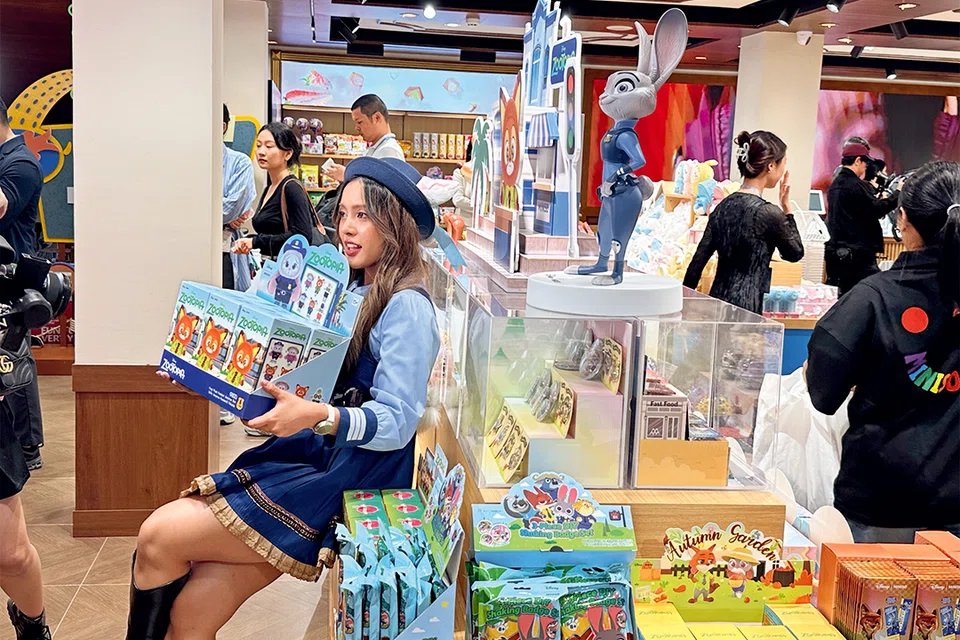
ON A late October morning, a long queue snaked through Siam Square, the bustling heart of Bangkok’s shopping district. The crowd had gathered for the grand opening of the first overseas Miniso Land — a multistory superstore for trendy toys.
The ground floor of the new Miniso flagship location was a shrine to Disney’s “Zootopia 2.” Local influencers in cosplay and media guests browsed aisles of co-branded merchandise, part of a global launch that the Chinese toy retailer chose to debut in Thailand.
Just 500 metres away, rival trendy toy retailer Pop Mart’s two-story store teemed with local shoppers and Chinese tourists snapping up Labubu dolls and other collectibles already sold out in China. Pop Mart is still enlarging the space to make room for another of its hit piece of intellectual property (IP). In August, the company also opened a 760-square-metre store — its largest worldwide — in Bangkok’s Iconsiam mall.
Facing shrinking margins at home, Pop Mart International Group and Miniso Group Holding are accelerating their push into South-east Asia, using Thailand as a springboard into the region’s fast-growing consumer market. They are investing heavily in larger stores and partnering with the local government to turn pop-culture fandom into a tourism magnet.
The partnership is a potential win-win: The toymakers get to tap new consumers abroad, while Thailand sees the return of Chinese visitors after events including earthquakes and border clashes earlier this year dented traveller confidence. The central question is whether this pop-culture strategy can drive long-term growth.
Miniso’s ‘big store’ bet
“South-east Asia is our overseas base camp, a place where we train our teams before sending them to other international markets,” Miniso chief marketing officer Liu Xiaobin said. “Launching our first overseas Miniso Land in Bangkok means we see Thailand as a core strategic market with immense commercial opportunities.”
That opportunity is tangible. The “trendy toy” market in South-east Asia was valued at approximately US$2.5 billion in 2024, with an estimated annual growth rate of 20 per cent, outpacing the global average, according to a report by the Guangdong Toys Association.
Trendy toys typically feature unique and limited-edition designs based on popular IP. Usually in the form of figurines and stuffed toys, or plushies, they’re prized for their aesthetics, rarity and collectability.
Liu believes young Thais are a prime market because of their spending power and shared cultural tastes with China.
Miniso is also doubling down on Thailand. It already has 16 stores in the country and plans to open 100 more within three to five years. Central to this expansion are the Miniso Land outlets — spacious, experience-driven stores in prime urban locations. The company also plans to open Miniso Land locations in Indonesia, Singapore and the Philippines.
The commercial logic for opening these superstores at home and abroad is different, Liu said. “In the domestic market, offline retail is more competitive, so innovative formats are more about responding to competition and gaining an edge. Overseas, it’s more about raising brand prestige.”
The company’s next openings will target “high-potential commercial districts,” said Huang Zheng, a vice president of Miniso. Rather than simply being points of sale, the stores are designed as social “parks” where visitors linger, take photos and create user-generated content — effectively turning their presence into organic marketing that boosts foot traffic while lowering promotional costs, he said.
The expansion follows its “big-store logic,” a shift born from declining same-store sales in China’s cutthroat retail environment. After discovering that larger stores outperform smaller ones, CEO Ye Guofu pledged to scale up 80 per cent of Miniso outlets by the end of 2026.
In Thailand, the strategy is paying off. The company upgraded all 16 of its Thai locations this year. Some have since seen monthly sales jump eight to 10 times, according to Wang Jun, Miniso’s general manager for Thailand.
Pop Mart’s explosive growth
2024 was a breakout year for Pop Mart. In February, a signing event in Bangkok with Molly Yllom — creator of Pop Mart’s teary-eyed figurine Crybaby — generated over 5 million yuan (S$919,173) in single-day sales, setting a new global record for the company.
Later that year, Labubu, an elf doll with big eyes and a mischievous, sharp-toothed grin, became a viral sensation across South-east Asia. Its popularity surged after being showcased by celebrities like K-pop superstar Lisa and Thai Princess Sirivannavari Nariratana.
Revenue for “The Monsters” IP, which includes Labubu, skyrocketed by over 700 per cent in 2024, exceeding 3 billion yuan and accounting for 23.3 per cent of Pop Mart’s total revenue.
The Thai government has been a keen partner in the trendy toy craze. In July last year, the Tourism Authority of Thailand held a welcome ceremony at Bangkok’s Suvarnabhumi airport for Labubu, bestowing upon the character the title of Amazing Thailand Experience Explorer — a first for a toy.
Such collaboration has expanded. In June this year, Pop Mart’s Dimoo – a shy boy with a cloud-friend for hair – was named a Special Friendship Ambassador for the 50th Anniversary of China-Thailand Diplomatic Relations.
Similarly, at the Miniso Land opening in October, one of its pieces of IP was named an “experience officer for the five must-dos in Thailand.” A Thai tourism official said at the event that the government hopes to leverage the momentum of Chinese brands and IP to promote Thailand as a vibrant and valuable travel destination for the Chinese market.
A high-stakes alliance
Thailand’s embrace of Chinese brands reflects underlying economic pressure. The country’s tourism-reliant economy has suffered from a sharp drop in Chinese visitors, who were once its largest tourist group. The disappearance of Chinese actor Wang Xing earlier this year, coupled with earthquakes and a border clash with Cambodia, dampened travellers’ confidence.
For the first nine months of 2025, total foreign arrivals fell over 7 per cent year-on-year to 24.1 million, according to official data. Chinese visitors plunged 35 per cent to just 3.4 million.
Acknowledging a sharp drop in Chinese tourists this year, a local tour guide told Caixin their company has been forced to cut its China-focused staff and add teams for European and Middle Eastern markets.
The guide also expressed skepticism about the toys’ lasting appeal. “At the beginning, a lot of scalpers came specifically to buy products they couldn’t get in China, and some tourists would buy them on the side. But this doesn’t bring in a stable flow of customers every month. Tourists now are price-conscious; they want better deals, better quality and they even check the exchange rate.”
Pop Mart’s latest earnings suggest the momentum may indeed be cooling in the region. In the third quarter of 2025, its Asia-Pacific revenue growth slowed to about 175 per cent year-on-year, down from 258 per cent in the first half and roughly 350 per cent in the first quarter. By contrast, revenue in the Americas jumped about 1,270 per cent, while returns from Europe and other regions rose around 740 per cent.
The Guangdong Toys Association warned that betting on a single blockbuster IP is highly risky as a company’s growth inevitably falters once hype fades. It also noted a surge in look-alike products in South-east Asia – especially plush toys – making it harder for brands to compete by relying solely on “cute” designs or copying popular trends.
Still, the association sees Southeast Asia as a promising market, urging Chinese trendy toy brands to diversify product lines, speed up iteration and develop IP rooted in local culture. CAIXIN