Uncertainty looms over Indonesia-US trade pact after legal blow in Washington
Analysts say the Supreme Court ruling gives Indonesia room to reassess its commitments

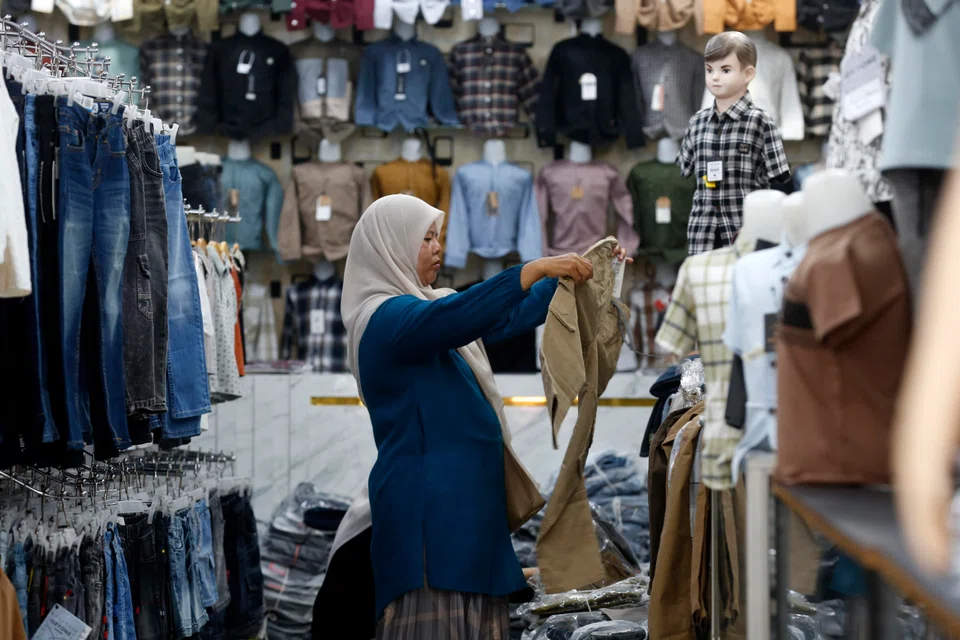
[JAKARTA] Indonesian businesses are scaling back risk and putting US-focused expansion plans on hold after the country’s tariff deal with Washington was thrown into limbo by a US Supreme Court ruling on Friday (Feb 20) that struck down US President Donald Trump’s reciprocal tariff policy.
While the ruling removes the immediate tariff threat, broader trade uncertainty remains as Trump signals he may push ahead with the 15 per cent tariff.
“Business planning this year will continue to prioritise prudence, market diversification and stronger internal efficiency, while awaiting greater clarity on policy direction,” said Shinta Widjaja Kamdani, chairperson of the Indonesian Employers Association (Apindo).
Shinta urged the Indonesian government to closely monitor developments and maintain bilateral communication with the US to prevent disruptions to trade and investment planning.
“What businesses need most right now is policy stability,” she said.
For Indonesian exporters, the practical response has been restraint. A footwear exporter who declined to be named told The Business Times that the Supreme Court ruling has further clouded the industry’s market outlook.
The footwear sector, which employs millions of workers and remains highly exposed to changes in US trade policy, now faces greater uncertainty and mass layoff. Some firms are also reassessing their capital expenditure plans, opting to delay major investment decisions until clearer policy signals emerge from Washington.
Previously, with tariffs set at 19 per cent, slightly below Vietnam’s 20 per cent rate, the US market still offered a degree of optimism for exporters.
At the same time, companies had been looking to mitigate potential risks by banking on broader market access through the Indonesia-European Union free trade agreement, which is seen as a key channel to diversify demand and reduce reliance on the US market.
“The window to the US market is becoming more blurry, while the ratification process of the Indonesia-Europe free trade pact is still ongoing,” the exporter said.
“We are in a holding pattern right now,” the exporter said.
While acknowledging the legal shift, Danang Girindrawardana, executive director of the Indonesian Textile Association, said that amid the dynamic situation, businesses should remain calm and continue operating as usual.
He urged industry players not to react impulsively to developments in the US, even as he acknowledged that challenges may emerge in the US-Indonesia export and import process.
Deal in overhang
A US Supreme Court ruling has cast uncertainty over the trade understanding between Indonesian President Subianto Prabowo and Trump, coming just days after the two leaders met on the sidelines of the Board of Peace meeting in Washington last week.
The timing has complicated an agreement that was already moving through domestic review and legislative processes in both countries.
Upon returning from Washington over the weekend, Prabowo reportedly instructed his ministers and senior officials to review the potential risks stemming from the recent changes in US trade policy, signalling that Jakarta is reassessing its position in light of the evolving legal landscape.
Exposure runs deep
The US ranks among Indonesia’s key trading partners, running its 15th largest goods trade deficit with South-east Asia’s largest economy. In 2025, the US goods trade deficit with Indonesia reached US$23.7 billion.
Indonesia’s labour-intensive sectors are among the most exposed to US demand in South-east Asia. About 61 per cent of knitted apparel and clothing accessories exports are destined for the US, according to Apindo data.
Furniture and lighting products send roughly 59 per cent shipments to the American market, while processed meat, fish and crustaceans account for 56 per cent.
Leather goods also stand at 56 per cent, non-knitted apparel at 49 per cent, toys and sports equipment at 45 per cent, and footwear at 33 per cent.
Ratification debate
The Supreme Court decision has also reignited debate in Jakarta over whether Indonesia should proceed with ratifying the Agreement on Reciprocal Trade at all. Analysts said the court’s rejection of reciprocal tariffs provides an opportunity for Indonesia to reassess its commitments.
Eisha Rachbini, programme director at the Institute for Development of Economics and Finance, said the Indonesian government still has room to renegotiate by leveraging the US Supreme Court’s decision that struck down reciprocal tariffs, in order to better safeguard Indonesia’s domestic interests.
She said although Indonesia secured investment commitments worth US$38.4 billion and zero per cent tariffs for 1,819 products, including textiles and coffee, the general tariff rate of 19 per cent imposed on other Indonesian products is still considered too high.
“The current reciprocal agreement does not fully reflect equal treatment between the two sides.”
Bhima Yudhistira Adhinegara, executive director of the Centre of Economic and Law Studies, argues that the Supreme Court ruling removes the pressure that led Indonesia to sign the agreement in the first place.
“All efforts undertaken by Indonesia’s negotiation team in Washington can now be considered void,” he said.
“Likewise, any pressure on Indonesia to join the so-called ‘Board of Peace’, reportedly linked to Trump’s use of reciprocal tariffs, should also be regarded as invalid.”
He has called on Indonesian lawmakers to halt ratification, warning that the deal could undermine national economic interests. Among the concerns flagged by his think tank are potential import surges in food, technology and oil and gas products that could weigh on the trade balance and weaken the rupiah.