


US$165 billion of renewable energy assets in Asean face high risk of climate hazards: report
Upfront investment of about US$13 billion to make these assets more climate-resilient can help avoid US$82 billion in losses

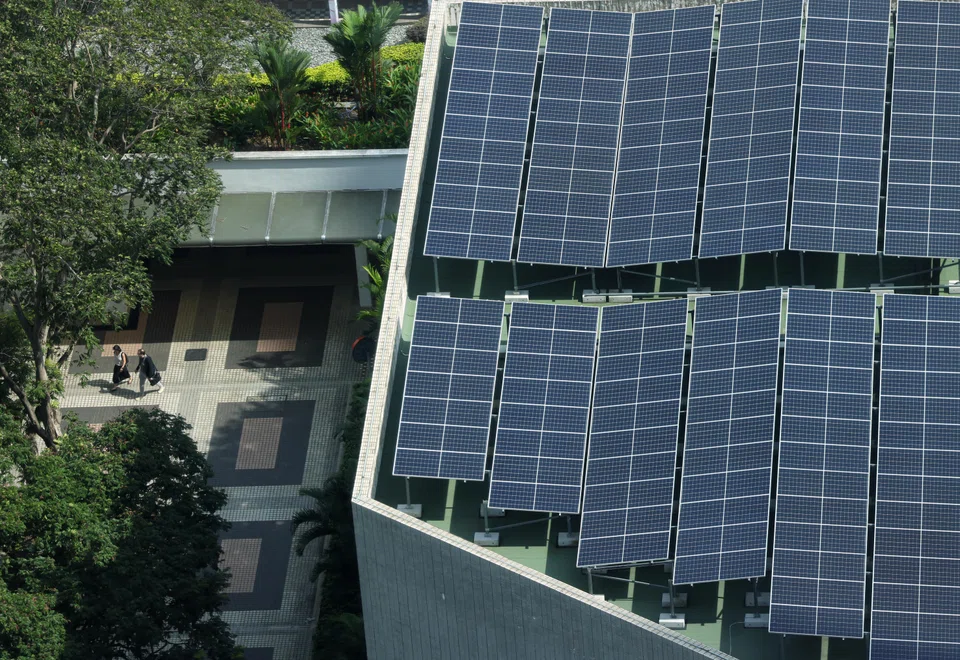
[SINGAPORE] About 75 per cent of renewable energy generation sites across South-east Asia, including those that have been planned or are under construction, are at high risk of being severely affected by climate-related events by 2030.
That translates to about US$165 billion in value across the region’s renewable energy portfolio being at risk, indicated a report by Zurich Insurance released on Wednesday (Jun 10).
However, it found that an upfront investment of about US$13 billion – which is about 2 per cent of total asset value – to make these renewable energy assets more climate-resilient could help avoid US$82 billion in losses.
This means that the return on that investment is about 6.5 times.
The report assessed around 1,380 renewable energy generation sites across Asean, covering solar, onshore wind, hydropower and geothermal assets in every country of the regional bloc except Timor-Leste.
Critical risk
Among the 1,380 sites that were assessed in the report, 39 per cent were expected to face a 30 per cent chance of being hit by a major climate event by 2030. Another 36 per cent of these assets were projected to have a 20 per cent chance of experiencing the same.
These assets, which are considered at critical risk, could face insurability hurdles without early resilience measures. This in turn tightens financing and project economics.
“This will have material consequences for the region’s energy transition pipeline,” the report said.

In terms of the renewable energy technology, solar faces the steepest near-term exposure with about 80 per cent of capacity facing critical risk. Wind power is the second most-exposed at 56 per cent.
At a country level, the report’s analysis suggests that Vietnam and the Philippines are the most vulnerable to an economic shock resulting from the impact of climate on renewable energy infrastructure.
That is because their relatively sizeable economies are supported by grids that rely on renewable energy to a greater extent than those of their peers.
While Singapore may not face as severe of an economic shock from these climate impacts, it is also at risk given its reliance on its neighbours to supply low-carbon electrons.
The city-state, which does not have many renewable energy options, has a target of importing around 6 gigawatts of low-carbon electricity by 2035.
Most of Singapore’s imported low-carbon electricity will come from Malaysia, Indonesia, Laos and Thailand, where about US$56 billion of renewable energy assets are at critical risk, said Mark Fletcher, head of Asia-Pacific at Zurich Resilience Solutions, the insurer's risk advisory arm.
He said in an interview with The Business Times that the findings were a “call to action” for Singapore and the wider region to adopt mandatory resilience standards.
Likening these resilience measures in renewable energy projects to a sprinkler in a building to protect against fires, Fletcher noted that these fixtures were not mandatory until government regulation changed things.
He said: “(It) can be mandated via regulation, and if the government doesn’t do it, the industry itself can do it, and part of that will come from lobbying from investors, insurers, finances to encourage these asset owners to build resilience for the future.”
Resilience measures
The report noted that renewable infrastructure depends on stable insurance to support financing, construction and operational continuity.
And resilient assets are easier to insure, easier to finance and more likely to deliver the expected operating performance.
To increase the resilience of these renewable energy sites, it said that financiers and project developers should screen risks early, stress-test the most exposed projects and strengthen designs before they are fixed in place to avoid losses and improve project outcomes as well as access to capital.
It estimates that putting these measures in place can reduce the financial risk from climate events by between 40 and 50 per cent.
One of the simplest ways by which developers can improve resilience is site selection.
Given that South-east Asia is one of the regions most vulnerable to climate change, there will inevitably be sites that are at high risk.
However, Fletcher said that significant investments are being directed to sites that are not well-suited for them, citing a wind farm located on elevated terrain exposed to extreme rainfall and landslips.
“I think the biggest change the companies need to make is to stop using historical averages and use forward-looking data. And that decision alone eliminates a huge portion of the risk before you’ve ordered any of the equipment or put any panels on the ground,” he added.
According to the report, many of the region’s renewable energy assets are still in the planning or construction stages, which means that there is still time to build in climate resilience at lower costs and greater engineering flexibility.
“By investing in resilience measures early in the project life cycle, the amount of potential loss can be reduced materially, through less severe loss exposure, improved operational continuity and enhanced insurability,” the report stated.
A lack of visibility on the returns on resilience investment has been inhibiting developers from paying more attention to integrating these measures into their renewable energy projects.
In addition, there is a misalignment of incentives among various stakeholders.
“Developers are incentivised or rewarded for minimising their upfront capex in order to win tenders, and then the loss that happens often sits in the future and often on someone else’s balance sheet,” Fletcher noted.
Nonetheless, the landscape is changing.
While a company’s financial strength and credit risk are often the main risk factors that a financial institution looks at, the view of risk is becoming more holistic with climate change increasingly part of that discussion, he said.
“Any significant investment to get insurance will need a risk engineering report. A professional engineer will go there and they’ll (assess) the quality of this site, and they’ll score it... That score directly informs insurers on how they should price the risk,” Fletcher added.
“The higher quality the asset from a resilience perspective, the better its insurance outcome, the more investable, more bankable it is. And that resilience topic is more becoming a condition of capital rather than some form of concession.”
TRENDING NOW
S$8 billion wiped off OCBC value as shares slide 5.8% in heavy trade

Grab CEO’s wife Chloe Tong on life with Anthony Tan and finding her purpose

Brookfield denies accusation it cut Soilbuild out of Mapletree deal
8 public officers referred to police over property buys near unannounced MRT stations: Chan Chun Sing

