Vietnam fintechs in hot seat with lending malpractice on government’s radar
About seven in 10 people in the country are unbanked and underbanked, opening the door to fintech to bridge the gap
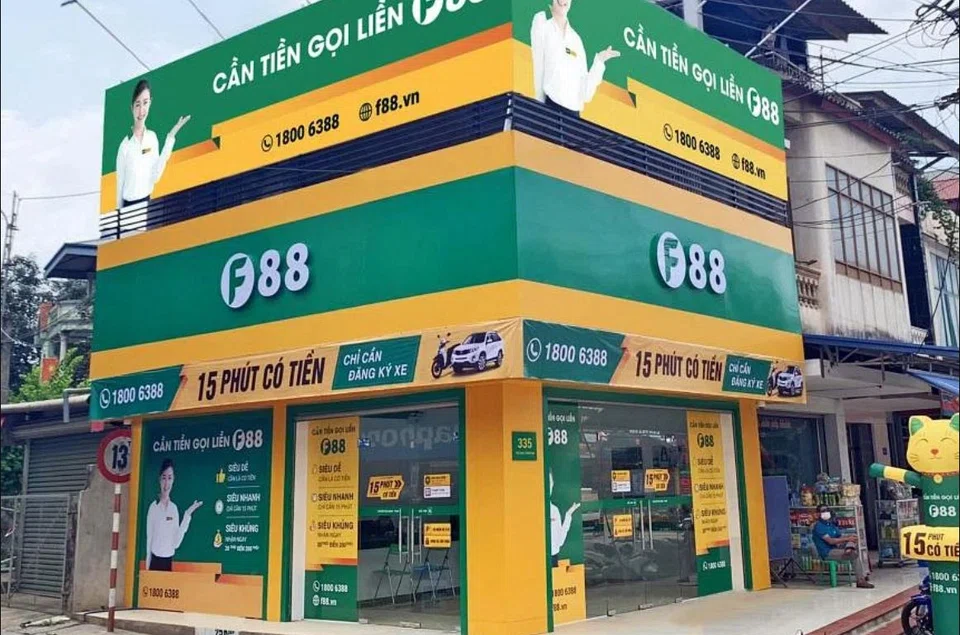
[HO CHI MINH CITY] Not long after closing a US$50 million financing round in early March, Vietnam’s largest pawnshop operator F88 Investment was confronted with allegations that some of its staff had used extortion methods in its debt collection activities.
Police forces in several provinces also said that some of the lender’s 830 branches had overcharged their clients with extra fees, said a report in a newspaper run by the Ministry of Public Security.
The ongoing investigation into the financial services company has thrust Vietnam’s unbanked and underbanked segment into the spotlight – a segment comprising about 70 per cent of the population – with the prolonged Covid-19 pandemic and uncertain economic conditions over the last couple of years leading to mounting demand for quick and easy loans.
It is not clear yet if F88 – which was said to be planning a domestic initial public offering – has indeed been involved in predatory lending practices.
The incident, however, has since placed other fintech businesses in the hot seat, especially those providing subprime lending or other financial alternatives to traditional bank loans.
Hoang Minh Duc, a special counsel at US law firm Duane Morris, said: “From my point of view, the authorities seem to be pretty open to the emergence of these new fintech models, but once the latter faces scandals linked to fraud and wrongdoings, stricter action may be taken.”
In recent years, the Vietnamese government has stepped up its fight against loan sharks and harsh debt collection methods. However, as Minister of Public Security To Lam said at a cabinet meeting last August, there are “major challenges” when it comes to lending via the Internet.
Falling manufacturing orders and a weakened global economy have put a strain on the livelihoods of millions of factory workers. Many are resorting to non-bank financial support such as loan sharks and the “black credit” market to make ends meet.
Based on data by British research platform Merchant Machine, 69 per cent of Vietnam’s total population are either unbanked or underbanked. The State Bank of Vietnam said in 2020 that although 70 per cent of adults in Vietnam have a bank account, nearly half of them are short of credit access.
These statistics – combined with Vietnam’s large number of smartphone users (94.2 million) and high Internet penetration rate (around 70 to 80 per cent) – bode well for the growth of different fintech models.
These include buy now, pay later (BNPL), earned wage access (EWA), peer-to-peer lending and e-commerce seller financing.
In October 2022, Vietnamese BNPL firm Fundiin closed a US$5 million Series A round, while Hanoi-based EWA startup Gimo snagged US$5.1 million in funding last month.
Indonesia’s Kredivo, which is operated by Singapore unicorn FinAccel, entered Vietnam in 2021 with the aim of being a market leader in the BNPL space.
Gimo is a startup serving some 500,000 Vietnamese workers from 100 businesses. According to its chief executive and co-founder Quan Nguyen, 40 per cent of the company’s users say they no longer use, or rely less on, predatory lending because they have access to on-demand pay.
On-demand pay allows workers to request part of their salary before it is due to be paid to them.
While analysts believe these financial solutions are necessary alternatives to bank loans, many of these are still operating in a grey area that is difficult to police.
“The government remains wary of fintechs because the latter can be easily distorted in Vietnam, making them harder to be supervised and managed,” said Duane Morris’ Duc.
In a 2021 report, Vietnam-based credit rating agency FiinRatings also named another risk related to possible regulatory changes – the interest rate and fee cap that are imposed on lending activities, which could significantly crimp the revenue bases of these firms. “In the long run, the alternative lending sector is expected to have positive prospects thanks to the low alternative lending penetration rate in Vietnam compared to peer countries, (and) a golden population structure (where the proportion of labourers is double that of the dependent population) increasing (disposable) income and high consumer demand,” the agency noted.
It added that these would also help the government achieve “national financial inclusion targets and tackle black credit”.
While the government is urging banks and financial institutions to give low-income people easier access to credit through new solutions, getting this group to understand the complicated banking system may prove too difficult for them.
Bui Hai An, the deputy chief executive officer at Timo, one of Vietnam’s first digital banks, said: “Banks and licensed credit institutions’ hands are tied by established institutions. Since most of them are public companies, leaders and shareholders may also be unwilling to test risky ideas...
“Not many organisations can afford the risk of offering loans to borrowers who have limited or unreliable credit history data.”
The current approach of many Vietnamese banks, he added, is to familiarise themselves with the market’s best practices by collaborating with and supporting the fintech startups that are bridging the gap. A 2020 survey by the State Bank of Vietnam found that 95 per cent of commercial banks have developed, or were planning to develop, a digital transformation strategy. According to the central bank, Vietnam is currently one of the world’s best performers in digital banking, with around 15 trillion dong (S$857.4 million) poured into digital transformation efforts so far.
“I believe investors are still betting on a ‘gold mine’ that only fintechs can tap into, and the possibility of them being strong and streamlined enough to win the battle once they gain licences from the authorities,” An noted.
“It’s naive to say that Vietnamese banks cannot catch up with fintechs. The question is, in what way can they do so?”