Vietnam set for a wave of global hotel brands amid booming demand for travel
As the country’s tourism industry recovers and evolves, experts weigh in on its strategy to attract high-spenders
[HO CHI MINH CITY] SOARING demand for travel in Vietnam this year is being powered by foreign arrivals – already higher than in pre-pandemic times – as well as a thriving domestic tourism industry. These twin trends have put the South-east Asian country on track to attract a major influx of global hotel brands in the coming years.
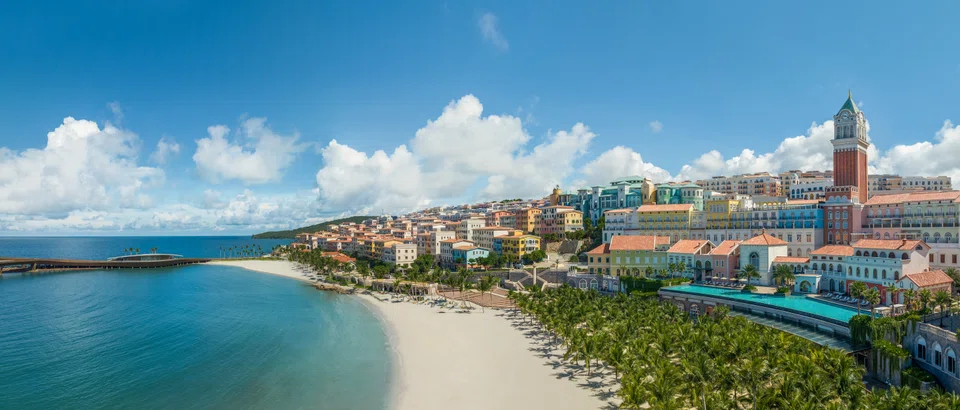
This shift is being anticipated despite an ongoing oversupply of high-end hospitality properties in the country’s coastal destinations.
According to a note issued by Savills Hotels in late July, this trend has accelerated, particularly after the pandemic. Many hotels are undergoing brand conversions or upgrades.
The hospitality advisory group forecasts that within the next three years, 40 per cent of hotels in Vietnam will be affiliated with international brands. This is a substantial rise from the current 30 per cent; back in 2013, it was under 25 per cent. Over that same decade, the number of hotel brands in Vietnam quadrupled to around 200.
Data from the Vietnam National Authority of Tourism shows that in the first six months of 2024, foreign tourist arrivals hit 8.8 million, marking a 58.4 per cent increase year on year.
Domestic tourism has remained robust, with 66.5 million local arrivals over the same period, including 37.2 million overnight stays.
Asia’s growing middle class, coupled with higher disposable incomes, are the key drivers behind the expansion of international hotel and resort brands into South-east Asia. This expansion is focusing on catering to the lifestyle and luxury-travel market.
Alexandra Murray, area vice-president and head of South-east Asia at global hospitality company Hilton, said: “Vietnam’s central location in the Asia-Pacific, coupled with its increasing connectivity to neighbouring countries, positions it well to emerge as a popular destination in the coming years.”
She told The Business Times that Hilton is on track to double its presence in Vietnam over the next few years, driven by strong demand from key source markets such as China, South Korea and Taiwan. Guests from these markets are increasingly keen on intra-regional travel that includes Vietnam.
Hilton runs five establishments throughout Vietnam. They are in the bustling metropolises of Hanoi and Ho Chi Minh City and in coastal destinations in Phu Quoc and Da Nang. Da Nang has two establishments.
Murray said: “We’re encouraged by Vietnam’s ambition to realise its tourism goals, including in infrastructure developments, preservation initiatives and policies to support investors, including reducing administrative processing times.”
High-end glut
Despite these favourable conditions, Vietnam’s hotel industry continues to lag in occupancy rates, partly because of the slow recovery in its key markets of Russia and China, said Savills Hotels.
Adding to the challenge is the nearly 25 per cent rise in supply of mid-scale to luxury hotel rooms in recent years; between 2020 and June 2024 alone, 45,000 rooms were added.
UK-based property consulting firm Knight Frank has urged developers to pause new projects in Vietnam’s coastal areas until tourism demand can catch up with the existing inventory. It is estimated that around 20 million four and five-star room nights are available each year in Vietnamese hotels.
Ben Gray, director of capital markets at Knight Frank, said: “(The coastal cities of) Phu Quoc and Nha Trang have both developed rapidly in terms of five-star room inventory, and are now experiencing very challenging times in terms of occupancy rates.”
He noted that the newly developed resort strips are falling short in tourism infrastructure and attractions, so there is little to engage visitors beyond the amenities found within the resorts.
However, unlike the oversupply seen in coastal regions, prime cities such as Ho Chi Minh City and Hanoi have not experienced this issue; in these urban centres, internationally branded and well-managed hotels continue to chalk up strong performances.
Vietnam-based investment management firm VinaCapital reported that occupancy rates at premium properties such as the Hanoi Metropole and Fusion Resorts, operated by its joint venture with US private equity giant Warburg Pincus, remain at or above pre-Covid levels. In the broader industry, however, performance is roughly 20 per cent below that benchmark.
Michael Kokalari, chief economist at VinaCapital noted: “US tourist arrivals are well above pre-Covid levels, and spending by relatively affluent travellers helps explain the high occupancy rates of upscale hotels.”
In these mature, bustling cities, Hilton also identifies opportunities for focused-service brands such as its Hilton Garden Inn, which caters to middle-class travellers in Vietnam. These hotels focus on providing accommodation, and leverage the surrounding neighbourhoods’ array of food and beverage options.
Uyen Nguyen, head of consultancy at Savills Hotels, anticipates that the midscale focused-service model will gain greater prominence in Ho Chi Minh City, as is the case in Bangkok.
She noted that among the top five international hotel chains, the number of midscale focus-serviced properties in Vietnam is only a third of that in Thailand, suggesting significant potential for further development.
Hey, big spenders
In recent years, the Vietnamese authorities have worked with hospitality industry players to come up with ways to attract high-spending travellers to optimise existing high-end inventories.
Vietnam aims to host 110 million domestic visitors in 2024, just like last year, but wants to pull in 35 per cent more foreign visitors than last year – between 17 million and 18 million foreign arrivals.
VinaCapital forecast that the continued recovery of tourist arrivals would add more than one percentage point to Vietnam’s 2024 gross domestic product growth, which stood at 5.05 per cent last year.
The firm estimated that before the pandemic, foreign tourism accounted for about 8 per cent of Vietnam’s gross domestic product, with purchases by these travellers accounting for about 10 per cent of the total retail sales in Vietnam.
While there have been calls for new night-entertainment complexes, shopping attractions or golf courses to boost foreign spending, some industry observers say these may not be enough to distinguish Vietnam as a destination for wealthy travellers.
Knight Frank’s Gray said: “Vietnam would be better served by focusing on its unique cultural attractions, rather than trying to compete with (Singapore’s) Orchard Road or (Thailand’s) Siam Square.”
Hilton’s Murray echoed this viewpoint. She said she believed Vietnam makes for an ideal destination for luxury travellers on the strength of its rich cultural heritage, scenic landscapes and captivating coastlines.
“Affluent travellers today are prioritising authentic, meaningful experiences and deeper, more engaging, human connections with local cultures and communities.”
As these guests tend to venture beyond popular destinations to explore the less-trodden parts of Vietnam, she suggested that more direct flights and travel routes be introduced between the country’s emerging destinations and other markets.
Gray also stressed that Vietnam should make it a priority to streamline the bureaucratic procedures for investments and visa processing, as well as improve its landscapes and the environment. These issues must be addressed to sustain the country’s rise as a travel destination, and should be prioritised over the development of hotels and resorts.