


Vietnam tycoon’s death sentence: Key takeaways from 300t dong fraud case
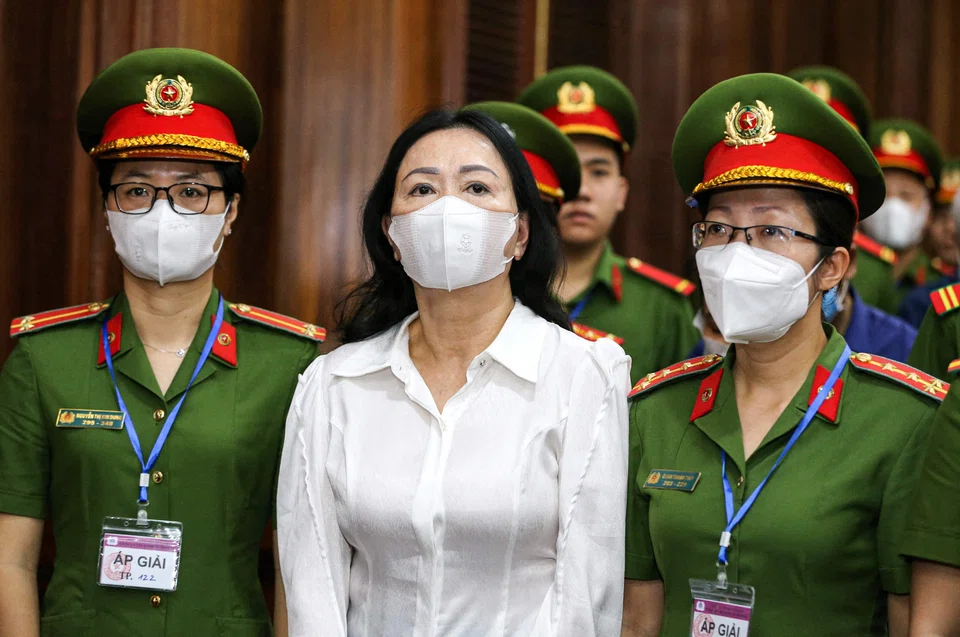
[HO CHI MINH CITY] After a month-long trial, Truong My Lan was sentenced to death by a court in Ho Chi Minh City on Thursday (Apr 11) for masterminding the largest fraud case in Vietnam’s history. She is also the first businesswoman in the country to face capital punishment.
The 67-year-old chairwoman of the real estate empire Van Thinh Phat (VTP) was found guilty of bribery, violations of banking regulations, and embezzlement of 304 trillion dong (S$16.7 billion) from private lender Saigon Joint Stock Commercial Bank (SCB), according to Vietnam’s state media.
Lan pleaded not guilty to charges of embezzlement and bribery, and refuted allegations of involvement in a slew of companies that had outstanding loans of 300 trillion dong at SCB.
One of Lan’s lawyers told Reuters that she would appeal the verdict.
While death sentences for financial crimes are not the norm in Vietnam, the country has sentenced some corrupt bankers to death in the past, with at least three such cases more than five years ago. However, none of these cases match the scale and prominence of Lan’s case.
The court will hold a second trial to examine the second phase of the case, which involves a VTP-linked bond scam. This impacted more than 40,000 victims, and led to the misappropriation of more than 30 trillion dong.
The multibillion-dollar fraud case is part of Vietnam’s sweeping graft crackdown, dubbed “Blazing Furnace”. The campaign has implicated hundreds of senior state officials and influential business figures, along with thousands of others who have been indicted since 2021.
It also sparked turmoil in Vietnam’s property market, with a series of years-long investigations and stricter measures against illegal practices among local developers and bond issuers.
Sophisticated scam
Between 2012 and 2022, SCB disbursed to VTP and affiliates loans amounting to more than one quadrillion dong. This represented 93 per cent of people’s savings deposited at SCB.
The jury concluded that Lan effectively controlled SCB by holding 91.5 per cent of the bank’s shares through numerous proxies.
She explained that she had become a shareholder to ensure the successful merger of three private banks into SCB in 2011, following a request from the central bank’s former deputy governor.
Lan said she used her family assets and borrowed money to help the bank resolve its debt dilemma, hoping it would eventually go public with a high valuation. However, her efforts to restructure the bank were derailed as she was arrested in 2022.
The total embezzled monies were appropriated through unlawful loans to shell companies, withdrawn in cash or transferred to remove traces of the cash flow, according to prosecutors. The sum is equivalent to 3 per cent of Vietnam’s 2022 gross domestic product.
The scam led to SCB facing “extremely serious consequences”, with a total loss of 677 trillion dong.
Lan, as the mastermind, must be “strictly punished” and obliged to compensate the bank a total of 674 trillion dong, read the court judgment.
“The defendant’s actions not only violated the property management rights of individuals and organisations but also pushed SCB into a state of ‘special control’, eroding people’s trust in the leadership of the (ruling Communist Party of Vietnam) and state,” the judgment noted.
The jury also said that Lan’s illegal gains should be confiscated for the state budget, but as “these funds belong to the people”, they should be transferred to SCB in order to make up for the losses.
Properties, yachts, luxe cars, shares seized
Lan pledged to use all of her family’s assets, including those unrelated to the case, to compensate for the loss.
Assets linked directly to her – including cash, shares, luxury cars, yachts and more than 1,000 properties – have been seized for judgment enforcement.
Some of the key assets are located in prime land across Vietnam’s southern economic hub, including the 39-storey Times Square and the Union Square luxury mall, both situated in the bustling central business district of Ho Chi Minh City.
It emerged over the course of the trial that Lan had planned to sell a Grade A office building in Hanoi’s Ba Dinh district for US$1 billion to recoup some losses, but instead drew an offer from an unnamed investor for US$360 million. Her key creditors, HSBC and OCBC Bank Singapore, had opposed the sale.
Partners in crime
The court also handed down sentences to 85 other defendants, ranging from probation to life imprisonment. They include 45 key executives from SCB, 15 former officials of the State Bank of Vietnam, three officers from the Government Inspectorate, and one former officer from the State Audit Office.
Lan was accused of bribing government inspectors to overlook the violations during their inspection of the bank. A high-profile case involved former State Bank official Do Thi Nhan, who was accused of accepting US$5.2 million in bribes, deemed the “biggest bribe ever” in Vietnam.
Nhan, who has returned US$4.8 million to the authorities, was given a life sentence and ordered to pay the remaining sum; she was also slapped with a fine of 100 million dong.
The web of fraud also extended to Lan’s family members, who signed fake loan documents at her behest to siphon money from SCB. Her husband, Hong Kong billionaire Eric Chu, was given a nine-year jail term, and her niece, Truong Hue Van, received a 17-year sentence.
Chu said he did not understand Vietnamese law and the language, so he signed the documents to use his company’s Times Square building as collateral for Lan’s loans, aiding her in restructuring the bank and unintentionally committing the crime.
He reportedly expressed regret for not discouraging Lan from rescuing the three private banks via the merger, and for leaving her to handle business matters with risky decisions by herself.
TRENDING NOW

Malaysian king buys stake in Singapore-listed mining firm expanding into rare earths

Grab CEO’s wife Chloe Tong on life with Anthony Tan and finding her purpose

Once staunchly pro-China, Malaysian Chinese businesses are now distancing themselves from Beijing

Longer wait times expected as S’pore healthcare institutions report system disruptions

