Vietnam’s bank ownership rule shift may draw foreign strategic investors but risks remain
Raising the foreign ownership cap to 49% for selected lenders can spur inflows, but high pricing and hidden bad debts can limit investor appetite
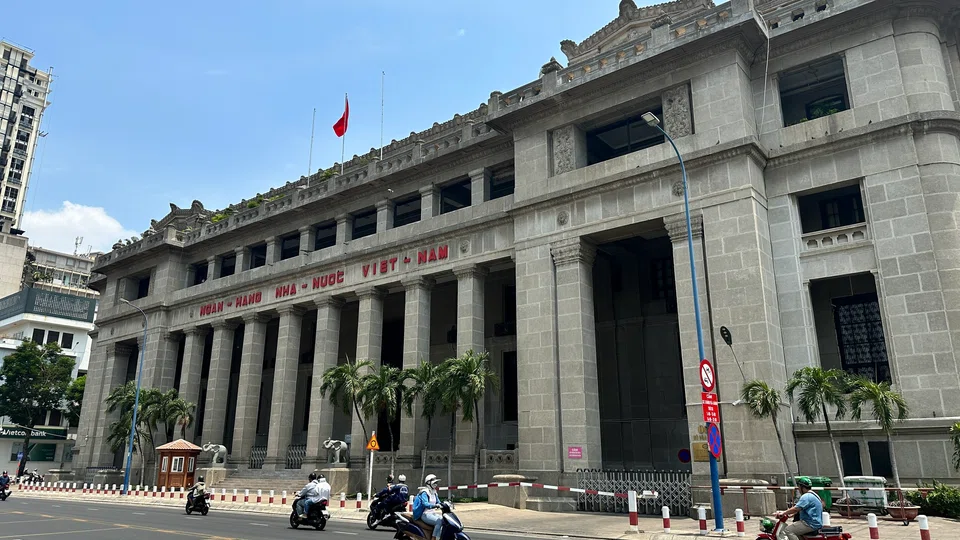
[HO CHI MINH CITY] Vietnam is throwing open the doors to deeper foreign stakes in its banking sector, but while the higher ownership cap may lure fresh capital, analysts have warned that murky balance sheets and mismatched valuations could keep eager investors at bay.
Effective May 19, the government is allowing up to 49 per cent foreign ownership – up from 30 per cent – for a select group of banks that has taken over struggling peers, as part of efforts to accelerate the central bank’s restructuring push.
“These institutions now have greater flexibility in pursuing overseas strategic partnerships and investors,” said Tyler Nguyen, chief market strategist at Ho Chi Minh City Securities Corporation (HSC).
Foreign institutions must meet several requirements to qualify as strategic investors. These include ownership of at least 10 per cent of the target bank, credit ratings that are “stable” or higher and a minimum of US$20 billion in total assets.
The higher ceiling is expected to boost established banks’ ability to raise foreign capital through share issuance to support the restructuring of weaker lenders. It also opens the door to deeper engagement with strategic foreign investors, particularly those with stronger expertise in corporate governance and asset quality management.
But that may not mean foreign investors will be flocking to absorb shares of those larger banks. For one thing, Nguyen has observed a valuation mismatch between local sellers’ expectations and offers by foreign investors.
Vietnam’s banking sector, which has a heavy weighting on the stock market’s key benchmark VN-Index – accounting for about 40 per cent – is trading at a premium, he pointed out. The average price-to-book ratio of bank stocks in Vietnam is 1.34, higher than that of those in Indonesia, Thailand and Singapore.
This means that potential investors might have to pay more than they would like for acquisitions, betting on long-term strategic benefits over short-term returns – a trade-off some may find hard to justify.
Tamma Febrian, director for financial institutions at Fitch Ratings, said that the continued lack of majority control under the new ownership ceiling could pose another deterrent for foreign investors to pay higher prices.
The deal-breaker, however, would be hidden non-performing loans and the target banks’ capability to manage asset risks amid economic fluctuations and the evolving regulatory frameworks in Vietnam, noted analysts.
Potential beneficiaries
Three domestic banks stand to benefit the most from the rule change. They are Vietnam Prosperity Joint-Stock Commercial Bank (VPBank), Ho Chi Minh Development Joint Stock Commercial Bank (HDBank) and Military Commercial Joint Stock Bank (MB Bank).
Along with Vietcombank, they are involved in the so-called “mandatory transfers” – a central bank-led initiative that allows selected commercial banks to take over underperforming lenders.
This is part of Vietnam’s broader effort to overhaul the banking sector and safeguard national financial security.
Vietcombank, which acquired troubled Construction Bank, must maintain a foreign ownership limit of 30 per cent as the new change excludes banks that have government ownership of more than 50 per cent.
Weak lenders, deemed as “zero-dong” banks or put under “special supervision”, are those grappling with liquidity shortages and capital inadequacy, requiring major rescue efforts by the authorities. Although Vietnam’s law allows credit institutions to declare bankruptcy, no bank in the country has ever become insolvent.
Thu Nguyen, head of investment at VinaCapital, a Vietnam-based asset management firm, said that established lenders would likely take advantage of the expanded credit room and increased liquidity support from the state that will come with a takeover.
“Overall, lenders that have acquired distressed financial firms are seen as being more attractive and having more growth opportunities than other banks,” she noted.
Market watchers added that recent regulatory reforms have introduced protective measures and financial incentives to encourage smooth transfers, including exemptions from consolidated financial reporting and access to preferential loan packages with low interest rates.
“From the perspective of acquiring banks, these transactions are now seen as strategic opportunities rather than liabilities,” said HSC’s Nguyen.
For instance, MB Bank aims to leverage “zero-dong” OceanBank’s extensive network of more than 400 branches to accelerate expansion.
HDBank said that acquiring Vikki Bank, formerly known as DongA Bank, would allow it to expand operations, increase lending and explore new business models.
Ownership constraints
Vietnam has maintained a 30 to 50 per cent cap for combined foreign stakes in various sectors such as banking, airline, real estate, as well as oil and gas. This has prevented foreign investors from disproportionate control in industries deemed critical to national security.
This has been one of the key bottlenecks in the reassessment by index provider MSCI to upgrade Vietnam to emerging-market status. Inadequate room in a company’s share register would also hamper inflows of fresh foreign capital to acquire an index constituent stock if the market upgrade materialises.
Foreign ownership of VPBank, HDBank and MB currently stand at some 25, 17 and 23 per cent, respectively.
The new rule, though seen as progress, is exclusively applied to a few banks involved in the mandatory transfers.
While other sectors such as logistics and real estate have also seen some gradual relaxations, these changes still remain sector-specific and measured.
“Given the banking sector’s significant weight in Vietnam’s market capitalisation, a broader foreign-ownership relaxation would have a far greater impact in meeting MSCI’s upgrade criteria,” said HSC’s Nguyen.