Asia’s economies avert energy shock via fiscal buffers, AI boom
The unexpectedly strong performances last quarter are prompting economists to upgrade growth forecasts across the region
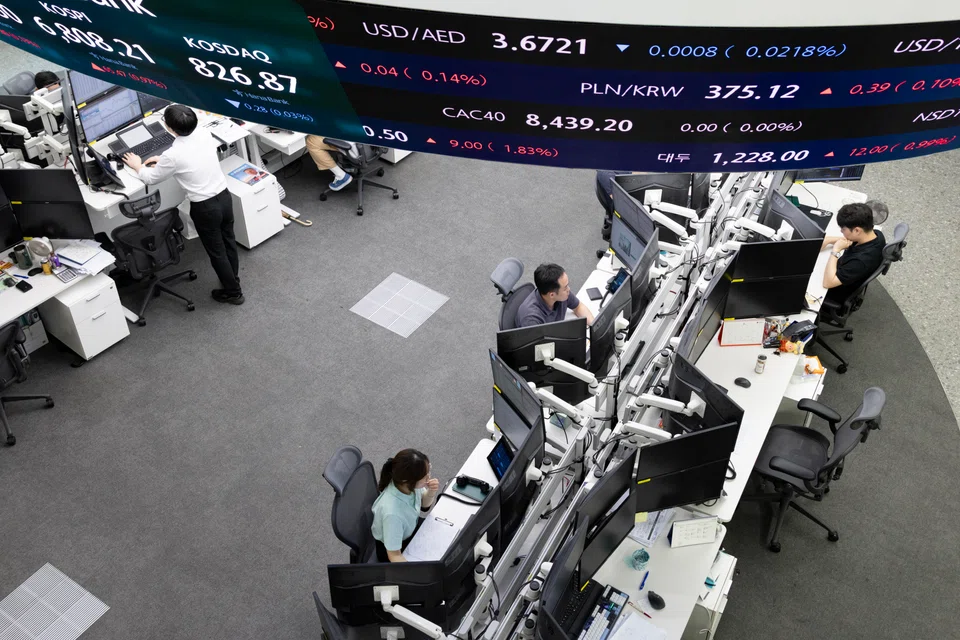
[KUALA LUMPUR] Asia’s economies from India to Malaysia and Australia defied all worst-case scenarios to post solid growth last quarter, as governments moved quickly to secure energy supplies and tapped relatively healthy balance sheets to cushion households.
A global boom in artificial intelligence also proved to be timely.
Figures out this week showed India, the world’s third-biggest energy importer, expanded a stronger-than-predicted 7.8 per cent in the June quarter, while Malaysia’s growth accelerated to 6 per cent. Singapore grew 5.9 per cent, prompting the government to raise its full-year forecast. Even Thailand avoided a deeper quarterly contraction.
The gains were even more striking in Asia’s technology powerhouses, where surging AI demand boosted exports. Taiwan posted its fastest first-half growth in about 50 years, while South Korea expanded at its strongest pace since 2020.
The unexpectedly strong performances are prompting economists to upgrade growth forecasts across the region and reviving expectations that some central banks may need to tighten monetary policy.
“Given Asia’s high exposure to energy, this resilience has been a positive surprise,” said Sonal Varma, chief economist for India and Asia ex-Japan at Nomura Holdings.
She sees rate increases in Taiwan and Malaysia later this year, while policymakers in India have opened the door to higher borrowing costs. Nomura also added a 25-basis-point September hike to its Reserve Bank of Australia call after second-quarter growth beat expectations.
Asia entered the Iran war as one of the world’s most vulnerable to an energy shock. Indeed, governments went into crisis mode, assembling emergency task forces, warning citizens of unprecedented challenges and scrambling to secure fuel. They tapped petroleum reserves, rerouted Middle Eastern supplies and sourced oil from Latin America and Central Asia.
Weaker Chinese demand also helped keep a lid on prices, economists said.

Helping limit shortages as the Strait of Hormuz was effectively closed for business, some countries doubled down on domestic energy sources such as coal, solar and biofuels, according to Aninda Mitra, head of Asia Macro Strategy at BNY.
In Australia, surging fuel prices accelerated a shift among motorists to electric vehicles, with purchases surging 10.3 per cent in the three months through June.
Authorities in Singapore nearly doubled support for households and businesses through cash vouchers, grants and rental assistance.
Thailand reshuffled state spending and prepared additional cost-of-living relief, while India unveiled support for smaller businesses.
Those measures “safeguarded household balance sheets and limited a damaging pullback in demand”, Mitra said.
For some countries in the region, AI-related demand has been a boon, though Standard Chartered (StanChart) economists Jonathan Koh and Edward Lee question how long the boost can last.
In equities, Taiwan and South Korea have surged ahead, with their benchmark indexes up about 35 per cent and 15 per cent, respectively, over the past six months.
Currencies of economies benefiting from the AI boom have also held up better, with the South Korean won and Chinese yuan gaining against the dollar, while the Philippine peso and Thai baht have lagged.
However, another surge in energy prices or a correction in the AI investment cycle are among the biggest risks for these economies, StanChart’s Koh and Lee cautioned.
A global bond selloff is driving up government borrowing costs, potentially making it more expensive to extend subsidies and other support while leaving central banks less room to counter any slowdown.
And the path ahead isn’t “straightforward” either, said Lavanya Venkateswaran, economist at OCBC.
Growth has lagged in Thailand and the Philippines, where domestic headwinds outweighed the forces lifting much of Asia. China also slowed more than expected last quarter to its weakest in more than three years.
“Broader economy wide price pressures are building across the region. The consumer price trajectory has also been uneven, similar to growth,” Venkateswaran added. “The upshot is that monetary policy tightening remains on the cards for the region in the next six to 12 months.” BLOOMBERG
Decoding Asia newsletter: your guide to navigating Asia in a new global order. Sign up here to get Decoding Asia newsletter. Delivered to your inbox. Free.
Share with us your feedback on BT's products and services