BHP sharpens Asia focus; bets on copper, potash over rare earths
Asia’s firm demand underscores the mining giant’s commitment to the region


[SINGAPORE] BHP is doubling down on Asia as the centre of gravity for global commodity demand, while placing long-term bets on copper and potash as its core future-facing commodities, sidelining smaller plays such as rare earths.
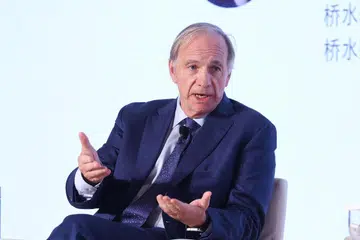
The Australian miner – the world’s largest listed mining company by market capitalisation – expects Asia to account for more than half of the global population by 2050, thus anchoring demand growth across the megatrends of urbanisation, decarbonisation and digitalisation, said its chief commercial officer Ragnar Udd.
“The world has got an insatiable appetite for copper at the moment,” Udd told The Business Times, adding that demand for potash – a key crop nutrient – is also surging, especially in fast-growing economies such as India.
Meanwhile, rare earths, as a relatively smaller commodity bucket, are not a priority for the mining giant. “Our focus tends to be on those areas where we see scale; and we have the ability to differentiate versus others in terms of the assets that we have, and how we invest in those over a longer time,” Udd noted.
Copper and potash: Future-proof
Copper, vital to electrification and digital infrastructure, remains a core growth pillar for BHP’s portfolio.
While downstream smelting capacity is rising, upstream supply remains tight, supporting the case for further investment, Udd added.
In an outlook report released in August, BHP noted that it expects the copper market to be “broadly balanced” over the next year as mine supply cuts and tighter scrap flows provide support amid slowing demand from China.
BHP forecasts copper demand to rise from 32 million tonnes today to more than 50 million tonnes by 2050. But new supply remains constrained by falling ore grades and rising regulatory hurdles, meaning that prices “still need to rise” to unlock new projects.
As countries with big populations such as India and China drive robust growth, global deliveries of potash in 2025 are set to surpass last year’s record. BHP is betting on its Jansen project to become one of the world’s lowest-cost producers.



BHP’s Jansen potash project is located in Saskatchewan, Canada, with production expected to begin in mid-2027. At a production rate of about 8.5 million tonnes a year, the mine will be one of the world’s largest potash mines once it is fully ramped up.
China and India: Different growth arcs, same long-term weight
China’s growth is expected to moderate as its population ages and fiscal capacity tightens, but decarbonisation-linked sectors remain opportunity-rich, supporting long-term demand for transition metals such as copper.
Grid investment in China rose 15 per cent year on year in the first half of 2025, supporting a record 264 gigawatts of renewable capacity, which was nearly 90 per cent of all wind and solar installed in the United States.
Electric vehicle production has surged, and more than half of all new light-duty vehicles sold this year are expected to be electric.
Meanwhile, BHP sees India as the fastest-growing major economy. Demand for steel – and thus iron ore – is booming, underpinned by massive government infrastructure investment, including highways, metro rail expansions, high-speed rail and freight corridors.
“China had an incredible growth story in steel-making… We saw China’s steel-making capacity rise from about 100 million tonnes a year to over a billion tonnes a year in the span of about 15 years.
“Now, China has maintained that steel-making capacity at a billion tonnes a year for the last six years. What we’re now seeing is that India is starting its own growth story in iron ore,” said Udd. He expects Indian demand to grow from 160 million tonnes this year to as much as 500 million tonnes by 2050.
Commercial hub in Singapore
As part of its Asia pivot, BHP has brought key commercial functions closer to its customers, with Singapore serving as the group’s global hub for procurement, marketing and innovation. The city-state handles billions of dollars in iron ore, copper, coal and potash trade each year.
“We have found Singapore to be such an incredible jurisdiction in terms of innovation, capabilities, and accessibility to different regions and customers,” said Udd.
In May, BHP launched its first industry artificial intelligence hub in Singapore to accelerate digital adoption in mining. “Having the team aggregated into Singapore... allows for expertise, capability innovation and the ability to learn across different areas… It enables us to... augment the capability of the teams and the organisation,” he added.
Regional partnerships
BHP’s commercial presence in Asia predates its Singapore hub, established in 2001. It maintains longstanding partnerships across the region, with offices particularly in Japan and China, in both upstream resources and downstream innovation.
Recent examples include Japanese conglomerates Itochu and Mitsui agreeing to retain their stakes in BHP’s new Ministers North iron ore deposit in Western Australia, ensuring stable supply as the adjacent Yandi mine winds down.
“Mitsui and Itochu’s decision to partner in our Ministers North project builds on decades of collaboration with our customers and partners,” said Udd. “BHP has been a reliable supplier to Japan for more than half a century.”
He also highlighted Mitsubishi’s role in BHP’s Escondida copper mine in Chile, which is the world’s largest producer of copper concentrates and cathodes, and the BHP Mitsubishi Alliance, which produces about 90 per cent premium hard coking coal in Australia.
Beyond mining, BHP is investing in innovation and steel decarbonisation. It is working with 11 steel makers, accounting for 22 per cent of global reported steel production, to develop low-emissions technologies capable of reducing greenhouse gas intensity by 30 per cent compared to conventional blast furnaces by 2030.
“Our partnerships are focused on low carbon fuel use, carbon capture utilisation and storage, direct reduced iron trials, and electrolysis demonstrations,” Udd said. But he noted that decarbonisation trajectories differ across regions due to variations in the age of blast furnace fleets.
Decoding Asia newsletter: your guide to navigating Asia in a new global order. Sign up here to get Decoding Asia newsletter. Delivered to your inbox. Free.
Copyright SPH Media. All rights reserved.