


Elon Musk spells danger for Accenture, McKinsey and their rivals
Why the American government could turn against consultants

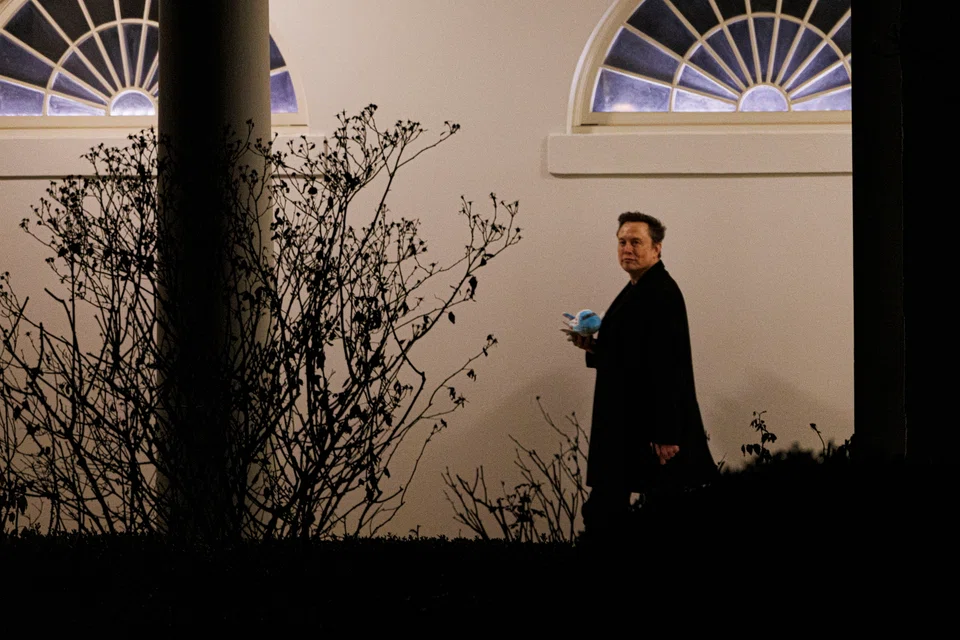
IT SHOULD be a management consultant’s dream. The organisation is immense. The bloat is obvious. And the new boss is eager to shake things up. President Donald Trump and his disrupter-in-chief, Elon Musk, have already begun hacking away at America’s federal bureaucracy. Musk’s Department of Government Efficiency (Doge) has set itself the target of cutting government spending by a colossal US$2 trillion.
For an industry that helps organisations remake themselves, that seems like an opportunity like no other. Yet consulting firms, which have come to rely on the federal government for a growing share of fees, are looking on nervously. None of them appear to have a seat at Musk’s table. They could instead be on the menu.
Consultants have a long history of cashing in on government projects. McKinsey, the world’s most prestigious strategy adviser, at least by its own estimation, helped Dwight Eisenhower establish the post of White House chief of staff in 1952 and designed Nasa’s first organisational structure in 1958. By 1977, Jimmy Carter was grumbling that the federal bureaucracy was employing consulting firms “excessively, unnecessarily and improperly”. That year Booz Allen Hamilton, one consultancy, was paid US$320,000 (US$1.7 million at today’s prices) by the Department of Agriculture to figure out how many chickens its inspectors should examine per minute.
Such a contract would look like chump change these days. The same firm received US$9 billion from the federal bureaucracy in the last fiscal year, according to government data. Add in the other top government consultancies –Accenture, BCG, Deloitte, EY, Guidehouse (formerly part of PwC), KPMG and McKinsey – and the figure exceeds US$18 billion, up from just US$5 billion a decade before.
The importance of America’s government for consulting revenue varies across these firms. Booz Allen Hamilton, which parted ways with its private-sector consulting business in 2008, is nearly entirely reliant on the public sector. McKinsey, whose work for the federal government slowed after its association with opioid manufacturers tarnished its reputation, makes less than 1 per cent of its global revenue from federal contracts. Across the firms we examined, though, the federal government accounted for about 8 per cent of total revenue last year. There is no bigger single client.
Some contracts are enormous. EY has made nearly US$70 million since 2020 supporting a reform plan at the Department of Housing and Urban Development. BCG has been allocated US$380 million since 2022 by the Defense Health Agency, which provides medical care to the armed forces, as part of an initiative called “Workforce 3.0”. Accenture has received US$700 million from the Department of Education since 2019 to build and manage a website, mobile app and virtual assistant for student aid.
The scale of spending partly reflects the magnitude of the mess. America’s federal government collects around 140 billion forms a year, most of which are still paper-based. Agencies struggle to compete with the private sector for talented techies to help change that. The growth in government consulting over the past decade has been driven largely by digitisation efforts, notes Fiona Czerniawska of Source Global Research, which tracks the industry.
Could that offer some protection from Musk’s woodchipper? The executive order establishing Doge tasks it with modernising the government’s technology. Ron Ash, who oversees Accenture’s federal-government business, expects that agencies will be pressed to automate faster. Firms such as his will be ready to help.
The problem, however, is that Doge and the consultants come from very different worlds. Take Musk’s methods. He has been brutal and abrupt, and made little effort to engage those affected. Consulting firms have spent years trying to distance themselves from that type of approach, says Tom Rodenhauser of Kennedy Intelligence, another industry analyst. Protesters have gathered outside the showrooms of Tesla, Musk’s carmaker, to protest against his cuts. Consultants will be loath to attract such attention.

For his part, Musk may see consultants not as the solution, but part of the problem. Many of them are frustrated with how little they have been able to achieve in government compared with their private-sector efforts, says Max Stier, head of the Partnership for Public Service, a non-profit which works to improve government. Bureaucratic inertia and political meddling are partly to blame. But Musk may conclude that, having tried for so long, consultants are not up to the task.
He may instead be drawn to options from his own sphere. Palantir, an analytics firm chaired by Peter Thiel, who worked with Musk at PayPal, has gained a foothold in the Department of Defense and is spreading quickly across the federal government. Among other things, it helps organisations feed their data into artificial intelligence (AI) tools. In the final quarter of 2024, its revenue from America’s government grew by 45 per cent year on year. Its share price has been on a remarkable ride, more than doubling since Trump’s election in November. Booz Allen Hamilton’s has fallen by a third.
Unlike most other software providers, Palantir embeds teams of engineers with its clients to help them make use of its technology. For now, it works on many projects alongside firms such as Accenture and Deloitte. But some also view it as a potential competitor to the big consultancies, particularly when it comes to AI. Thiel has described conventional consulting as a “total racket”.
The Trump administration poses another conundrum for the consulting industry. Besides costs, officials also want to strip the government of wokery. Diversity, equity and inclusion (DEI) efforts are a particular target. An executive order issued last month bans federal contractors from operating any programmes “promoting DEI that violate any applicable federal anti-discrimination laws”. That has put the big consultancies, which have been vocal champions of DEI, in an awkward spot.
Some have remained defiant. McKinsey has insisted that it will continue its pursuit of a “diverse meritocracy”. Yet it has little to lose. Other firms have quickly sought to placate the new administration. Accenture has informed staff it will be “sunsetting” its diversity goals. Deloitte’s American branch has told those working with the federal government to remove their pronouns from their e-mail signatures. Such moves have ruffled employees, and may irk private-sector clients that have been preached to on the merits of DEI. Consulting bosses will have to decide what price they are willing to pay to keep their biggest client happy.
©2025 The Economist Newspaper Limited. All rights reserved
Decoding Asia newsletter: your guide to navigating Asia in a new global order. Sign up here to get Decoding Asia newsletter. Delivered to your inbox. Free.
Share with us your feedback on BT's products and services
TRENDING NOW

Mooted COE changes will solve category issues, but higher premiums likely: observers

Grab CEO’s wife Chloe Tong on life with Anthony Tan and finding her purpose

Once staunchly pro-China, Malaysian Chinese businesses are now distancing themselves from Beijing

Cliff Tan has 7 million followers and a 4-month waitlist. Why won’t he expand his business?

