Grenfell fire exposes disconnect between elitist council and poor residents
London
THE Ferraris were driving people batty in affluent South Kensington. Drivers revved their engines and ripped past Harrods. Residents were already irritated by the dust and noise from super-rich neighbours building underground swimming pools and cinemas. Now came complaints about Middle Eastern "types" drag racing at night.
Up in North Kensington, a part of London that is home to some of Britain's poorest residents, the complaints were more elemental. People were fighting plans to close a day care centre, lease out a public library and demolish a community college. At one public housing project, Grenfell Tower, residents had complained about fire safety issues for years: power surges that blew up television sets and filled rooms with smoke, outdated fire extinguishers and the absence of a communal fire alarm.
The very different complaints from the opposite ends of Kensington received very different responses from the 50-member council representing the Royal Borough of Kensington and Chelsea. The Ferraris were debated in the council chamber. Fines of as much as £1,000 (S$1,759) were imposed on those revving engines. Underground construction projects were restricted.
The concerns in North Kensington, particularly those of Grenfell Tower residents, were mostly ignored. By November, one resident, Edward Daffarn, was so frustrated that he predicted "only a serious fire" resulting in a "serious loss of life" would make the council pay attention.
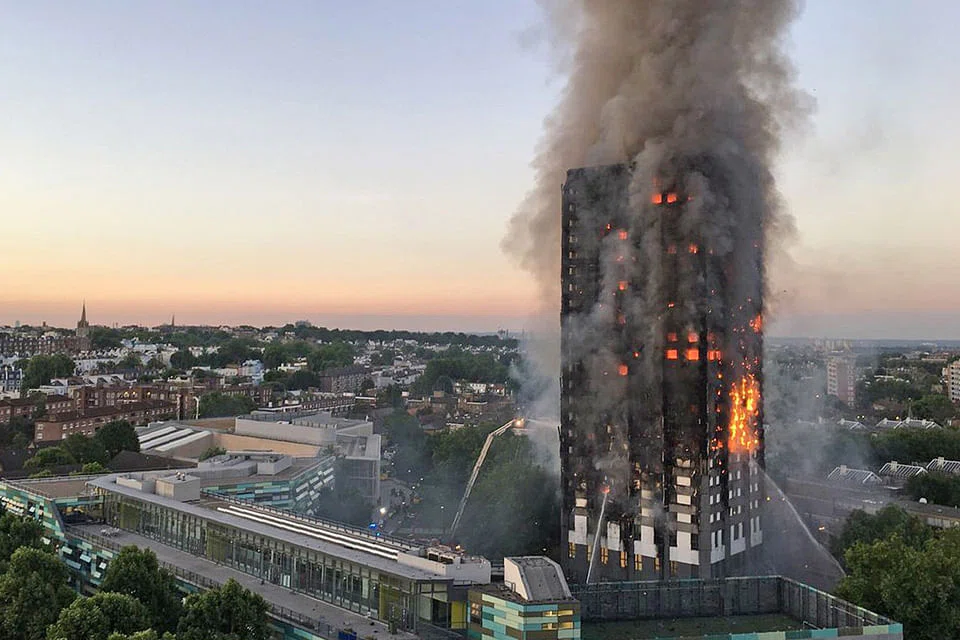
The councillor in charge of housing, Rock Feilding-Mellen, dismissed him as a "fantasist". Seven months later, as a deadly blaze engulfed the building in the early morning hours of June 14, Mr Daffarn fled his apartment on the 16th floor. Stumbling through the smoke-filled landing, he was found by a fireman and guided to safety. But at least 80 of his neighbours died. "This council does not represent the people of North Kensington," Mr Daffarn said.
Kensington and Chelsea is a microcosm of a divided Britain. The south is home to Kensington Palace Gardens, better known as Billionaires' Row, one of the most expensive streets in the country. Roman Abramovich, the Russian billionaire, owns a mansion there reportedly worth £125 million. And Kensington Palace is where Prince William and the Duchess of Cambridge will be raising their children.
To the north, Golborne ranks as one of the two poorest wards in London. Victorian-era diseases such as tuberculosis and rickets have made a comeback. Life expectancy in parts of North Kensington is 20 years lower than in South Kensington.
In recent years, the council has spent millions of pounds subsidising opera tickets and paying tax rebates to all except the poorest at a time when services for youths and toddlers were reduced, and free swimming classes for state-funded schools and older residents were cancelled. The contempt directed at those raising concerns about fire safety at Grenfell Tower was not an exception, residents said, but the fire exposed the disconnect between an elitist council and poor residents in the north. "They don't know how the other side lives," said Monica Press, a Labour councillor from North Kensington.
The council leader, Elizabeth Campbell, admitted last month that in her 11 years as a council member she had never set foot inside a high-rise housing project.
Ms Campbell, who took over as leader after the Grenfell fire, has vowed to rebuild trust. But local residents said that the social contract between those who govern and those they purport to represent is broken. Police officers investigating the fire have told survivors that there were "reasonable grounds to suspect" that the council and the organisation managing its social housing might have committed corporate manslaughter.
"How do you think our children feel seeing people not care about their mothers, fathers, grandparents, uncles, aunties?" said Niles Hailstones, whose youngest son attended school with several children who died in the fire. "We watched the building burn down in front of our eyes."
Today, the face of London is the Muslim son of a bus driver. Sadiq Khan, the city's directly elected mayor, in many ways represents how the city sees itself: multicultural, liberal and socially mobile.
But much local governing authority is devolved to the councils that run London's 32 boroughs, which can look very different from that.
Of the Kensington council's 50 members, 46 are white and 37 are Conservatives. The Cabinet, led by Ms Campbell, is entirely white. One of her fellow councillors is Lady Catherine Faulks. Another is Mr Feilding-Mellen, the stepson of the Earl of Wemyss and March. Another is Professor Sir Anthony Coates, known locally as a man of letters - the letters being those that he lists after his name to highlight his credentials.
Timothy Coleridge, one of several councillors who attended Eton, Britain's most exclusive private school, has served on the council since 1986, as did his father before him. Two years ago, he received an e-mail from a distressed resident. Its subject line was: "Our borough is becoming a nightmare!!" Sports cars were speeding in his Knightsbridge neighbourhood, one of the most expensive in London, the resident complained. Limousines hogged parking spaces outside his home.
"The super car situation was ghastly during the last few summers, keeping us all awake in North Terrace," the resident wrote on June 2, 2015, demanding urgent action.
Mr Coleridge sympathised. "We totally agree with you, and our experiences as local residents matches yours," he replied, 14 hours after receiving the complaint. Lawyers were put to work. Police were consulted. Five months later, a Public Space Restriction Order imposing steep fines had been passed.
Councillors representing the north of the borough acknowledged that in the lives of the rich, this was a legitimate concern. "But the alacrity with which they took it up was remarkable," said Robert Atkinson, a Labour councillor.
Grenfell Tower residents were treated differently. The council kept deducting rent from a Grenfell survivor even after the fire, a mistake that Lady Faulks called a "tiny" thing before backtracking. The council's former leader, Nicholas Paget-Brown, defended the body's decision not to install sprinklers, suggesting that residents did not want them. And his deputy, Mr Feilding-Mellen, a property developer, had insisted on keeping down the cost of the external cladding used in a £10 million renovation in 2014, according to a leaked e-mail, resulting in the choice of what turned out to be highly flammable materials.
North Kensington Library, a stately Victorian building near Portobello market, is the rare place where children from the housing projects mix with those from Notting Hill Preparatory School and Chepstow House School, two private schools that cost more than £6,000 a term. But now, the public library might have to move out so that one of the prep schools can move in.
Mr Feilding-Mellen negotiated a deal to lease the building to Notting Hill Preparatory School, which is getting a year rent-free so that it can refurbish the building. The council said that this arrangement is not unusual. Local critics said that it is practically paying for the refurbishment. Mr Feilding-Mellen's twins are on the waiting list for the school.
Meanwhile, the council is spending more than £18 million of public money on a new building in which the public section of the library will be limited to the ground floor, while students from Chepstow House will get their own access and separate floor. Mr Feilding-Mellen's children are on the Chepstow House waiting list, too. At a council meeting Oct 19, he insisted that he did not have a conflict of interest, although he conceded that it might be "perceived" as such.
Since the fire, Ms Campbell, the council leader, has promised to use the council's reserves to build more social housing. And she has put on hold all redevelopment projects, including North Kensington Library and Kensington and Chelsea College pending a review. But distrust remains. NYTIMES