Luxury spending spurs Hong Kong’s ‘flight to quality’ economic recovery: analysts
The improving economy has brought some much-needed relief to the city’s real estate sector
 Add BT as a preferred source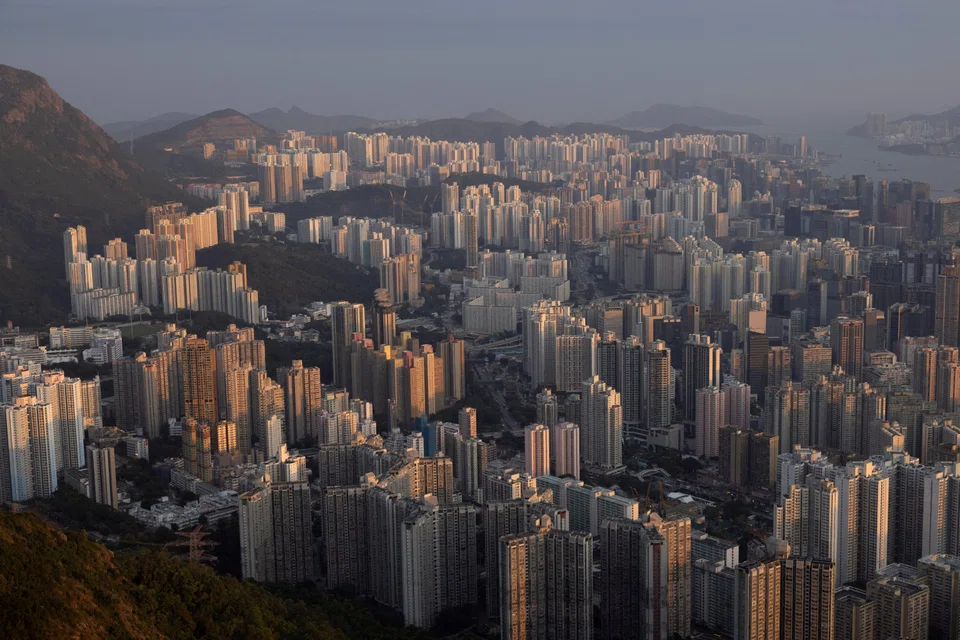
[HONG KONG] High-end spending – everything from luxury penthouses and villas, jewellery, watches and even clocks – is helping to fuel Hong Kong’s ongoing economic rebound.
For the first half of 2026, the economy grew by 5.1 per cent compared to the same six-month period in 2025 – the strongest half-yearly performance in almost five years.
The improving economy has brought some relief to the city’s real estate sector, a pillar industry that has traditionally served as a barometer of Hong Kong’s general economic health.
Edward Chan, the lead analyst for Greater China real estate ratings at S&P Global Ratings, noted that hardly a week passes by these days without news of a luxury residential property changing hands.
“If you look at Hong Kong’s retail sales data, the rebound has been underway for some time,” he said. “It becomes clear that the growth is being driven by luxury goods and high-end consumption. Property owners such as Hongkong Land and Hysan Development are among the biggest beneficiaries because they are most exposed to these luxury segments.”
Top-selling products fall under the government’s “hard luxury goods” category, which recorded a 25 per cent year-on-year increase in value in the first half of 2026 to HK$31 billion (US$3.95 billion). This amounted to 15 per cent of total retail sales.
On the whole, total retail sales rose 9.6 per cent in H1, which analysts said was key to the Hong Kong economy’s stronger showing this year.
In real estate, the city’s passion for top-end purchases represents a highly uneven recovery. Cathie Chung, a senior director of research at industry consultancy JLL, calls the economic recovery “a flight to quality”.
Not yet back to the golden age
S&P’s Chan said that Hong Kong’s property market has stabilised, although the recovery remains modest by historical standards.
SEE ALSO


“It’s not yet back to the golden age. But the market is no longer declining. It’s growing gradually, and that growth is coming from the top end of the market rather than mass retail,” he noted.
This polarisation bears watching, especially in commercial buildings, which are the sector’s weakest-performing asset class in the current cycle, explained Chung.
The growth is concentrated in Hong Kong Central’s narrow downtown strip where fewer than 10 “trophy” grade-A commercial buildings – led by IFC and the Henderson – are approaching full occupancy, driven by demand from global financial firms including the likes of Jane Street, Quilter and Point72.
By contrast, the remainder of the 60-plus grade-A buildings in the same district have high vacancy rates, with some buildings exceeding 20 per cent.
The average vacancy rate for the premium grade-A offices in Central is 8.8 per cent, according to JLL. As such, average Grade A office rents in Central – though still among the world’s top five most expensive prime office markets – remain 40 per cent below the peak levels last seen in 2019.
“They are still very affordable compared with the peak levels,” said Chung. “High-quality buildings and assets remain highly sought-after in the leasing market because their rentals are still substantially lower than the market peak in 2019. Even for luxury goods, we understand that it is more supported by the high-net worth individuals in Hong Kong on top of tourists.”
Rentals of core retail store locations in Central at Queen’s Road Central, such as those for luxury handbags, have started to rebound in recent months. “At its core, it is still the same ‘flight to quality’ story,” said Chung.
Observers said that Hong Kong’s office sector as a whole continues to face structural oversupply.
Reeves Yan, the executive director and head of capital markets at CBRE Hong Kong, estimated that Grade A office vacancy rate exceeds 17 per cent, a historically high level. This is largely driven by several years of new construction, coupled with slower-than-expected occupier demand. “Rents have also declined since 2018,” he noted.
S&P’s Chan cautioned that even if vacancy rates in the core central business district fall back into the single digits, the market would still be far from its peak years. “During the best of times, office vacancy rates in the CBD were as low as 2 to 3 per cent,” he added.
Residential market seeing strong pickup
The boom is more widespread in the residential market, where vacancy has fallen below 5 per cent and rents have surged back to record highs, supported by an influx of mainland students, skilled professionals and other new arrivals.
Approvals under the government’s talent-admission programmes and visa schemes in the 2023 to 2025 period reached 397,835 – a 104 per cent increase from the 2017 to 2019 period, according to data from French financial services firm Natixis.
Hong Kong remains the world’s most expensive residential market but sales prices remain nearly 20 per cent below the high-water mark set in 2021, the peak, according to JLL.
A two-speed development in commercial and residential properties is not unique to Hong Kong, though.
Global gateway cities from London to New York, and even in some cities in mainland China, have experienced the same pattern, according to CBRE’s Yan. “The phenomenon reflects a global repricing of office demand alongside the continued importance of housing as an essential asset class,” he said.
“At the end of the day, Hong Kong’s residential market is a story of both population and economic growth. The office market may not reflect the city’s population growth,” pointed out Chan from S&P.
Capital from the mainland remains an important driver of demand for assets in Hong Kong, be it real estate, insurance or bank deposits, said analysts.
Nearly a quarter of home sales are under mainland Chinese surnames, which may include Hong Kong permanent residents, up from 10 per cent in 2019, according to Natixis.
Yan noted that while mainland capital is important in the luxury residential and office sectors, Beijing’s ongoing tightening of outbound capital controls might only have a limited impact on the transaction volume.
“Hong Kong’s property market today is less reliant on speculative mainland capital than it was during previous cycles,” he said. “The more important drivers remain interest rates, economic growth and investor confidence.”
Natixis’ research team concludes that, despite the cyclical momentum, “the recovery is incomplete” as retail sales and visitor arrivals remain at 20 per cent and 15 per cent below 2018 levels, respectively.
“The better headline GDP growth number has not been fully transmitted across the entire economy and reduced credit risks,” said Natixis in a June research report.
Gary Ng, a senior economist for Asia-Pacific at Natixis, said that while economic growth appears to be relatively strong, the growth has not yet translated into job creation. “As a result, it affects people’s earnings, wage growth and the wealth effect. I’m a little concerned about whether demand will be strong enough to sustain this growth.”
Decoding Asia newsletter: your guide to navigating Asia in a new global order. Sign up here to get Decoding Asia newsletter. Delivered to your inbox. Free.
Share with us your feedback on BT's products and services