

Asia’s AI hardware bet has a financing problem
The region can build AI data centres, but the tougher question is how to pay for the GPUs inside them

THE US cannot sustain its own artificial intelligence boom. Access to power, not capital, is now the biggest bottleneck for new capacity in the country, with new facilities in places such as Virginia waiting as long as seven years for adequate supply.
China, meanwhile, cannot buy Nvidia graphics processing units (GPUs). Washington has restricted AI chip exports since October 2022 and banned every workaround chip that Nvidia designed for the Chinese market. The most recent ban on the Nvidia H20 in April 2025 triggered an announced US$5.5 billion charge for the chipmaker in a single quarter.
South-east Asia’s advantages are clear: open land, available power, and fast permits.
Malaysia’s Johor state, which had about 10 megawatts of data centre capacity in 2021, is a leading example. Now it has a development pipeline approaching six gigawatts by 2029, a 600x expansion in power.
The region can build AI data centres, but the tougher question is how to pay for the GPUs inside them. As chips become the dominant cost in AI infrastructure, a new financing market has emerged around the hardware itself – one with its own lenders, risks, and rules.
As someone who works on GPU financing transactions, I have seen firsthand how lenders evaluate these deals and where they see the biggest risks. Let’s take a closer look.
What is GPU financing?
For traditional data centres, IT equipment takes up less than 30 per cent of total capital expenditure. But for AI data centres, GPU servers and related IT equipment account for up to 70 per cent of the total capex.
That shift has turned GPUs into a separate asset class from the data centre facilities that house them. Lenders now finance GPUs separately from the buildings, with different terms and repayment structures.
This new asset class is led by neoclouds, or cloud providers that primarily offer GPU as a service. The neocloud buys GPUs and rents them out by the hour or by the year, copying Amazon Web Services’ playbook without the AWS balance sheet.
SEE ALSO





To fund the hardware, the neocloud signs an offtake agreement – a multiyear contract in which a customer commits to buy compute capacity in advance. Lenders finance the hardware against that contract, typically placing it in a special purpose vehicle (SPV), a ring-fenced legal entity that holds the assets so the lender can seize them cleanly if payments stop.
CoreWeave first proved the model at scale by raising US$7.5 billion in debt from Blackstone and Magnetar in 2024. That deal showed that compute could be project-financed like power, aircraft, or construction – not because GPUs are safe assets, but because contracted cash flows could make risky assets financeable.
A good deal
For anyone lending to or borrowing against AI hardware in South-east Asia, three questions determine whether a deal holds together: Will the hardware arrive on time? What will it be worth at the end of the term? Who is actually paying?
A major underwriting variable is the schedule. Offtake contracts carry delivery milestones, and the standard remedy for a missed go-live date is the customer’s right to walk away from the contract. Case in point: Microsoft reportedly withdrew from some CoreWeave commitments in early 2025 over delivery issues.
GPUs are ordered months in advance via deposits, so if the chips arrive before the power, they lose value sitting in a warehouse. If the power arrives before the chips, the equity burns on an empty shell.
The transformer order, permits, substation energisation, and GPU procurement all have to land within the same period of time. Otherwise, the customer contract is void.
Investors are also concerned about what makes a project good. As such, South-east Asian neoclouds winning customer contracts today need to deliver on quality, price, and speed.
Quality means Tier III certification, a data centre redundancy standard. Price comes from cheap land and power. Meanwhile, speed is from modular and containerised construction, including prefabricated power and cooling.
The other major issue is residual value, or how much the GPUs will resell for at the end of the term. Equity needs a high residual value to have an attractive return profile on the transaction.
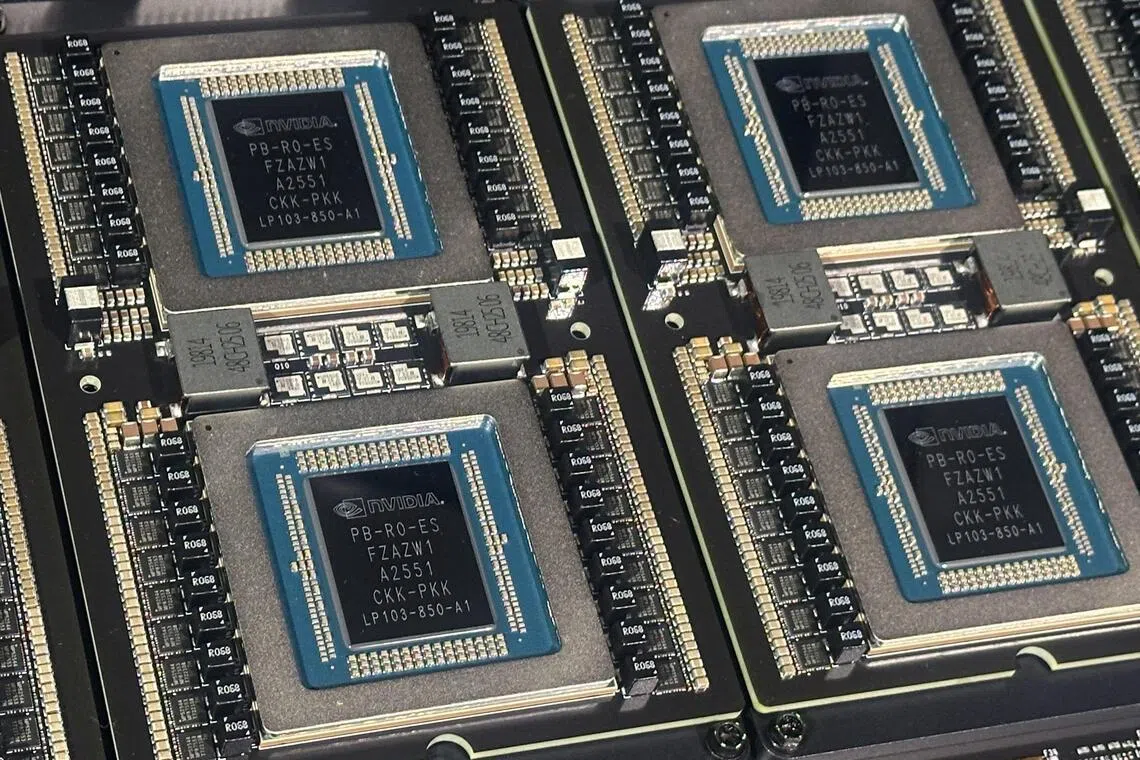
Lenders use the residual as secondary collateral to cover any missing offtake. GPU residuals are impossible to predict, however, as new Nvidia chip releases make previous generations obsolete.
Regardless of the schedule and residuals, the most careful question any financing group asks about a GPU deal in South-east Asia is the same one they ask anywhere: Who is the end customer?
Customer concerns
In South-east Asia, answering that question involves a complication that does not exist in the US market: The region sits next to the world’s largest buyer of AI compute, which Washington will not let anyone sell to.
Frontier AI demand is concentrated in the US and China, and China is walled off by US export controls. A data centre in Johor or Bangkok – full of Nvidia chips but with thin local demand – sits next to the largest restricted buyer on earth.
The US Bureau of Industry and Security, the agency that enforces export controls, warned in May 2025 that letting Chinese firms train AI models on US chips, even remotely through a cloud contract, risks violations.
The enforcement record is already real. Earlier that year, in March, Singapore charged three individuals with fraud over roughly US$390 million of servers shipped to Malaysia. Investigators then examined whether restricted Nvidia chips inside the devices ended up in China.
Months later, in October, it was reported that Megaspeed, a Singapore-based operator that had spent around US$2 billion on Nvidia hardware and was raising capital to expand into Thailand, gave Chinese customers remote access to restricted chips. Megaspeed was eventually evicted from its Malaysian site by its landlord, Bain Capital’s Bridge Data Centres.
For a lender, this turns regulatory risk into credit risk. Instead of just asking whether the neocloud or its customer will pay on time, the lender needs to inspect if the offtake is even allowed.
If the contract evaporates under an enforcement action, the whole deal collapses because that contracted cash flow was the collateral.
Where the demand actually comes from
Credible South-east Asian operators have already solved this by going to the source: Their offtake agreements are with US enterprises, Australian firms, and sovereign AI projects, as well as customers that Washington has no objection to.
The few publicly disclosed names on South-east Asian capacity point to outside of the region: partnerships such as Singapore’s Singtel with UK-based Nscale, or Singtel with US-based Vultr.
Large US companies have been signing visible GPU commitments because AI spending itself is part of their growth story. But South-east Asian enterprises are behaving in a more controlled fashion. Most are still waiting for pilots to translate into proven productivity gains before committing to multiyear GPU offtake contracts.
Since regional enterprises have yet to sign four-year commitments, local neoclouds cannot anchor financing on domestic offtake. Instead, they must rely on buyers from China or the West.
Physics narrows the export market, too.
AI training can be carried out over great distances because training clusters communicate far more internally than they do with external users. A training cluster in Johor can serve a San Francisco lab just fine.
But inference, which refers to how an AI model applies what it learned during training to generate real-world results, has to be located near those users. Distance matters as inference becomes the bulk of AI demand.
That is why domestic demand is what would change the equation. Singapore has shown the template, with government AI procurement acting as the anchor tenant that the private market does not yet provide.
Regional banks and telco firms signing real compute commitments could prove more valuable to Malaysian and Thai neoclouds than any tax incentive. After all, committed local offtake is safe from US enforcement actions, and it positions those operators for the inference demand that will eventually have to live locally.
Winning overseas demand now is what sets a data centre operator up for the local demand later. The hard part is staying in the game through chip bans, new GPU generations, and high-interest financing. TECH IN ASIA
Bernie Margulies is the founder and CEO of American Compute, which helps GPU buyers get access to better GPU financing and structures residual value insurance for lenders/lessors.
Decoding Asia newsletter: your guide to navigating Asia in a new global order. Sign up here to get Decoding Asia newsletter. Delivered to your inbox. Free.
Share with us your feedback on BT's products and services
TRENDING NOW

If Europe goes to war, the fallout will be felt in East Asia

Indonesia stocks suffer worst plunge in nearly 30 years as MSCI proposes standalone status

Keppel seeks US$1 billion for Vietnam investments as it joins country’s international financial centre

Philippines’ FDI slowdown exposes uneven investment prospects across S-E Asia

