Anime’s Demon Slayer hit is a watershed for Japan
Its animation finally has a global box-office smash. Now the country must capitalise on it
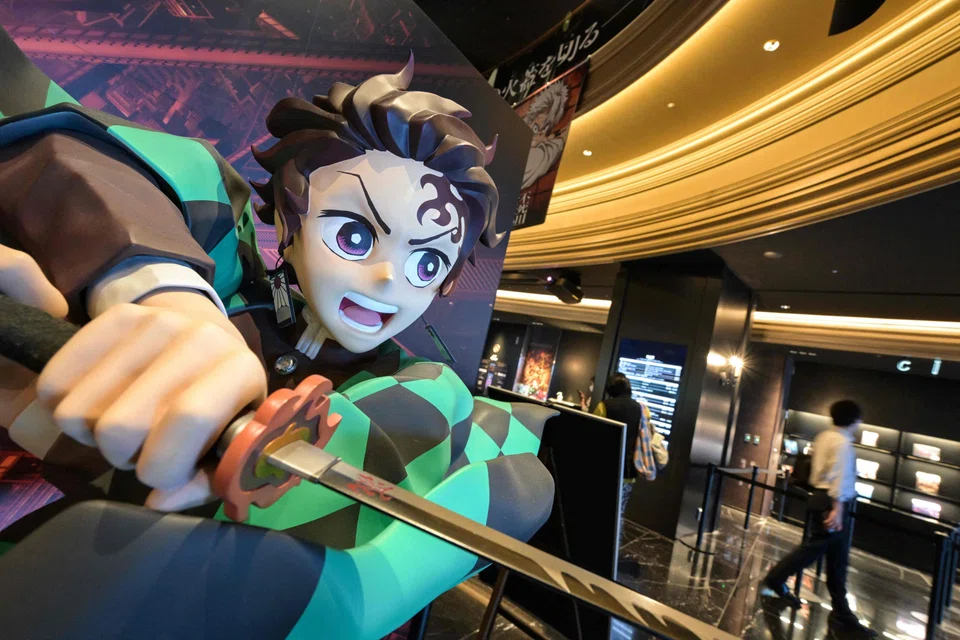
JAPANESE animation has dominated streaming for years. Now, it’s slaying on the silver screen, too.
Demon Slayer – Kimetsu no Yaiba: Infinity Castle, the first part of three movies that will conclude the hottest anime property in years, last weekend opened to US$70.6 million in North America. That goes further than simply a record for a Japanese animation, or the most for a foreign-language film. It’s the sort of figure you’d expect to see from a mainstream Hollywood hit – a James Bond, say, or Fast & Furious.
This is a watershed moment for an industry that has been on a parabolic growth path – and a model to follow to ensure it realises the fruits of its success.
The draw isn’t just in the US, where Infinity Castle is playing in more than 3,300 locations; it’s the number one movie globally. Some even speculate that a rumoured release in China could take it past a revenue of US$1 billion.
While flicks like The First Slam Dunk have been multimillion hits there, that might prove a stretch, even for the Demon Slayer never-say-die hero Tanjiro Kamado. But a good run in the world’s second-largest box office would nonetheless comfortably elevate Infinity Castle into the upper echelons of the year’s top 10 movies, well above the latest Mission: Impossible or Marvel.
New normal
In its home market of Japan, the film will soon become the biggest-ever box-office hit – dethroning the first movie from the property, released during the pandemic in 2020. With little else in theatres at the time, that film’s popularity (which broke a decades-old record held by Studio Ghibli’s Oscar-winning Spirited Away) always felt a little like other Covid-era anomalies. But the breakthrough of Infinity Castle suggests that this is a new normal.
With China’s Ne Zha 2 the highest-grossing film of the year worldwide, and Netflix’s KPop Demon Hunters a surprise hit, 2025 might go down as the moment global cool began to shift. Japan, which produces some 300 anime series annually, is in pole position to extract the most from this push.
As the veteran Toei Animation director Tatsuya Nagamine put it in a recent interview with President Online, this frantic pace means there’s always something new, just as foreign fans have tired of Disney-like predictability.
The drab box office of successive Pixar coming-of-age stories and the studio’s endless live-action remakes suggests he’s right. While there are still two more Demon Slayer movies to come to wrap up the story, the world of anime is already moving to find the next big thing.



How did this change happen? Two ways: First gradually, and then as suddenly as an anime can shift from serious drama to over-the-top comic relief. Infinity Castle broke a Japanese animation record set back in 1999, when the genre was still a niche within a niche.
Its popularity outside Japan has grown organically, like punk or hip-hop. Many of my generation will have encountered it almost as a mind-bending illicit substance, passed around as bootleg videotapes or discovered on late-night stoner channels.
With the growth of the Internet, fans began pirating series not officially released overseas, adding their own subtitles and growing franchises by word of mouth. At the same time, Gen Z attitudes have shifted toward things that were once considered the realm of geeks. Now, anime is given cred by the perennial gatekeepers of cool – athletes (from Ibrahima Konate to Jamaal Williams) and celebrities (Billie Eilish, Michael B. Jordan).
Netflix now says that one in every two people on its platform use it to watch anime, with viewership tripling in five years. The most bullish projections put the worldwide market above US$80 billion by 2033.
The irony is that Japan itself has been incredibly late to wake up to this success – and needs to start monetising it. At a recent talk on the industry I attended in Tokyo, discussion still seemed to focus on animators’ poverty-line wages, studios’ struggles to stay afloat, and the lack of government support.
Where is the money from all this global growth flowing to? If Pop Mart International Group can make an overnight, US$45 billion hit out of Labubu, why do Japan’s animation firms still seem impoverished, held back by outdated and fractured rights management?
Better model
Infinity Castle can perhaps start to provide a better model. Together with the manga publisher Shueisha, Sony Group controls much of the series through its Aniplex and Crunchyroll units. But unlike most anime, where the studio that actually creates the visuals is merely a contractor, Demon Slayer’s animator Ufotable is part of the production committee that finances the creation – and shares in the profits.
That gives it a seat at the table, and a stake in continued success. Other studios should look to follow suit, and larger firms like Sony should aim to drive such economies of scale.
A period of consolidation would do the industry no harm. Infinity Castle has shown that the sky is the limit for the genre. Our hero Tanjiro’s perseverance and grit are great characteristics. But they shouldn’t be everything.
Decoding Asia newsletter: your guide to navigating Asia in a new global order. Sign up here to get Decoding Asia newsletter. Delivered to your inbox. Free.
Share with us your feedback on BT's products and services